























































The H3R Story Foundation is taking action to fill a critical gap for women, and young girls in particular, through a broad platform of social, professional and life opportunities, including sports and football, media, technology and financial literacy. By Nichelle Gainey, founder and executive director
The systems shaping our future (AI, blockchain, decentralized networks) are not new inventions. They are new names for something that sports and culture have always known on a subliminal level. The H3R Story Foundation This is where this conviction comes from.
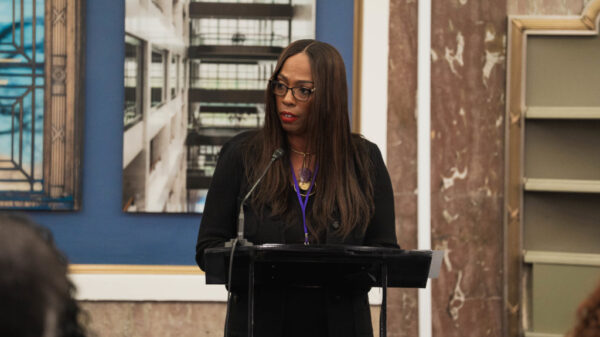
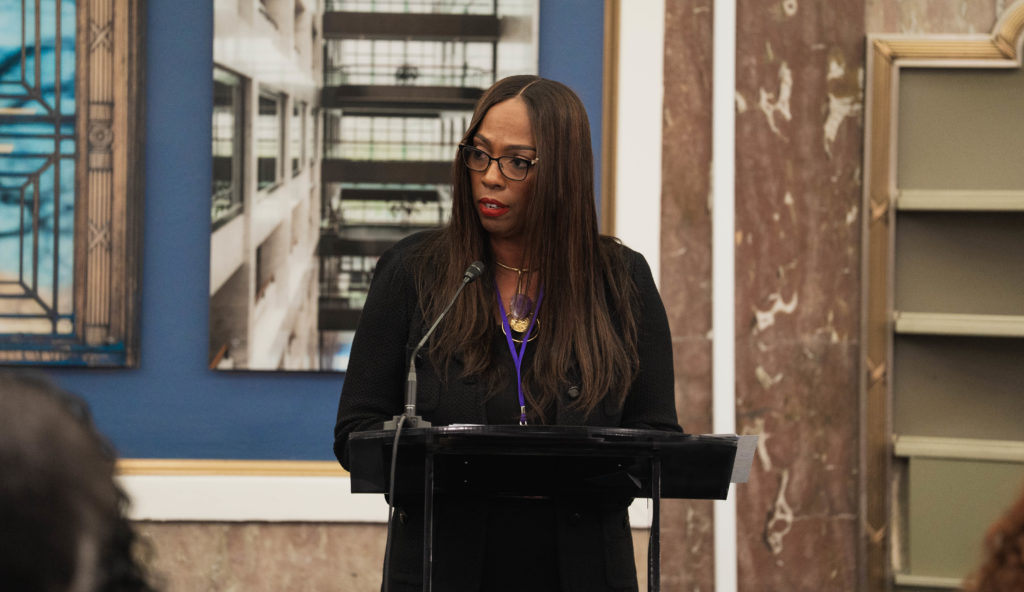
On June 12, 2026, as the world’s attention was still electric from the opening ceremony of the 2026 FIFA World Cup in Mexico City, the H3R Story Foundation hosted its Power Room Atlanta, at The Power Room.
No stains No field But the same stakes.
An estimated $40 billion moved to the 2026 FIFA World Cup host communities in Atlanta, Dallas, Miami, Los Angeles and beyond. Money that flowed into infrastructure, media, technology, sponsorship and supply chains. And yet, the women and girls who live in these communities, who bring the culture that makes these cities worth coming to, are not in this conversation.
The Power Room exists to change that. Not as a reaction. As a redirect.
Because if blockchain protects what’s real and irreversible if it says this happened, this mattered, this belongs to us, then the $40 billion moving through these host cities needs witnesses to keep it from disappearing into the same hands it’s always had.
Women and girls between the ages of 16 and 25 should not be a footnote in this economic moment. They are the ledger. H3R Story Foundation is building the infrastructure to ensure it is recorded, protected and owned.
When women lead, the world follows. The power room is where this starts
Argentina is where I was interested not only as an idea, but something I felt watching Messi and the national team play. There is something that happens on the pitch that looks like instinct, but is actually a system. No one controls it. No one calls out every move. But somehow it’s held together: through time, through trust, through all these players reading each other in real time.
That’s when I started to see football in a different way. Not just as a sport, but as a test of how coordination really works.
Then in Brazil, watching Marta Vieira da Silva play for the Brazilian national team at the 2016 Rio Olympics deepened that. His movement is different to Messi’s, but the intelligence underneath is the same. It is reading the space. She is getting ahead of herself. He constantly converses with everyone around him without saying a word. The pace they each carry is not about individual brilliance, but how they function within a system of other people who respond and adapt in real time.
And what struck me is that it’s not really about men’s soccer versus women’s soccer. The underlying structure is the same. The playing field becomes this place where decision-making extends to a whole network of people. Each movement is personal and collective while being shaped by the constraints of the system and everyone within it.
But the moment that expanded all of this for me was watching the fans. Because the cadence was not only on the track, but in the stands, in the streets, on the bodies of people who had nothing in their hands but the memory of what they had just witnessed. The Argentine fans moved as Rosario lifted them, with that fierce, grounded pulse that lives in the chest before it reaches the feet. And in Brazil, the beat brought something older and deeper to the coco-de-roda circles of Alagoas, the call-and-response tradition of northeastern Brazil, the very land that produced Marta herself. Two different countries, two different cultural rhythms. But in these stages, something connected like nodes in a network that meet in real time. A closed, verified, irreversible moment.

This is exactly what blockchain does. It does not create the connection. It protects him. It says: this happened, this was real and no one can take it from us.
That kind of cultural memory, the beat of fans who felt something so collectively that it became a part of them, deserves the same protection. The singing, the swaying, the specific energy of a crowd when Marta touched the ball home during those Olympics, or when Messi orchestrated something that no one can explain, but everyone felt. These moments are not happy. They are living infrastructures. They are from the people who were there, and from those who carry the culture from which these players came.
That’s where my mind went to AI and decentralized systems. AI learns through patterns, repetitions, variations, how things relate over time. Decentralized systems work through distributed coordination, not a single authority making all the calls. But what I kept thinking was: culture and sport were already doing it.
Long before anyone named these technologies, people lived exactly how these systems worked.
So for me, football is not a metaphor that I’m stretching to fit technology. It is a real, living example of how trust, coordination and participation emerge through a network. And once you see it that way, the issue of access becomes impossible to ignore who gets into the system, who gets to see inside it, and who actually gets to shape where it goes.
This is what H3R Story Foundation is working on. If artificial intelligence and decentralized systems are how coordination will work in the future, we need to be honest about who is included in that future and who is left out.
We focus on women and girls between 16 and 25 years old, especially those who do not have constant access to digital tools, because participation is not automatic. Sport makes visible what these systems really need to function. Culture decides who belongs to it.
That’s why H3R Story Foundation exists not as a charity, but as a structural fix.
Just as a pitch requires every player to be seen, responsive and confident with the ball, the systems being built now require the same.
AI that doesn’t learn from women and girls isn’t intelligent, it’s incomplete. A decentralized network that excludes entire communities is not distributed, it is just a smaller version of the same concentration of power.
We work with women and girls between the ages of 16 and 25 because the future is not something that happens to them. They are the infrastructure. They always have been. H3R Story Foundation just makes sure the system finally knows.
We are developing toolkits and networks that solidify this network into real opportunities. That they embrace and build untapped talent and change thinking, positively challenge
We are inclusive and take steps that no one else is taking. If you want to know more or be part of the change and the opportunity, get in touch. Our mission is to tap into a huge network of women and girls who are full of creativity, ideas, skill and capacity to make real change.
This movement is about building the infrastructure of education, trust and participation for global ownership through partnership. We are investing in women. Invest in girls. And investing in the future we want to see.
We are not building a program. We’re building an infrastructure that connects girls and women to the global economy through sport, media, technology and ownership. This is the gap we are trying to close. Come and take the opportunity to close it with us.
Nichelle Gainey is the founder and executive director of the H3R Story Foundation. In a career that includes working at four FIFA World Cups, she has spent decades building at the intersection of global sport, women’s leadership and community development.
Contact her at (email protected)