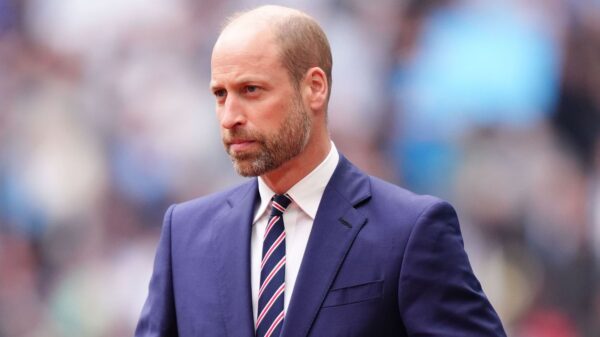

























































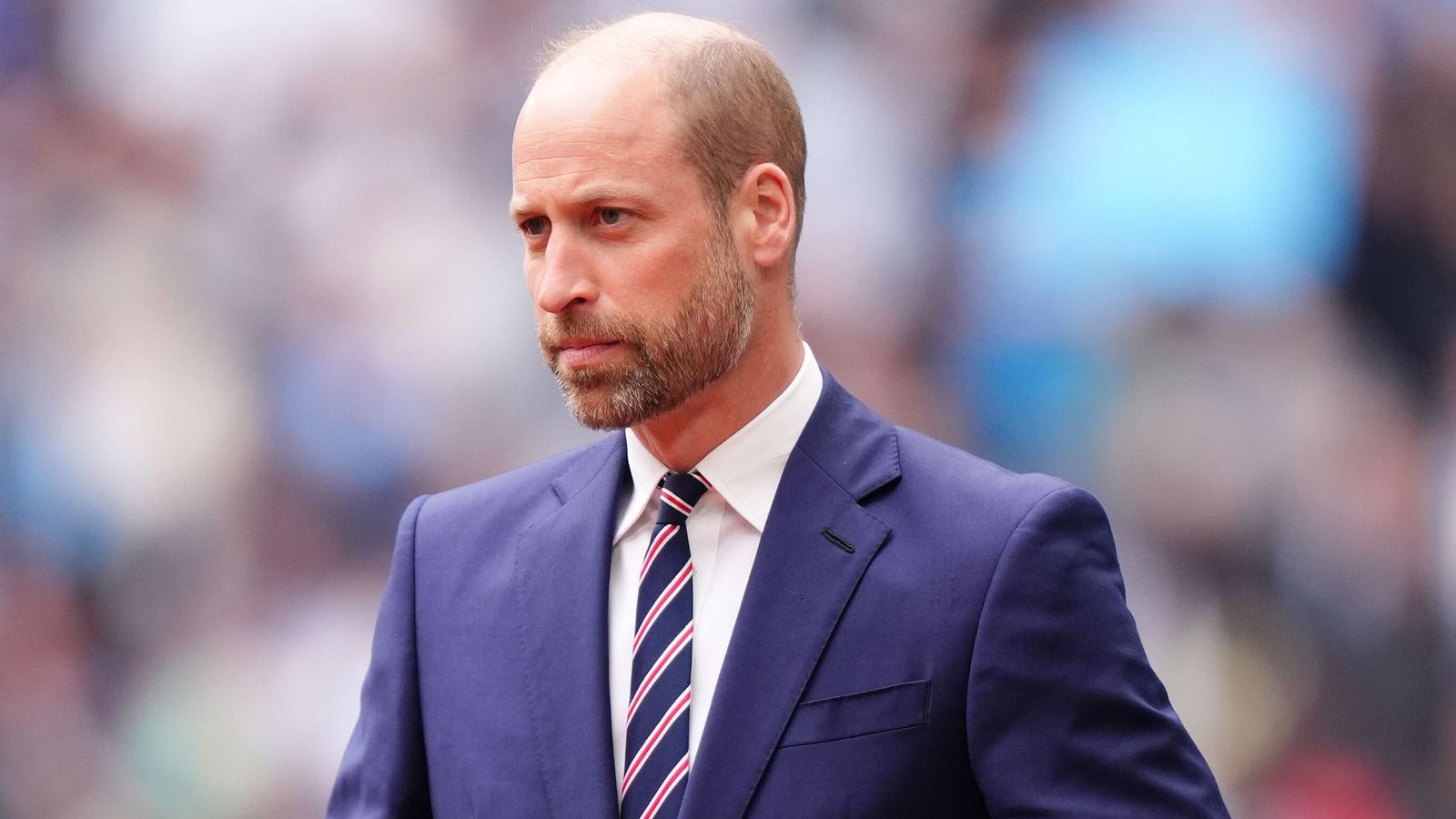
Prince William will join leading figures from across sport on Thursday to launch a new, first-of-its-kind suicide prevention tool designed to help organizations recognize the warning signs and support those at risk.
The historic event will take place at Everton’s Hill Dickinson Stadium in Liverpool on World Suicide Prevention Day, 10 September.
Dame Kelly Holmes, Gabby Logan, Campbell Hatton, Jill Scott and Dame Laura Kenny are among those joining the Prince of Wales at the ‘On Your Side’ launch.
The toolkit, developed by The Royal Foundation in partnership with the British Standards Institution and mental health charity Chasing the Stigma, aims to turn suicide prevention into everyday practice across the sporting sector.
It will be available on Chasing the Stigma’s Hub of Hope, the UK’s largest mental health directory.
To mark the launch, The Royal Foundation has also produced a short film encouraging people to have the confidence to start a conversation about suicide.
The film features England captain Harry Kane, Formula One driver George Russell, two-weight world champion boxer Carl Frampton, GB international basketball player Kofi Josephs, Women’s Rugby World Cup winner Rocky Clark, two-time world champion kickboxer and Muay Thai champion Ruqsana Begum and former elite trainer George Bajoker with a twist.
The Football Association, Premier League, British Cycling and Team GB are among the major sporting organizations committing to implementing the toolkit.
The FA, of which the Prince is Patron, will commit to rolling out the toolkit across its organisation, as well as its community and grassroots football network.
The Premier League and British Cycling will announce their commitment to prioritizing suicide prevention across their organisations, while Team GB will use the resource with all athletes and staff.
More than a dozen other sports organizations have also signed up to become champions of the toolkit, committing to introduce practical, evidence-based suicide prevention techniques throughout their organizations.
The guidance includes advice on creating safe and supportive environments where people feel able to speak up and support others in difficulty, including appropriate language and conversation starters.
It also explains how to make suicide prevention part of everyday practice, educate people to recognize the warning signs and respond to someone in crisis, and establish clear procedures for crisis situations and supporting people after a suicide.
At the center of the resource is a five-step framework called GOALS, designed to help individuals start a conversation about suicide. It stands for:
- Get ready
- Open the conversation
- Ask the question
- Listen and answer
- Support and guidance
The toolkit is designed for use in all sporting environments, from local clubs and academies to elite organisations, regardless of size, structure or level. It is important to everyone involved in sport, including players, coaches, staff, volunteers, families and spectators.
Research commissioned by The Royal Foundation found that the sport sector has the potential to be a powerful platform for suicide prevention, but is hampered by stigma – particularly among men and elite athletes – as well as gaps in skills, knowledge and resources.
The findings also showed goodwill and pockets of effective practice across sport, but that the scale and diversity of the average activity sector is often isolated, inconsistent and unevenly resourced. At a basic level, many clubs do not have clear guidelines on how to recognize risk and respond appropriately.
During the event, representatives from across the sports ecosystem will also have the opportunity to share insights and reflections from their organizations in a session hosted by Sue Gregory, CEO of Everton in the Community.
The initiative builds on the National Suicide Prevention Lifeline, launched in autumn 2025 with more than £1m of funding from The Royal Foundation over an initial three-year period.
The network aims to bring about lasting change in the way suicide is understood and prevented in England, Scotland, Wales and Northern Ireland.
The Prince and Princess of Wales and The Royal Foundation have made changing the conversation about mental health and suicide prevention a long-standing priority, with the aim of tackling stigma and helping people find the right support at the right time and in the right place.