




















































LIV Golf’s vision for LIV 2.0 took a small step forward on Monday evening when it formalized its restructuring support agreement (RSA) with BC Partners, a London-based private equity firm that has agreed to finance LIV 2.0. Monday, BC Partners announced a “committed initial investment” as part of a goal of $300 million in cumulative funding to help the league emerged from Chapter 11 bankruptcy and pursue a future focused on global team golf with a smaller schedule and player equity.
The agreement was filed on Monday as part of LIV’s bankruptcy case, and the financing requires court approval. The league filed for Chapter 11 on September 8and a hearing is scheduled for October 14. If approved, it will allow the league to move forward with various plans to launch LIV 2.0 in 2027, which will likely include a schedule of 10 tournaments and half of the events hosted internationally. Monday’s press release marked the first time BC Partners chief credit officer Ted Goldthorpe has spoken publicly about the investment.
“Our aim is to facilitate the emergence of LIV Golf from the restructuring process on a sound financial basis and with renewed impetus towards the 2027 season,” said Goldthorpe. “Most importantly, we want the players who make this league what it is to share in what they help build. Giving players real ownership and action in the league and teams is a unique opportunity in professional golf, and aligns everyone around the long-term success of the product for the game and for the fans.
The RSA also made an important change in LIV’s initial bankruptcy filing and the agreement between the league and BC Partners.
BC Partners had originally set an October 13 deadline for a “required number of players” to commit to LIV 2.0. But the RSA’s filing on Monday moved that deadline to Oct. 25 and changed the definition of “required number of players.” Originally, the number of pledges that would ratify a deal was both 1) 50 percent of the players with financial claims, and 2) those pledges had to represent at least two-thirds of the amount of LIV money owed to the players. If these benchmarks were not met, BC Partners could back out. However, the amended motion presented on Monday no longer included these figures. Instead, “required actors” has been modified to mean the number “necessary to ensure the continuation of the business of the Parties of the Company as a bona fide golf league”. A key element of the LIV 2.0 vision – and to gain player engagement – is that engaged players retain 52.5 percent of the equity in the new iteration of the league.
While Bryson DeChambeau has supported LIV’s new vision, it’s unclear how many players are willing to stay with the breakout league. Sergio Garcia asked the court last week if his contract was terminated due to the bankruptcy filing or if he can terminate it himself, and recent files suggest that it will be able to make this decision by himself. Joaquin Niemann was talking to Bricks before winning the Chilean Open last weekend and said he was still deciding “whether I want to stay and believe in what’s happening in the league or go play more in Europe and from there try to go on the PGA Tour.”
As for owning equity in LIV Golf, Niemann said Bricks there were positives, but I wasn’t sure it was what I wanted.
“Knowing that it’s something that I think could take a couple of years. I don’t know if it’s something that I want to do at this stage of my career. So, these are the questions that I have to ask myself before making a decision,” said Niemann, in comments translated from Spanish.
O’Neil spent the last few months trying to keep LIV together after the Saudi Arabian Public Investment Fund (PIF) withdrew from the financing perpetually. He worked to secure external funding – which he got from BC Partners – and to sell his players on his vision for LIV 2.0. He now has until October 25 to get pledges.
“We believe deeply in the future of this league and in the opportunity to build something distinctive alongside our players,” O’Neil said in a statement about BC Partners’ investment. “We have achieved our major milestones, and while there is still work ahead, today marks significant progress towards a player-focused, team-focused, truly global league that complements the wider game and creates new opportunities for players, fans, partners and the next generation of golfers.
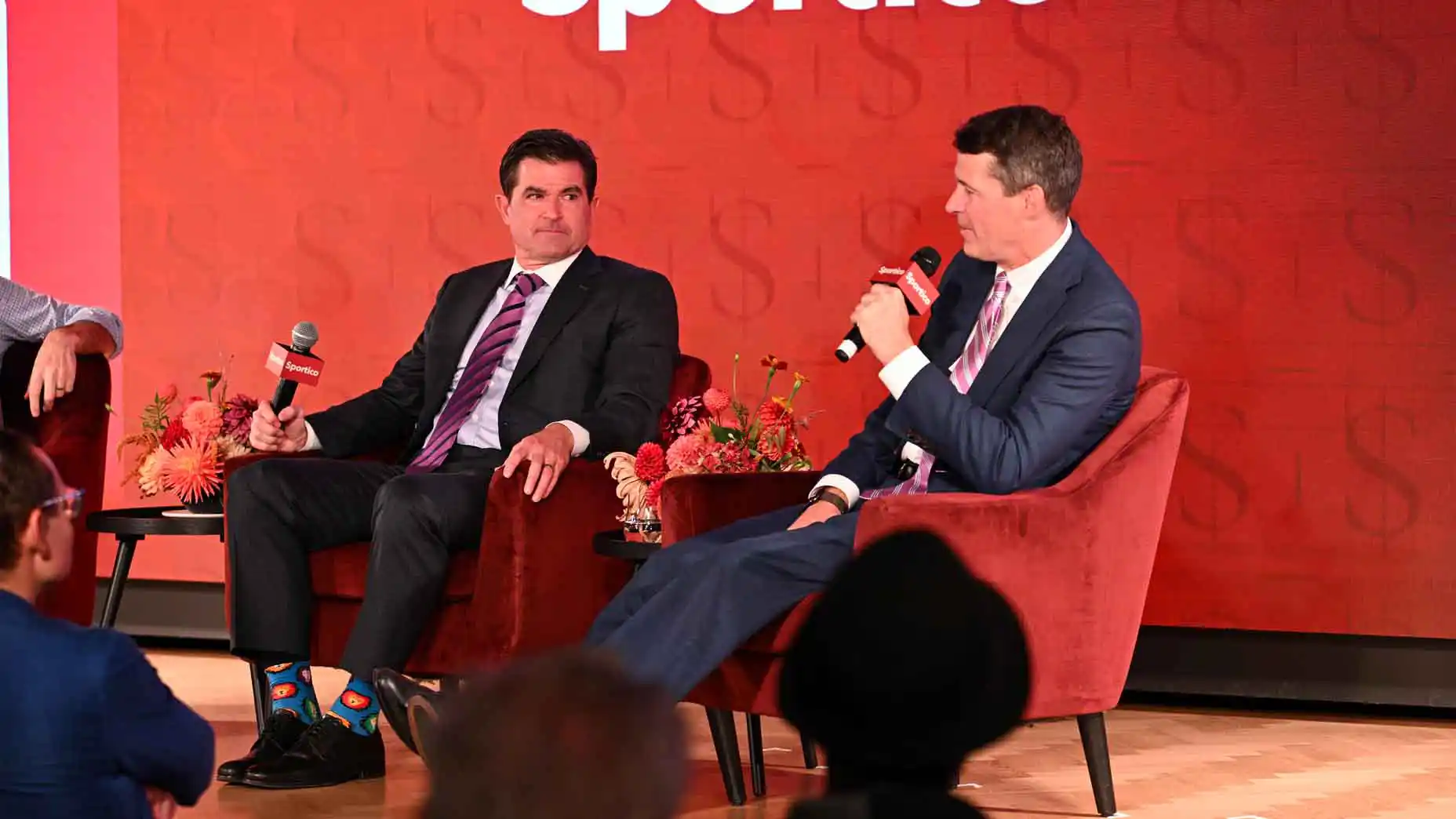
O’Neil and Goldthrope spoke at a Sportico event in London on Tuesday. O’Neil said that the ongoing war in the Middle East, which contributed to the PIF pulling out of LIV, forced him and his team to rethink their plan to make LIV Golf profitable and sustainable, leading to a “scaled-down” vision, of 10 tournaments for LIV 2.0.
“Then a war happened and the funding dried up,” O’Neil said. “We had to be creative and we had to find discipline and we had to come together as a team and rewrite the business plan, going from a Saudi business plan to a business plan.”
The PIF raised red flags, according to the Financial Timeson BC Partners’ interest in LIV since the bankruptcy filings, saying BC is only looking for tax write-off purposes, not to run a profitable golf league. Goldthorpe, who said he believes the LIV franchises could quickly be worth “$100 million,” acknowledged the potential tax benefits Tuesday but disputed the idea that’s the only reason they’re investing.
“Yeah, sure,” Goldthorpe said of the potential tax hits that could come with LIV’s losses. “There is a large NOL (Net Operating Loss) in the United States and the United Kingdom, but this is not the driving force behind the investment. Some of it has been misconstrued. We are all in the LIV, and we are very committed to it. The tax matter is just an added benefit.”
The next step for LIV 2.0 comes at the October 14th hearing, where a judge will decide whether to approve the RSA, among other various motions for advanced operations.