





















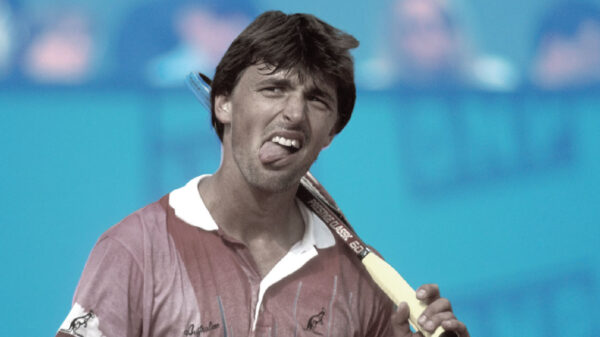

































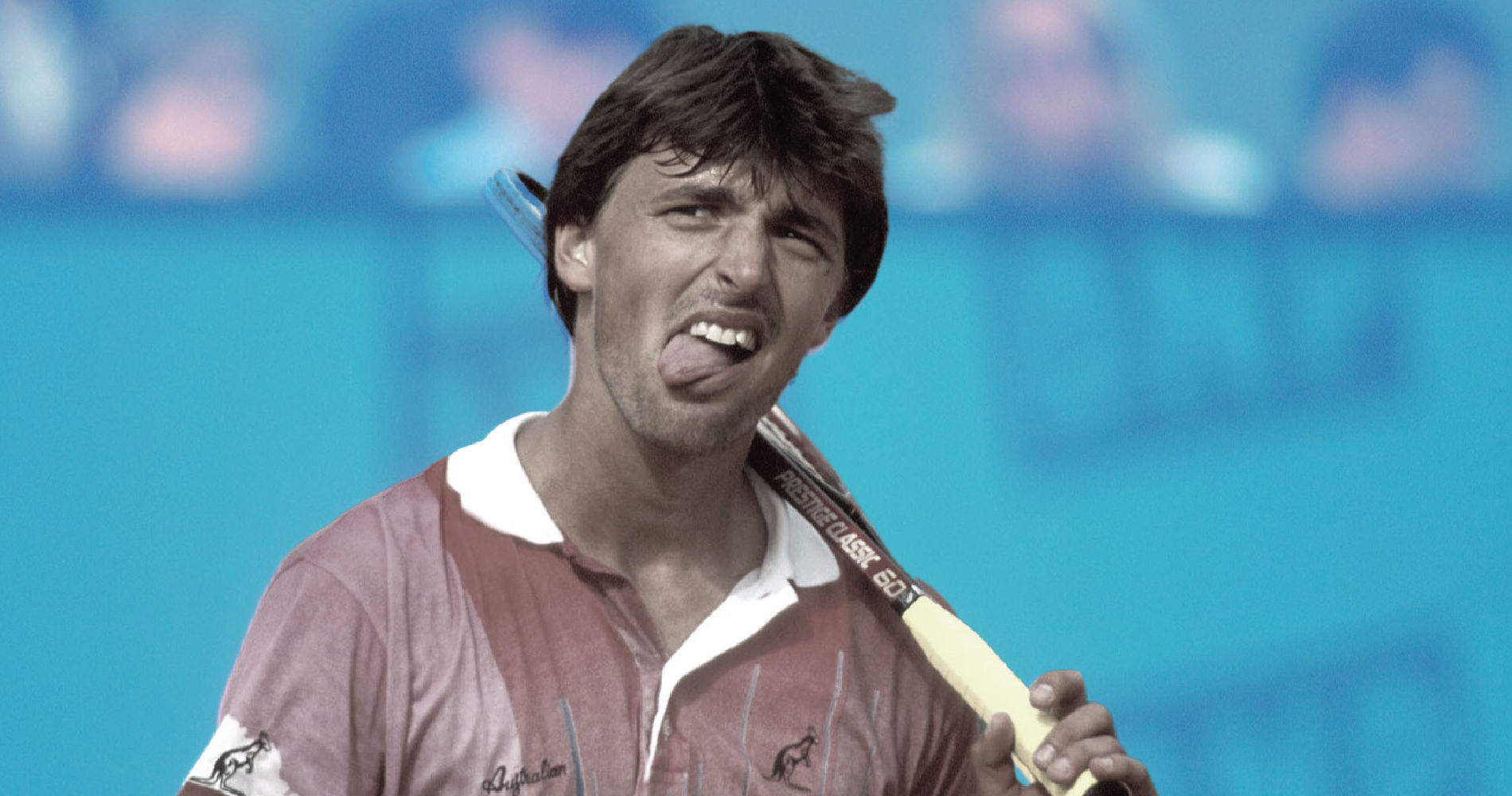
Players: Goran Ivanisevic and Andrei Medvedev
- Goran Ivanishevich. A volatile lefty capable of being a genius
Goran Ivanisevic was born in 1971 in Split, Croatia and had his breakthrough year in 1990 when he was just 19 years old. He made a name for himself that year by reaching the quarterfinals Roland Garros After beating Boris Becker, he then finished 3rd in the first round and followed that up by Wimbledon semi-final where it was the same Becker who defeated him (4-6, 7-6, 6-0, 7-6).
In 1991, her season was hampered by political problems in her country, as Yugoslavia was ravaged by civil war, and she was unable to focus on tennis.
In 1992, Ivanisevic returned to the top and, throwing 206 aces during the tournament, reached the Wimbledon final, where he lost to Andre Agassi in five sets (6-7, 6-4, 6-4, 1-6, 6-4). He finished the year as world No. 5, but in 1993 the Croatian injured his foot. Australian Open and struggled to find his pace when returning to the tour.
The Croatian did not make it past the third round of any Grand Slam tournament and soon fell out of the top 10. However, Ivanisevic started playing well again on indoor courts, winning his first titles of the year in Bucharest and Vienna (where he beat local hero Tomas Muster in the final, 4–6, 6–4, 6–4, ending his season 7 at Stoke). Masters 1000 (lost to Michael Stich 4-6, 7-6, 7-6, 6-2). Thanks to these results, he finished 9th at the Paris Indoor Open.
- Andrei Medvedev. Ukrainians rock the ATP Tour
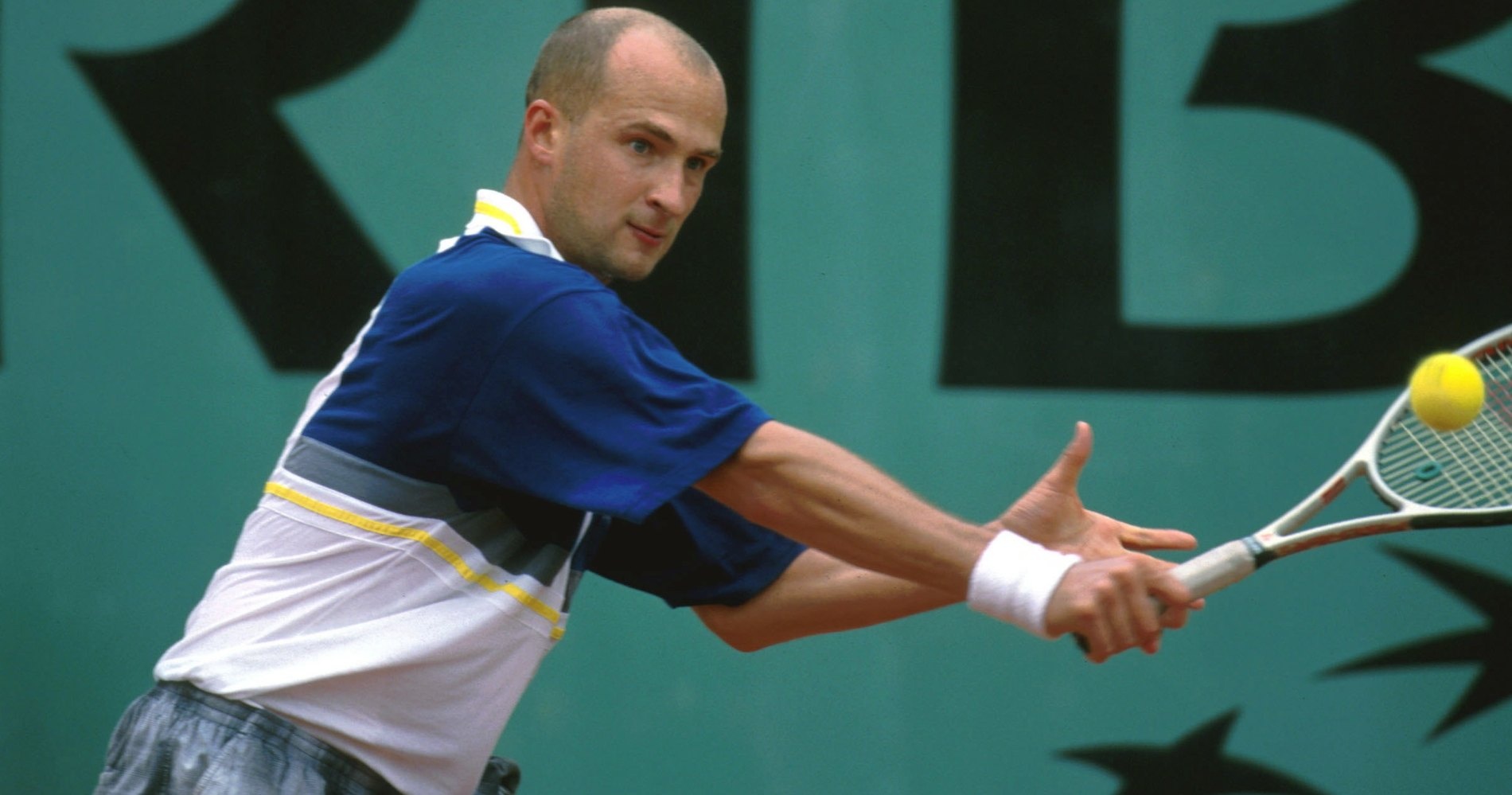
Andrei Medvedev, born in Kiev in 1974, had a very early breakthrough at the elite level. The Ukrainian won his first match in Genoa in 1992, at the age of 17, defeating Guillermo Perez-Roldan (6-3, 6-4) in the final. This first title was soon followed by two more in Stuttgart and Bordeaux, and by the end of the year Medvedev was already 24th in the world. He continued his ascent to the top in 1993, defeating future Roland Garros champion Sergi Brughera in the final at home in Barcelona (6-7, 6-3, 7-5, 6-4). The Spaniard took revenge a few weeks later at the French Open, defeating Medvedev in the semifinals (6-0, 6-4, 6-2). In November 1993, aged 19, the Ukrainian was ranked No. 8 in the world, had already won six tour titles and became the third teenager, after Mats Wilander and Boris Becker, to earn $1 million in prize money.
Venue: Paris Bercy indoor arena
The Paris-Bercy Indoor Open was founded in 1986. Held annually in early November, it was usually the last tournament on the tour before the season-ending ATP Masters and Davis Cup Finals. One of the most prestigious indoor events in the world, it became part of the Super 9 category (the former name for the Masters 1000) in 1990. Among its previous champions were such big names as Boris Becker (1986, 1989, 1992) and Stefan Edberg (1990).
The factsIvanisevic’s serve is too good for Medvedev, too boring for fans
When Goran Ivanisevic stepped onto the main stage of the Paris Indoor Open to face Andrei Medvedev in the final, his reputation as a great server was already established. The left-handed Croatian hit 206 aces at Wimbledon in 1992 when he lost to Andre Agassi in a five-set final. En route to the final in Paris, Ivanisevic had already served 70 aces to beat top-10 players Michael Chang (7-6, 7-5), Pete Sampras (7-6, 7-5) and Stefan Edberg (4-6, 7-6, 7-6). However, neither the Parisian crowd nor Medvedev could have imagined that on this day Ivanisevic was going to deliver such a master class that the tennis authorities would have to slow down the game to keep the interest of the general public.
Through three sets, Medvedev, despite being seeded No. 8, remained clueless in returning serve to the Croatian. The numbers spoke for themselves. In 15 service games and one tiebreak, Ivanisevic served 27 aces and 32 service winners, almost enough to last the entire match without a second shot.
Throughout the week, the Parisian public had been very supportive of Ivanisevic, but it was his serve that spoiled the show that day, with a section of the crowd finally booing him after each of his unreturned serves. “I didn’t boo him because I was a big fan.” Vincent, a tennis enthusiast who was in the audience that day, would recall: “But I have to admit there wasn’t much to see in his service games and it wasn’t a great final to watch.”
Ivanisevic, despite the crowd’s hostility, remained undaunted and sealed his victory 6-4, 6-2, 7-6.
“I don’t care,” Ivanisevic said of the Bulgarians, according to The Los Angeles Times. “They want five sets, but I don’t want to play five sets. (…) It’s not easy to beat 10 top four guys in one tournament.”
What next?? Ivanisevic wins Wimbledon
The 1993 Paris Open final will remain one of the key matches, as will the 1994 Wimbledon final (in which Ivanisevic also played), which forced the tennis authorities to slow down the game.
“We want to strengthen tennis on our faster surfaces,” said ATP director Mark Miles, quoted as saying: The New York Times At the end of 1994. “This is proof that we should not look at changing the rules of tennis, but work with the combination of the surface and the balls,” said Paris Open Director Patrice Clair at the same time.
Most indoor tournaments quickly adopted heavier balls and slowed their surface to allow for longer rallies. At Wimbledon, after trying different types of balls to increase the length of the rallies, the board finally decided to change the composition of the grass, which slowly doomed the serve and volley game to all but disappear from the All England Club.
In 1994, after reaching his second Wimbledon final (lost to Pete Sampras, 7-6, 7-6, 6-0), Ivanisevic achieved his highest ranking of world No. 2. In 1996, he held the unbroken record with 1,477 aces in a season. In 1998, he would suffer a third heartbreaking loss in the Wimbledon final, where he came close to taking two sets to love before Sampras was beaten again (6-7, 7-6, 6-4, 3-6, 6-2).
Devastated by this loss, which he called “the worst moment of his life”, Ivanisevic would not win a tournament for the next 24 months. However, in 2001, entering the main draw as a wild card ranked 125th in the world, he finally won at Wimbledon, defeating Pat Rafter (6-3, 3-6, 6-3, 2-6, 9-7) in the final. With his shoulder bothering him, the Croatian played sporadically until 2004, when he retired after losing in the third round. Leighton Hewitt at Wimbledon.
After retirement, Ivanisevic will become a top coach, working with Marin Cilic and Novak Djokovic before teaming up with WTA player Elena Rybakina in November 2024.
After rising to world No. 4 in 1994, Andrei Medvedev would struggle for the next few years, remaining a top 30 player, but falling well short of the standards he had set in his early years. In 1999, he achieved one last remarkable achievement, reaching the Roland Garros final as world No. 101, defeating Andre Agassi in straight sets (1-6, 2-6, 6-4, 6-3, 6-4).