


















































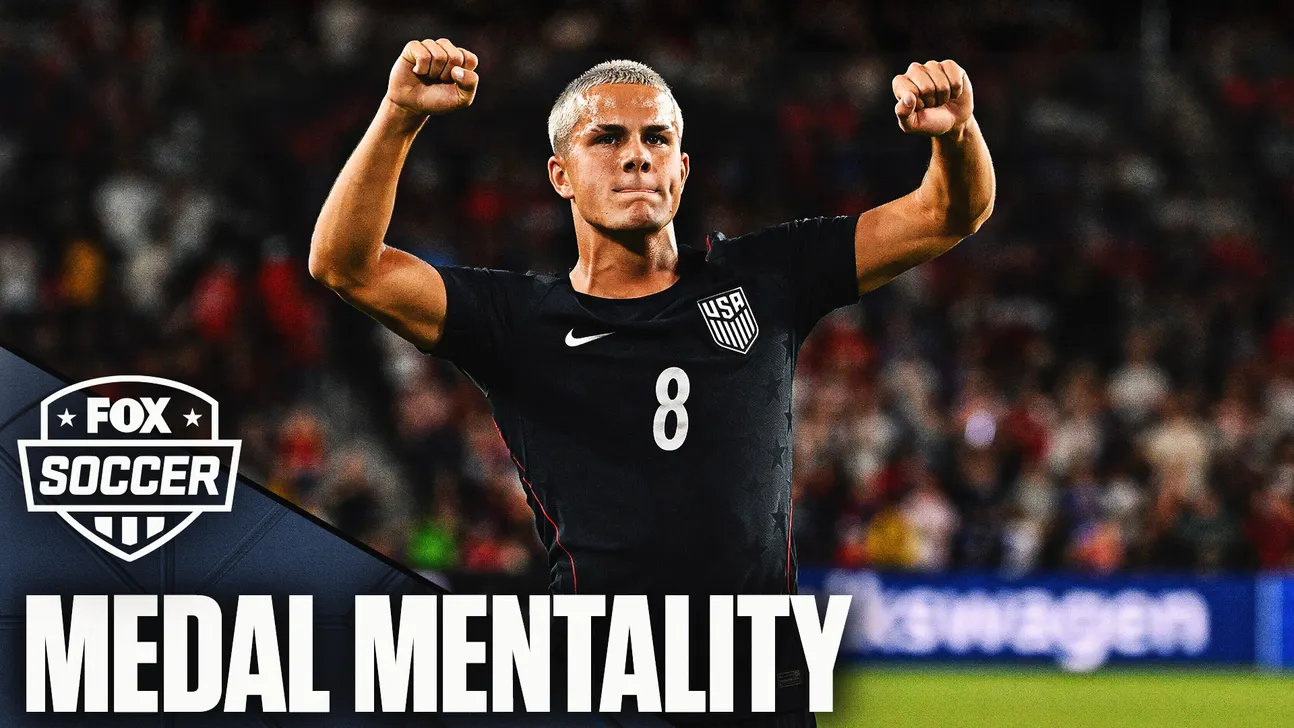
When a new generation of blue-chip teenagers recently led the U.S. men’s soccer team to four convincing victories in its first four games since capturing the American public’s imagination during the 2026 FIFA World Cup, optimism about the program’s future grew among American fans old and young.
Perhaps no one was happier than Cavan Sullivan, Julian Hall and the rest of the youth it did better than US Soccer CEO Dan Helfrich.
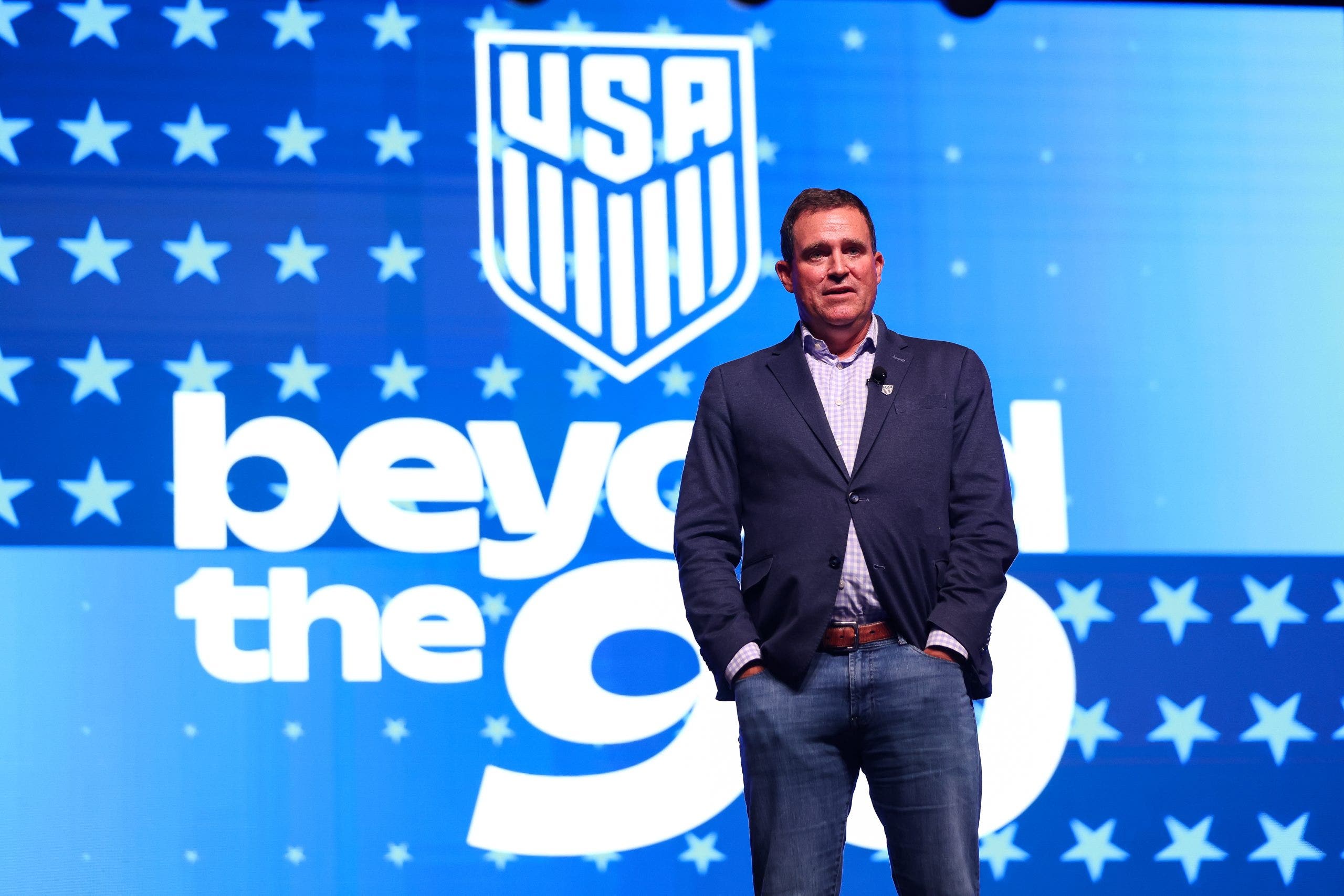
(Photo by Isaiah Vazquez/USSF/Getty Images)
In less than a year in the role, the former Deloitte executive has quietly emerged as one of the most influential figures in the insider game. Helfrich, who has overseen the day-to-day operations of the federation since January, and CEO JT Batson made the decision to signed coach Mauricio Pochettino to a new four-year contract following the Stars and Stripes’ rousing run to the World Cup round of 16.
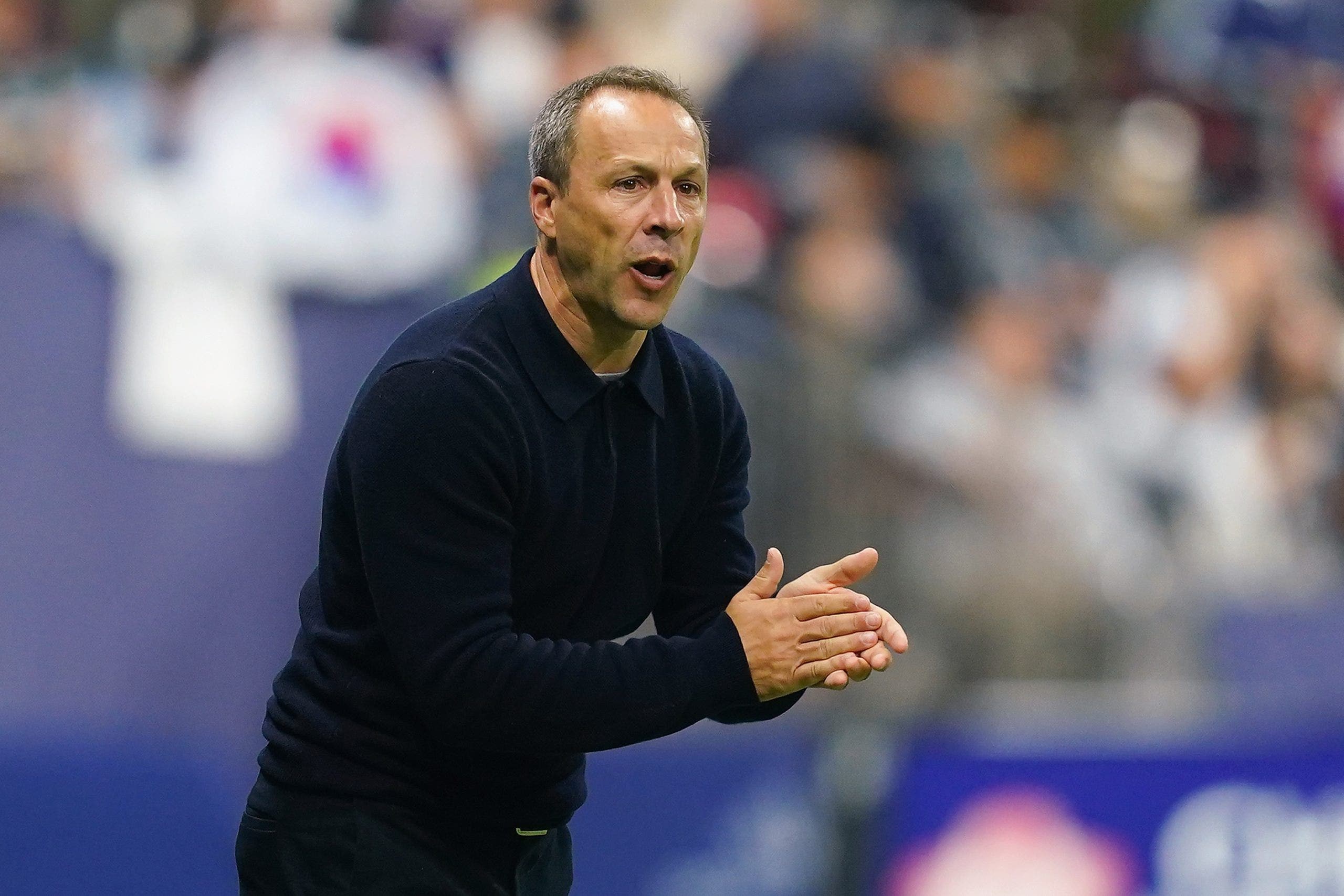
And it was Helfrich who led the successful recruitment of three-time former USA World Cup defender Steve Cherundoloan MLS Cup-winning coach with LAFC in 2022, to lead the US men to the 2028 Olympics in Los Angeles.
(Photo by Rich Lam/Getty Images)
Coming off a World Cup that shattered viewership numbers and created 10 million new US Soccer supporters, according to a recent report from Nielsen Media Research, Helrich sees these Summer Games stateside as another once-in-a-generation opportunity for the men’s and women’s national teams. The American women, of course, have won gold in five of the eight Olympic tournaments, including in Paris in 2024. The men are aiming for first.
“The medal is very realistic,” Helfrich told me last week during a 30-minute interview.
He is right. For all “Why not us?” talk over the summerthe miracle the USA needed to win the 2026 World Cup never materialized.
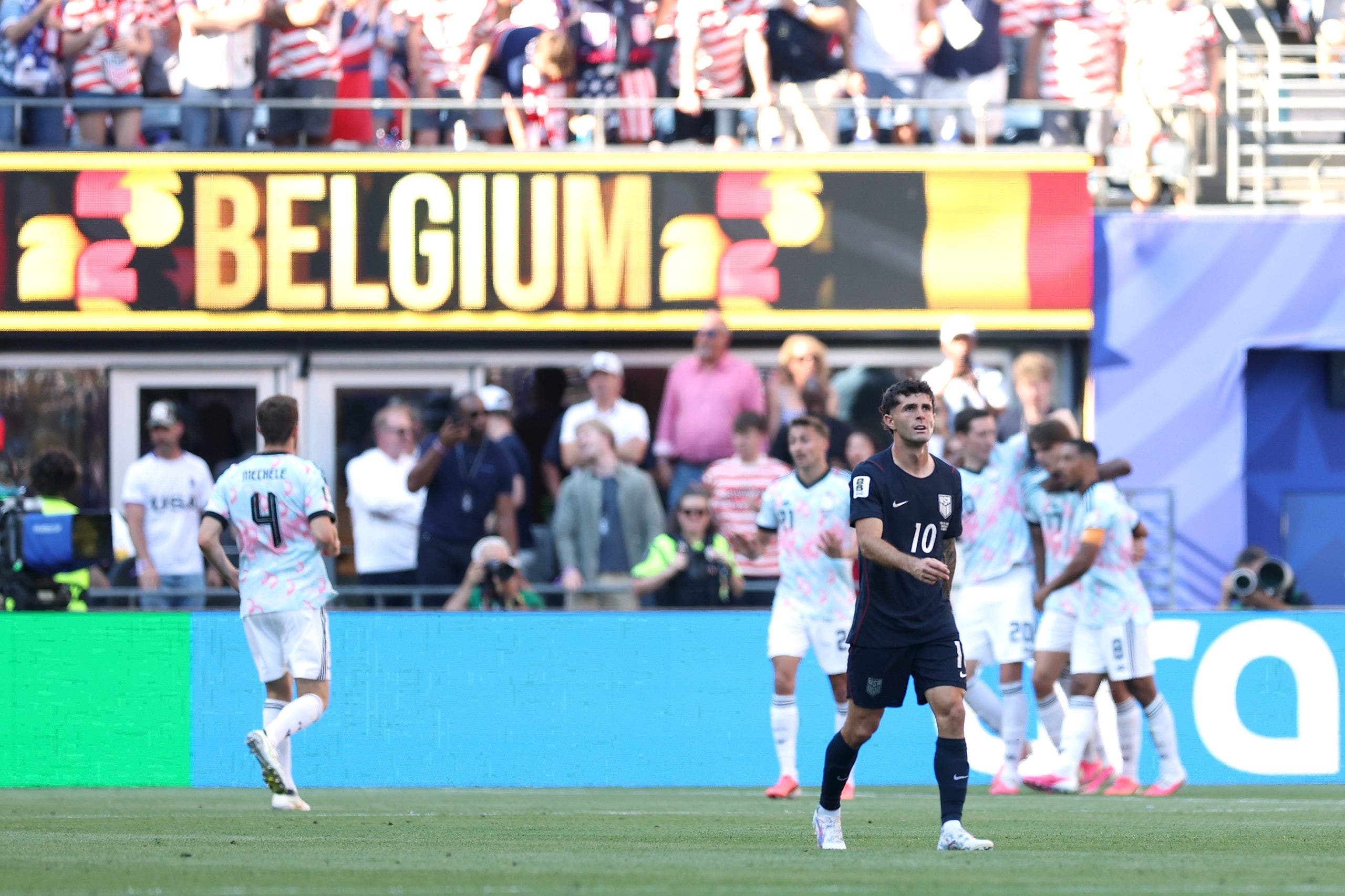
The Americans showed that they were not in same class as Belgiumlet alone champions Argentina or France or Spain. There is no shame in that. They are certainly not alone. In a century of World Cups, only eight nations have ever won it.
(Photo by Jamie Squire/Getty Images)
The Olympics are a completely different matter. It is primarily an under-23 event, for starters, with three over-age players per team allowed. Mid-major national teams of around the same caliber as the USA have won it on numerous occasions in the past, most notably arch-rival Mexico in London in 2012.
LA28 will feature a 12-nation men’s tournament. If the hosts progress from group play, they would be just one knockout win away from the medal round. Imagine what the 90,000 red, white and blue clad fans who packed into the historic Rose Bowl to see both men and women go for glory on the last weekend of July 2028 can do to further promote football in America.
Helfrich definitely has.
“This summer was the biggest and broadest demonstration of what large-scale public love for sports can look like in our country, and we think that for a few weeks in the summer of 2028, we can recapture some of that same passion, fire and joy,” said Helfrich, a football inmate who played at Georgetown and has a son who is currently in college and a daughter who represents the Hoyas. of Virginia.
“When you put together a ’26 World Cup, a ’28 Olympics and hopefully a 2031 Women’s World Cup on earth, there’s enough connective tissue between all those events that we believe we can create stars.”
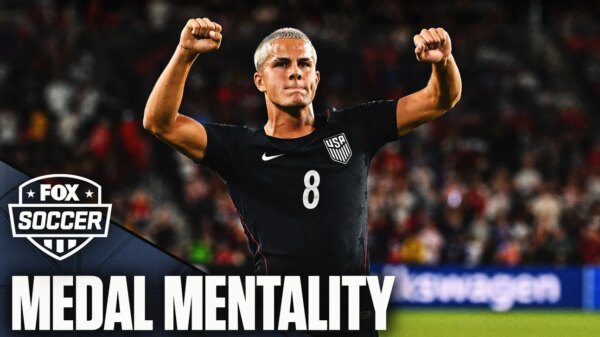
Sullivan and Hall are the frontrunners on the men’s side. of The 18-year-old Hall scored in his first three internationals this fall, including the winner in a remarkable 3-0 win over Mexico. Sullivan, who turned 17 last month, became the youngest scorer in program history later in that game.

(Photo by Patrick Mulligan/USSF/Getty Images)
However, there are many others. Almost half of Pochettino’s September/October roster was made up of picks who will be eligible for the LA28 age – striker Justin Ellis, 7-foot-7 centre-back Neil Pierre and goalkeeper Diego Kochen among them.
Some of these players will continue to gain experience under the watchful eye of Pochettino, who has a well-earned reputation for nurturing young talent.
But by the time the Olympics begin, Cherundolo’s team will be the priority. That is expected to be the case when it comes to the selection of surplus additions, and even if Pochettino’s side compete in a 2028 Copa América hosted by the USA in the same summer. (Asked for an update, Helfrich told me that “there is no news on Copa América ’28.”)
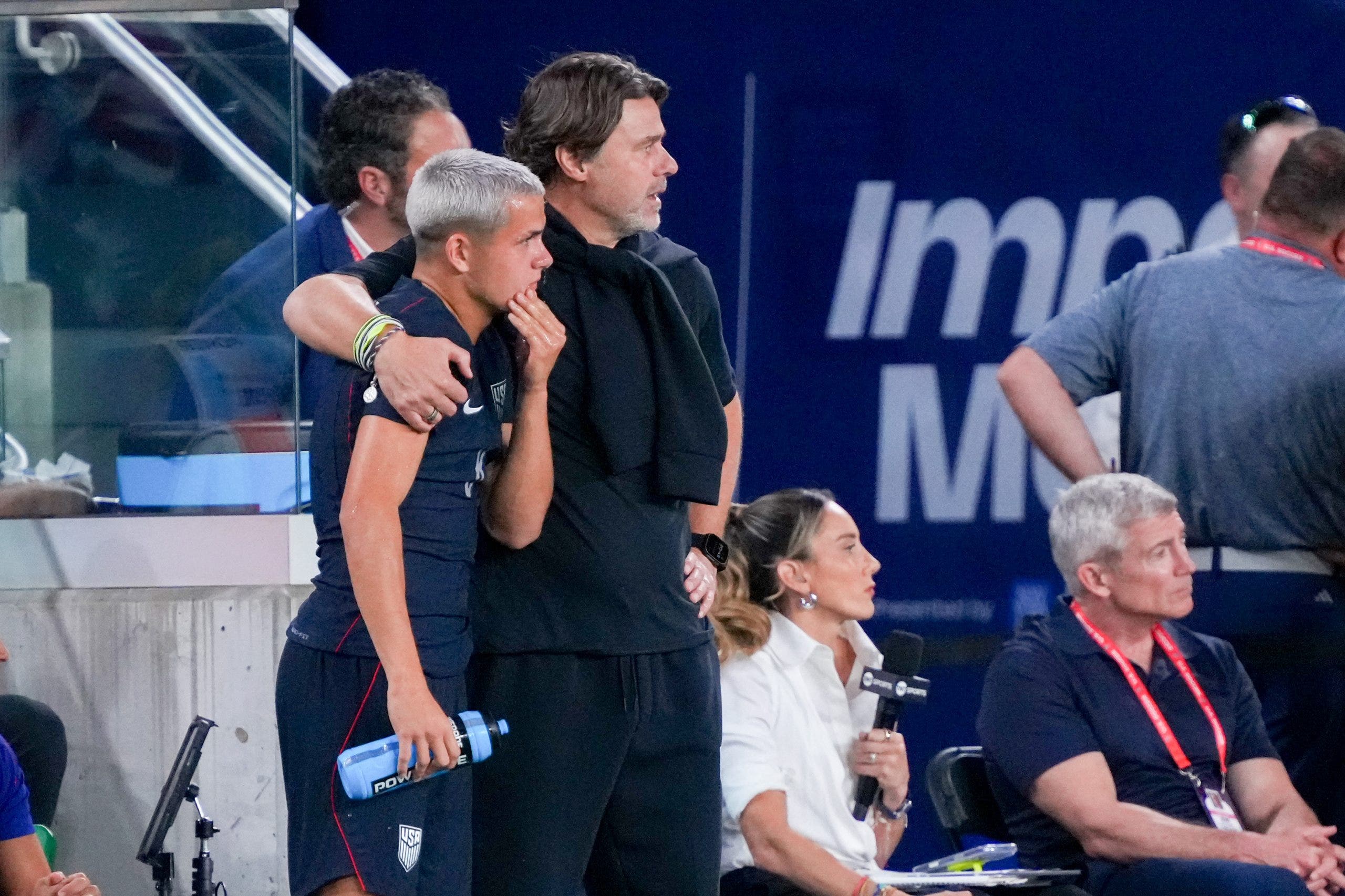
“Mauricio has a keen understanding of culture, history and sport, both in football and beyond,” said Helfrich. “He understands what the Olympics means to the United States.”
(Photo by Robin Alam/ISI Photos/ISI Photos via Getty Images)
For Cherundolo, the hard part will be convincing European clubs to release players for the Olympics. Unlike major senior tournaments such as World Cups or Copa América, FIFA does not compel clubs to allow national youth teams to report for Olympic duty.
However, MLS teams have historically not stood in the way of their youngsters. Given the attention a home Olympics will shine on its athletes – and the potential to cash in on any transfer interest that comes as a result – that doesn’t look set to change.
Fielding the strongest possible Olympic squad could also pay off for Pochettino at the 2030 World Cup.
During a roundtable with reporters at U.S. Soccer’s headquarters outside Atlanta, three days before Spain beat Argentina in the 2026 final, Helfrich noted that 12 members of La Rojas’ squad were former Olympians. La Albiceleste boasted eight. Semi-finalist France had six.
“The historical correlation between strong Olympic performances and then strong World Cup performances two or six years later is well known,” Helfrich said, noting that the story includes the US.
(Photo by Gary M. Prior/Getty Images)
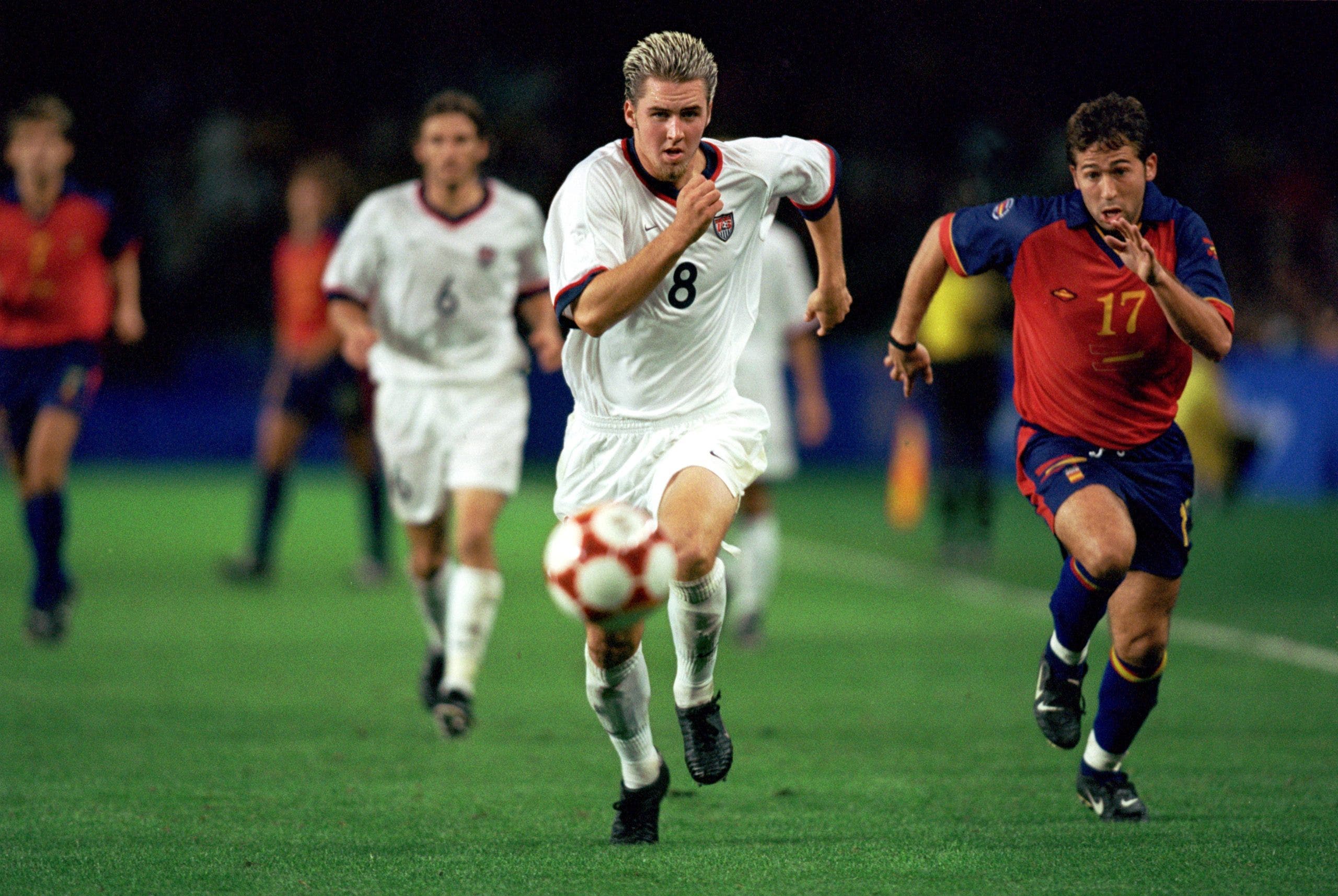
The US men’s best finish in an Olympics came in 2000 in Sydney, where they reached the semifinals before finishing fourth. Two years later, five members of that Olympic roster started the Americans’ 3-2 upset of Portugal in the 2002 World Cup opener, with one more on the bench. The USA went on to reach the quarterfinals, its deepest run in the soccer competition since 1930.
Repeating this success will depend on making the right decisions at the right times over the next four years. The 2024 Olympics had already happened when Pochettino arrived that September. He had less than two years to prepare for the 2026 World Cup. Helfrich barely had six months.
They will have a whole cycle this time.
“Mauricio, JT, I — we’ve all been clear that this chapter, if you will, call it the second chapter, has a different context and set of goals than the first chapter,” Helfrich said. “It’s a longer cycle with a home Olympics and an exciting group of players.
“The men’s national team staff is really connected to an overall strategy of the federation for the trajectories of all these teams and these players,” he added. “That is a core part of this chapter and Mauricio and his staff have jumped into that strategy with both feet.”