




















Cowboys. Commanders.
For the better part of NFL history, they’ve been bitter rivals, no matter where they play or what they’re called.
From the Cowboys’ introduction to the sport in 1960 through the heyday of both franchises in the 1970s, ’80s and ’90s to the present day, these two teams have clashed on and off the field, generating hatred between each other and their respective fan bases. The final episode of this rivalry comes Sunday afternoon, as the Cowboys host the Commanders at 4:25 PM ET on FOX.
Here are five things you need to know about the historic NFC East rivalry:
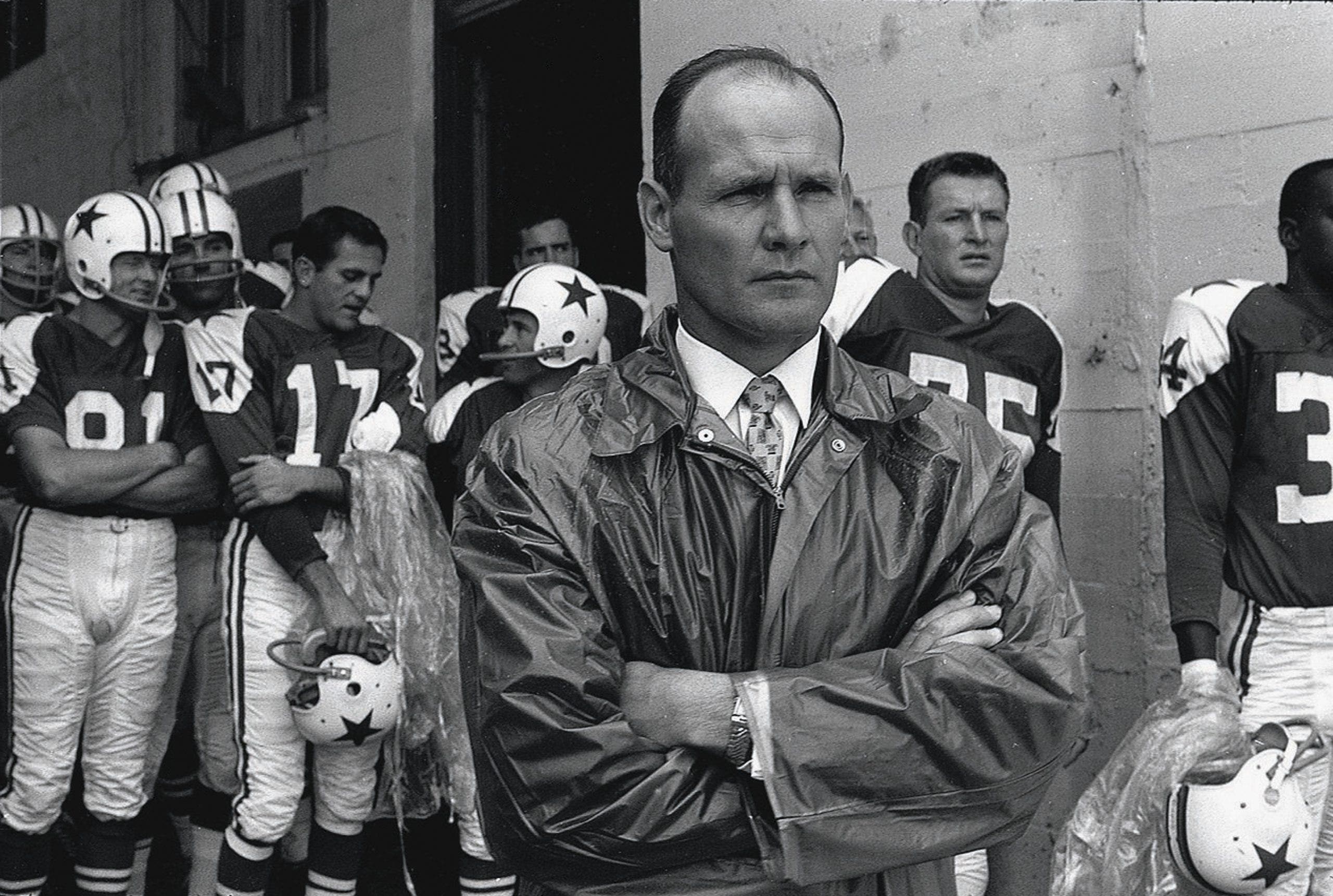
Tom Landry was the inaugural head coach of the Cowboys, a position he would hold for 29 years. (Photo by Marvin E. Newman/Sports Illustrated via Getty Images)
This rivalry didn’t start on grass or turf. It started in a courtroom.
In 1958, every franchise in the then-12-team NFL voted in favor of expansion except one: Washington. Then-owner George Preston Marshall argued strongly against the expansion. At the time, Washington was the southernmost team in the sport and saw the southeastern part of the country as a larger target audience.
What could pose a threat to this? An NFL team in Texas.
After a potential sale of the Washington franchise to Clint Murchison Jr. failed, the Texas oilman kept trying to buy an NFL team, and he opted for fraud. With Marshall his biggest obstacle to getting a franchise in Texas (NFL owners had to unanimously approve expansion), Murchison bought the rights to the Washington song from band director Barnee Breeskin, who had a rocky relationship with Marshall at the time. After receiving the rights, Muchison promised to give Marshall only if he voted for expansion and thus, a team in Dallas.
Marshall obliged, and the Cowboys were born in 1960. Fascinating, right?
 Washington anger builds on Dallas headlines
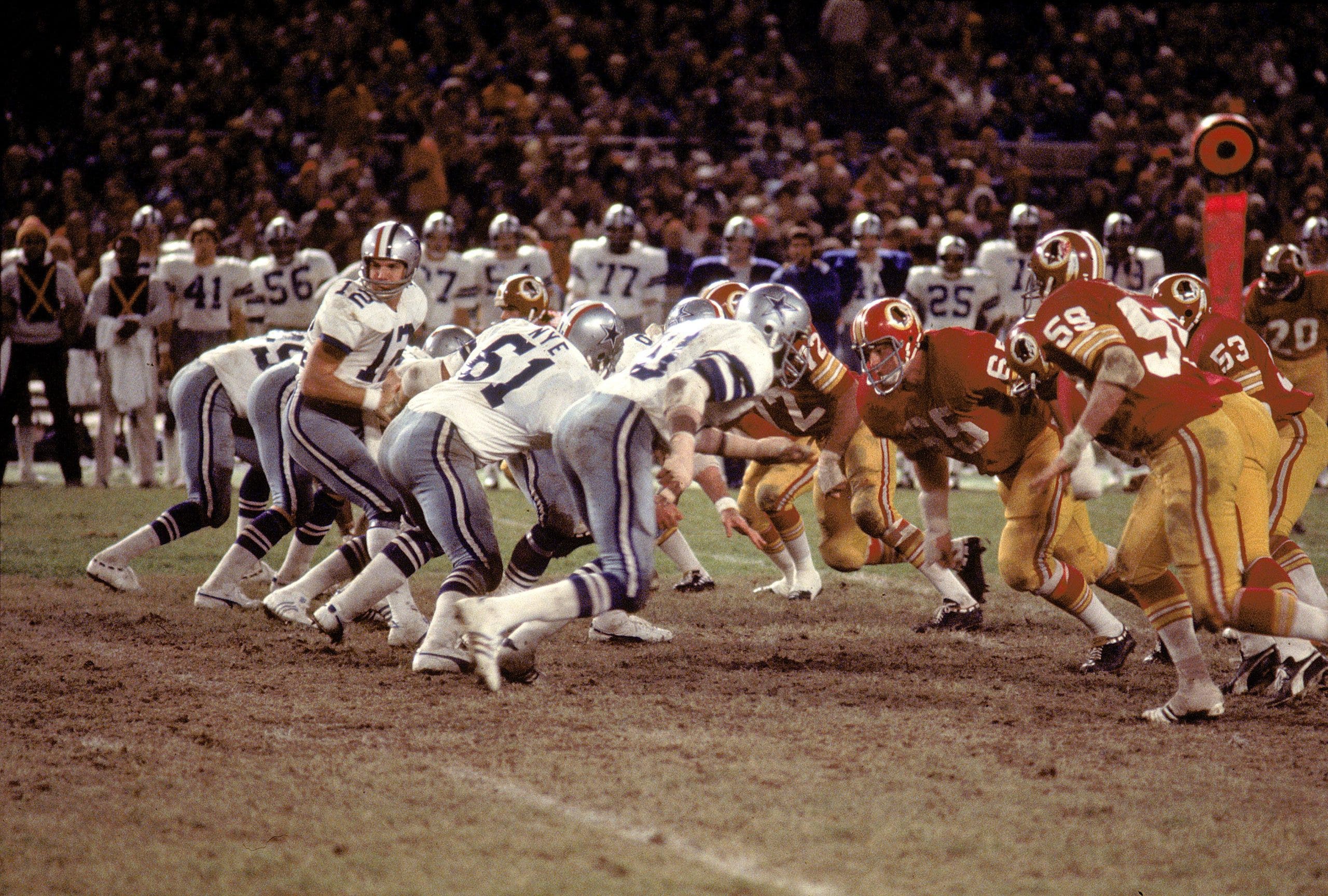
The Cowboys won the Super Bowl in the 1971 and 1977 seasons. (Photo by Nate Fine/Getty Images)
Curious why someone might hate the Cowboys? George Allen, Washington’s head coach from 1971-77, had many reasons.
It took a minute, but once Dallas coach Tom Landry got his then-4-3 defense — which ended up producing Hall of Famers like Bob Lilly, Randy White and Chuck Howley — and a dazzling offensive core in place, the Cowboys were a force to be reckoned with. And they hit Washington in the process.
After a relatively even start to the all-time series in the early to mid-1960s, Dallas swept the season series with Washington from 1968-70 and won eight of 10 games against its rival heading into the 1972 regular season.
To make matters worse for Washington, Dallas beat the Miami Dolphins in Super Bowl VI, winning a title in the Super Bowl era over the team whose owner tried to deny the Cowboys entry into the league.
Now, there it Was a blip on the radar for Dallas that was a precious moment for Washington. In the season following the Cowboys’ Super Bowl VI triumph (1972), Washington beat Dallas in the NFC Championship Game 26-3 to advance to Super Bowl VII. True, Miami went on to beat Washington to complete the only perfect season in NFL history (17-0).
As for the NFC Championship Game, Washington outgained Dallas 316-169, with Cowboys Hall of Fame quarterback Roger Staubach completing just nine passes. Meanwhile, Washington quarterback Billy Kilmer and Hall of Famer Charley Taylor combined for two touchdown passes, with the former completing 14 of 18 passes and posting a 148.6 passer rating. The two teams split the season series against each other from 1973-76.
During Allen’s tenure from 1971-77, Washington went 7-8 against Dallas. And the head coach seethed. At times, Allen was seen pushing his players to be the aggressor against the Cowboys, as evidenced by the brutal hits they would take on each other.
Additionally, another reason this game was “a blip on the radar” is that the Cowboys won the Super Bowl again in the 1977 season, with Staubach and star players Tony Dorsett and Drew Pearson, among others, carving their names into NFL history. Washington did not make the postseason that year.
Joe Gibbs pushes Tom Landry aside
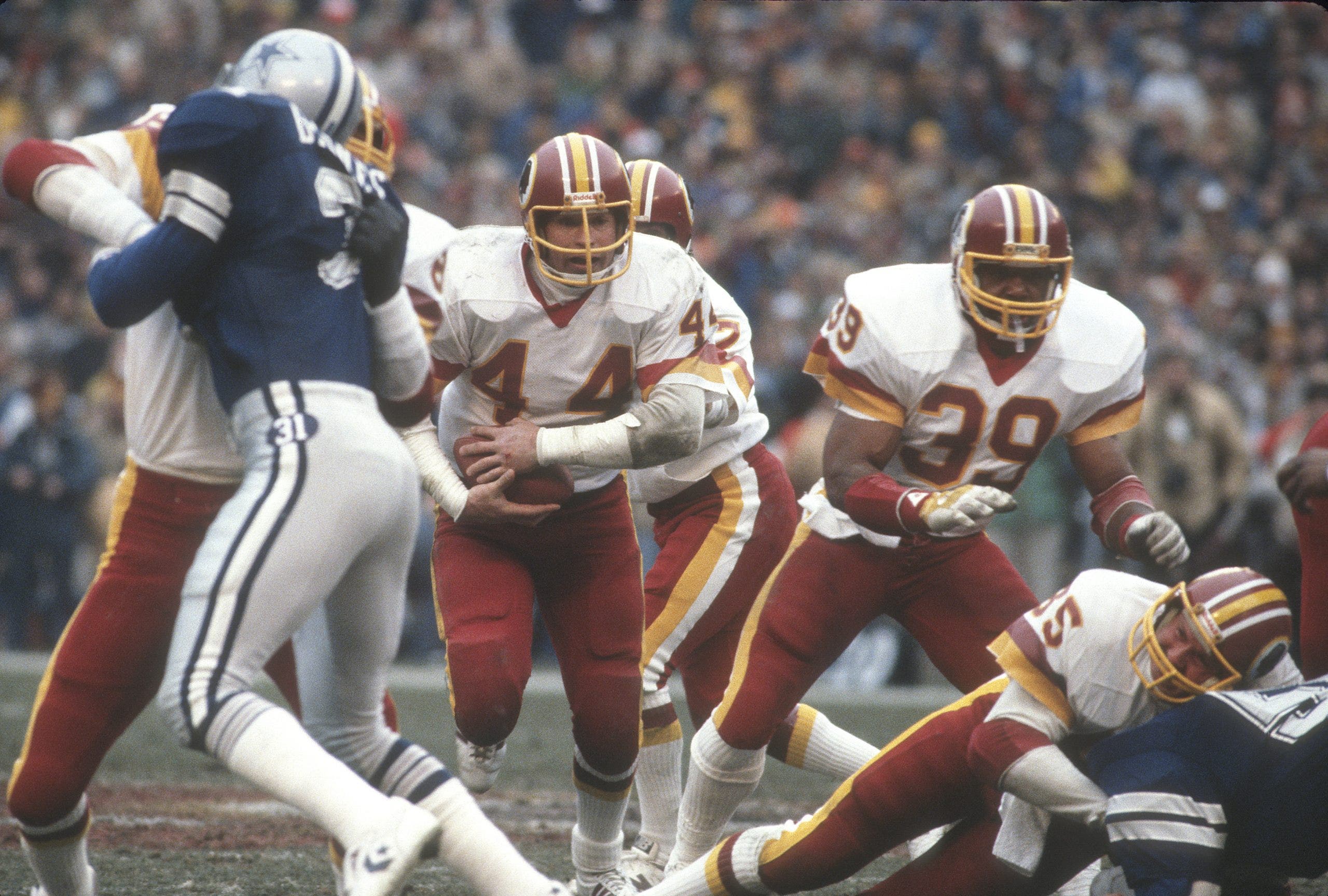
Washington has won each of its two playoff games against Dallas (1973 and 1982 postseasons). (Photo by Focus on Sport/Getty Images)
In 1981, Washington hired San Diego Chargers offensive coordinator Joe Gibbs as its new head coach, and the franchise began its golden era — and ended its bitter rival in the process.
After an 8-8 debut year with Gibbs, Washington won its first Super Bowl in 1982, going 8-1 in a season that was cut short by an NFL lockout. While beating the Dolphins in the Super Bowl — seeking revenge for their loss in the 1973 season — and John Riggins’ MVP performance are surely on the short list of treasured moments in franchise history, Washington’s treatment of Dallas in the NFC Championship Game may have been just as sweet to the fan base.
After losing six straight to Dallas, Washington defeated the Cowboys at RFK Stadium to advance to the Super Bowl, intercepting quarterback Gary Hogeboom twice with Riggins rushing for 140 yards and two touchdowns. The next year, Washington won an NFL-best 14 games in the regular season, but was defeated by the Los Angeles Raiders in the Super Bowl 38-9.
Four years later (1987), however, in another hit-and-miss season, Washington won the Super Bowl. And in a Monday Night Football game that year on the road, Washington beat the Cowboys with most of its roster being replacement players. Dallas, meanwhile, had roughly half of its regular players on the roster. And in 1991, Washington was on top of the football world again, with its third Super Bowl title, the most by a team in the NFC East at the time.
Washington won its three Super Bowls with as many quarterbacks (Joe Theismann in 1982, Doug Williams in 1987 and Mark Rypien in 1991) and had a balanced defense featuring star cornerback Darrell Green, who played for Washington from 1983-2002 and is the leader in interceptions with 54 games. Meanwhile, in Dallas, Landry was fired after the 1988 season by new team owner Jerry Jones after missing the playoffs in four of the previous five seasons. The Cowboys hired Miami Hurricanes coach and national champion Jimmy Johnson as their new head coach and went 1-15 in their first season under him (1989).
However, the two teams went 12-12 against each other with Gibbs in his initial stint as Washington’s head coach from 1981-92 (he returned for a second stint from 2004-07). But more often than not, it was Washington playing deep into January and Dallas watching.
 And Dallas pushes Washington right back
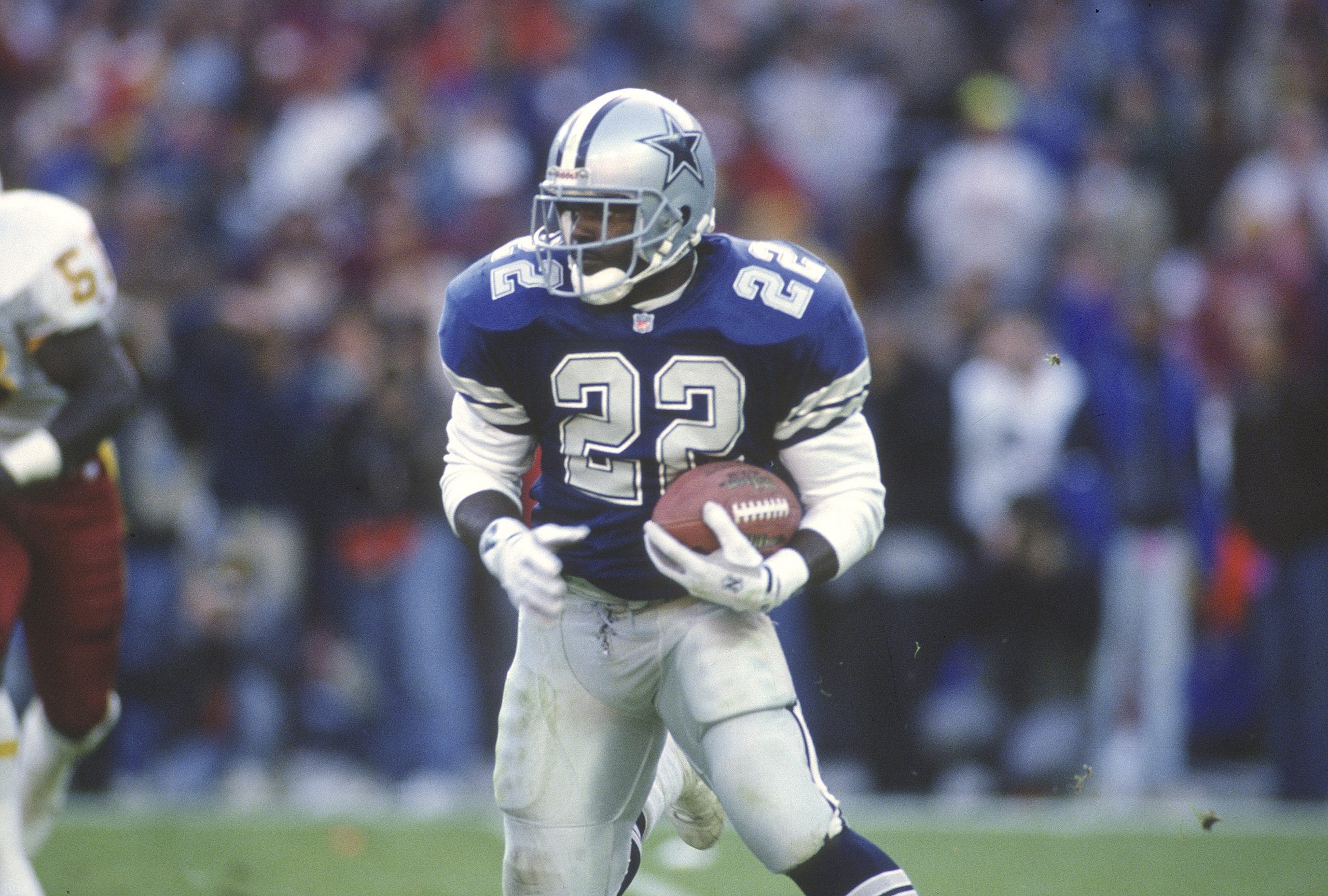
Led by NFL all-time leader Emmitt Smith, Dallas swept the Super Bowl in the 1992, 1993 and 1995 seasons. (Photo by Focus on Sport/Getty Images)
Being a Cowboys fan in the 1980s and the opening seconds of the 1990s was tough. Why is that so? Well, perhaps the Cowboys’ two biggest rivals, Washington (1982, 1987 and 1991) and the New York Giants (1986 and 1990), won half of the Super Bowls in the sport from 1982-91.
But then the Cowboys stepped up.
In Johnson’s fourth season as a head coach (1992), the likes of NFL all-time rushing leader Emmitt Smith, star wideout Michael Irvin, Jay Novacek and quarterback Troy Aikman fueled one of the NFL’s premier offenses, leading Dallas to its first Super Bowl victory in 15 years. Super Bowl XXVII. And the Cowboys came back beating the Bills in the Super Bowl again the next year, 30-13.
Dallas then had to weather the storm of Johnson and the Cowboys parting ways after the 1993 season, with former Oklahoma Sooners coach and national champion Barry Switzer taking the reins. After losing to the San Francisco 49ers in the 1994 NFC Championship Game, Dallas returned to the podium in 1995, winning its third Super Bowl in four years and tying San Francisco for the most Super Bowls in league history at the time with five.
Throughout the Cowboys’ run, Washington always had the momentum, as the two teams were .500 against each other from 1992-97. At the same time, Washington missed the playoffs from 1993-98. The team actually hired former Dallas offensive coordinator Norv Turner as head coach for the 1994 season, but the Turner era produced just one playoff appearance and just two winning seasons from 1994 to 2000.
Washington Has Playoff Edge; Dallas has the rest?
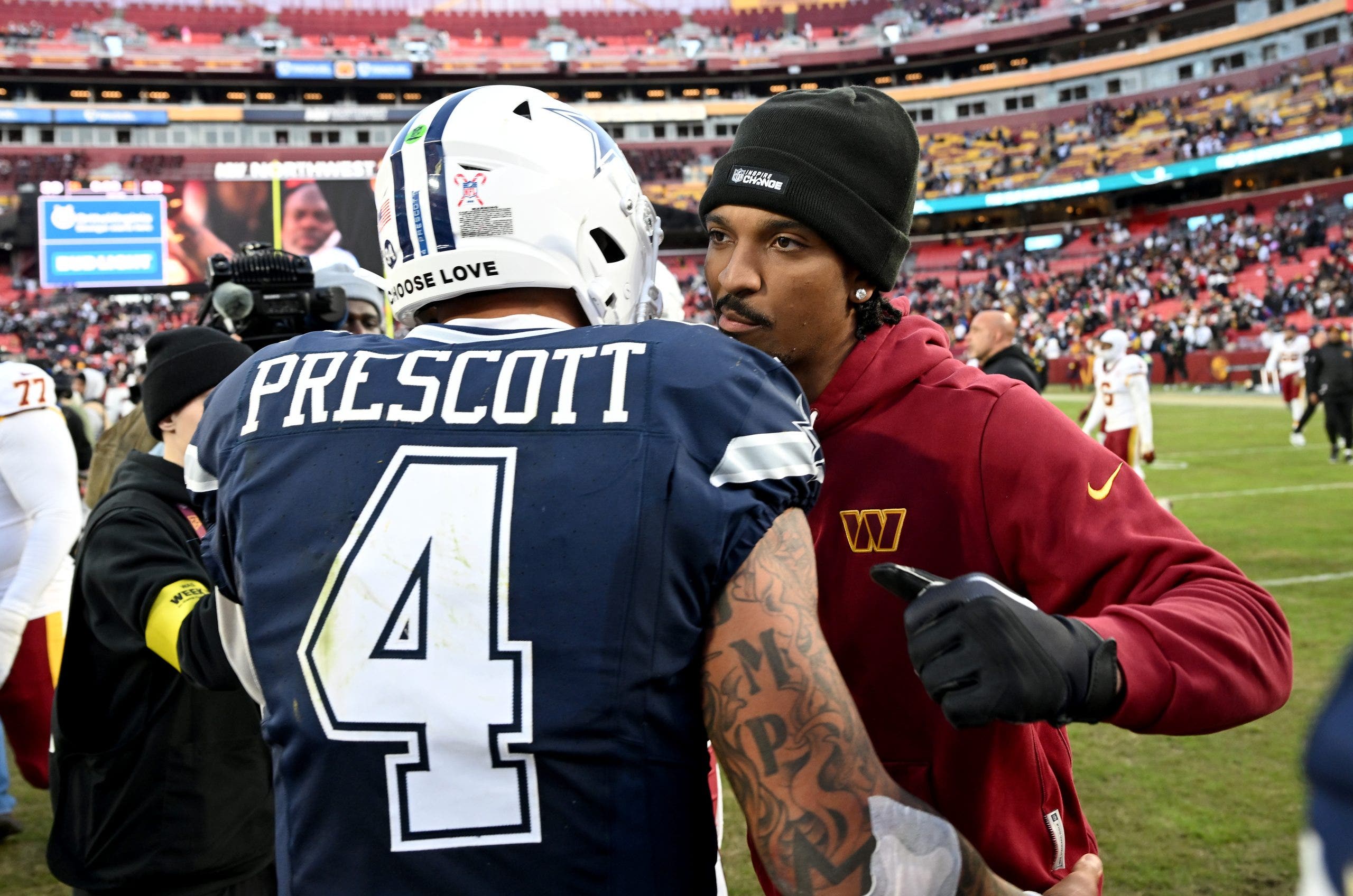
The Cowboys swept the 2025 season series with the Commanders. (Photo by G Fiume/Getty Images)
The story of the NFL cannot be told without this rivalry. The way the Cowboys worked their way to getting Washington to let them into the league, the frantic games, the two teams ending a golden run for the other and the animosity through it all. This rivalry has it all.
Would you rather dominate the all-time streak in the win column against a team you despise or struggle in the regular season against a team you despise but beat in the postseason? This is the dichotomy regarding the question of who has been the “winner” of this rivalry.
As alluded to earlier, Washington has gotten the best of Dallas in January, winning the two times the teams have met in the playoffs, with both years resulting in a Super Bowl appearance for Washington. Plus, Washington beat Dallas in a win-or-go-home Week 17 game in 2012 that decided who won the NFC East and whose season was over, with Alfred Morris rushing for 200 yards and three touchdowns and Washington intercepting Cowboys QB Tony Romo three times.
At the same time, the Cowboys are 81-49-2 in the all-time series. Dallas won 10 straight games against Washington from 1997-2002 and 14 of 15 through 2005, while also winning 11 of 14 games against Washington from 2013-19 and has won eight of its last 10 games. And just for good measure, Dallas is 8-2 against Washington in Thanksgiving games.
This is damned!
These teams are each in their own title drought. In 2024, Washington won a playoff game for the first time in 19 years and reached the NFC Championship Game for the first time in 33 years, but it has been 25 years since the Lombardi Trophy was hoisted in Washington, D.C. Meanwhile, Dallas has not reached the NFC Championship Game since winning its last championship (1995).
Commanders and Cowboys are more alike than different – but they couldn’t hate each other more.