



























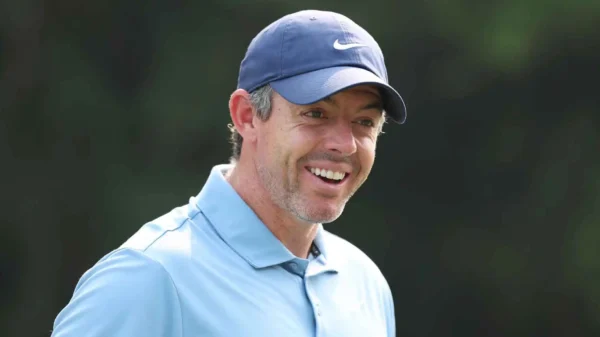















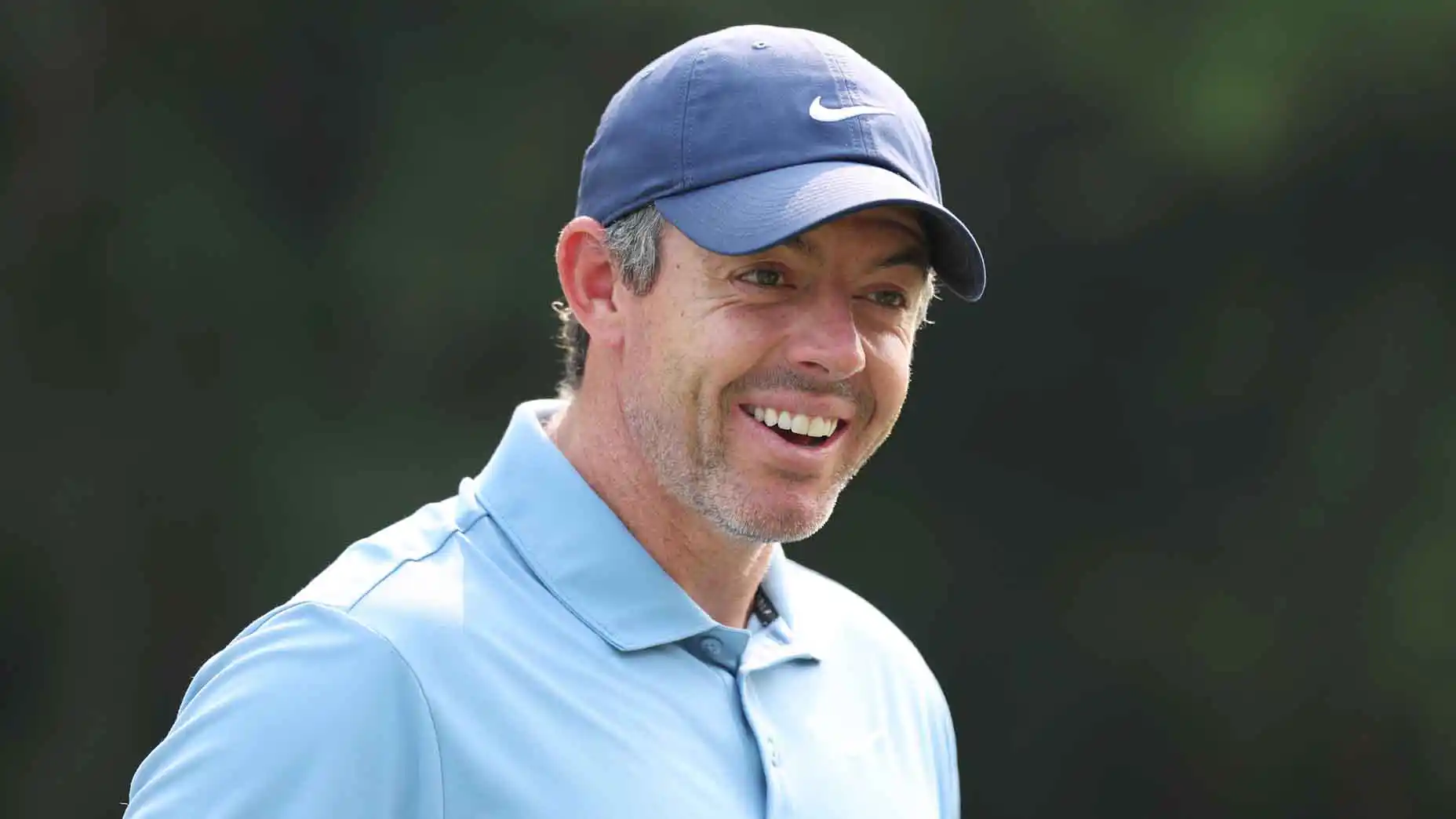
Rory McIlroy sees LIV Golf sinking. Even if the rebel league somehow survives Chapter 11 bankruptcy and launches LIV 2.0, the six-time major winner is convinced that pro golf’s great civil war is finally over.
“It’s difficult,” McIlroy said to the Bloomberg New Economy Forum in New Delhi, about LIV’s chances of getting version 2.0. “It seems like every day that goes by, there’s another player who was in LIV saying they’re not reuniting for LIV 2.0.
“It will be very difficult for them to get out of this Chapter 11 bankruptcy and move forward. But if they do, it will certainly not be a threat to the traditional order of the game as perhaps it once was.”
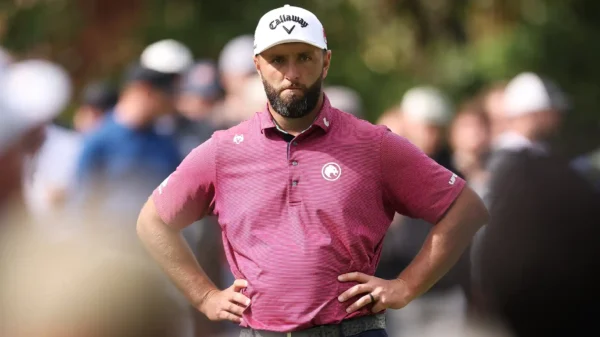
In the past week, LIV Golf looked Jon Rahm is out of the league. David Puig and Adrian Meronk followed. Sergio Garcia had his contract with LIV terminatedand lawyers for other players are trying to do the same. Also like LIV Golf and BC Partners Global filed a restructuring support agreement last week that saw BC Partners make an “initial investment” as part of a goal of $300 million in cumulative funding to help the league emerged from Chapter 11 bankruptcyplayers began fleeing a league that is no longer backed by billions of dollars from Saudi Arabia’s Public Investment Fund (PIF), which started the league as a soft-power exercise.
On Tuesday, McIlroy, who was the initial face of the PGA Tour’s fight against LIV when it emerged in 2022, discussed where LIV and PIF faltered and recalled his decision and Tiger Woods to take a stand against the separatist league, believing that it was bad for their legacies and also for the general health of the sport – and it was finally successful. That the PIF money was better spent elsewhere in the game.
“LIV had probably half a good idea that was executed pretty badly,” McIlroy said. “They had a lot of capital, but I think a lot of that capital was wasted in some ways, and I think they could have used that money much more strategically, and they could have partnered with some of the governing bodies of the game, and they certainly could have done better things with it instead of just enriching the tour pros who were already making a lot of money.
“Tiger and I, at the beginning of 2022, when this thing started, we were certainly the two who were probably the most vocal against it,” McIlroy said. “But we were probably the two who had the most to lose even in terms of our stature on the PGA Tour, and so – I think we both felt that this was not good for the game and that it was going to fracture the game. But also everyone around the game has interests, and we were about to launch TGL, and we thought that LIV could have taken something from TGL, which was going to be a LIV and a Tour player – which was going to be a LIV and a player of the Tour – TGL So, you know, everyone has different interests in the game, and try to protect your interests, but also try to protect the interests of the game as a whole.
While Rahm and others formalized their exit from what remains of LIV, the DP World Tour dealt another blow to the rebel league’s chances of reinvention on Monday when CEO Guy Kinnings told BBC Sport that players who choose to take part in LIV 2.0 will no longer be allowed to tee it up on the DP World Tour. With the October 25 deadline for players to commit to LIV 2.0 looming, the DP World Tour’s move to block LIV 2.0 players from teeing up on the European circuit will likely force others out and push the sport toward the unified world, the once fractured breakaway league.
“You see Guy Kinnings coming out this week and saying that if LIV moves forward in this version 2.0, players who are thinking about going in that direction, they have to make a choice,” McIlroy said. “It’s either you play LIV 2.0, and you can’t play the DP World Tour, or you play the DP World Tour, and you can’t play LIV 2.0. But I think this period of trying to double and do both is over.”
As for a potential path back to the PGA Tour for LIV’s shortcomings, CEO Brian Rolapp has yet to offer a clear answer as to when, how or if they will be accommodated. Rolapp said the “Returning Member Program,” which welcomed Brooks Koepka in January, is no longer available and that the PGA Tour will not communicate with any player seeking to return until it is certain the player’s contractual obligations with LIV have ended. Rolapp last spoke in September, as LIV entered bankruptcy, but has not spoken since the case began moving through the courts and the Rahm-led exodus began.
At the Baycurrent Classic last week, Xander Schauffele said it will be a tough question for Rolapp to answer because every player affected by the emergence of LIV and the civil conflict of golf will have an opinion on what should happen to those who left.
“I have no idea,” Schauffele said when asked if Rahm and the others leaving LIV would return to the PGA Tour. “There are 225 guys with Tour cards, and if you sit down and interview them all, you’ll get probably three or four boxes of how the guys feel. Some guys don’t care, some guys are really marked, some want them to have a huge fine, some would let them back tomorrow. Where I stand in those boxes, I’m really in mind. own business most of the time.”
As for McIlroy’s opinion, the two-time defending Masters champion is all set to move on.
“Yeah, I’m going to do it,” McIlroy said about welcoming LIV players to the PGA Tour. “A rising tide lifts all boats, and I think having some of these actors coming back is beneficial for the tour business.”
With LIV Golf’s days as a PGA Tour competitor seemingly numbered, McIlroy is ready to look toward a future where pro golf is unified. This date is TBD. Meanwhile, he is free to say something that is more than four years in the making – if he wants to.
I tell you so.