















































September 18: FIFA vice-presidents Alexander Ceferin and Victor Montagliani have sent a letter to FIFA president Gianni Infantino, saying FIFA could comfortably give each of its national association members an extra $10 million each over the 2027-2030 cycle without substantially affecting FIFA’s $6 billion reserves or having to sell its rights to private equity investors.
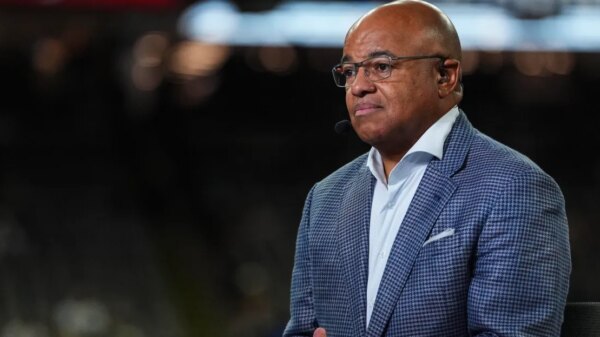
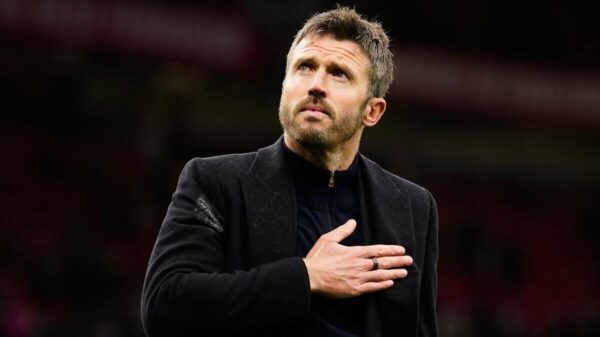
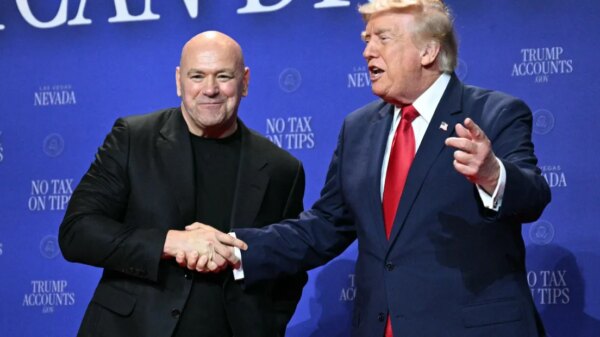
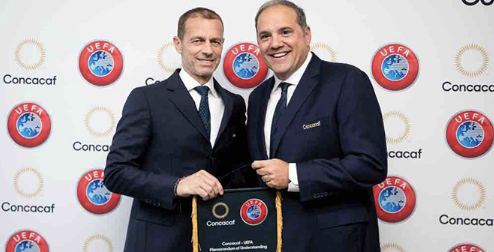
Ceferin (pictured left) and Montagliani (pictured right) are the presidents of UEFA and Concacaf, but the letter was sent as vice-presidents of FIFA. It has also been sent to other presidents of the confederation asking for their support.
The AFC, which has previously sat down with FIFA and UEFA to demand more transparency about Infantino’s failed attempt to sell World Cup rights, is very likely to continue its support.
The big question is whether Africa, South America and Oceania, generally the confederations with the most economically needy members, will equally support the suggestion.
In this sense, it is a major challenge to Infantino’s fan base which is based on the illusion that the FIFA grant money becomes a gift from the FIFA President and not a statutory and constitutional right as part of their FIFA membership.
The letter also raises the underlying question of why Infantino sought to sell FIFA’s commercial rights in the first instance, sweetened by the offer of a one-off $20m reward to subscribing federations in return for agreeing to the sale of the FFE at very short notice.
The letter follows earlier comments by Montagliani, who has consistently argued that FIFA does not need to raise additional money and that its $6 billion reserves can easily accommodate significantly larger amounts of money being released to member associations. After all, FIFA is their association and they own it: the money already belongs to them, only managed by the FIFA executive.
A family business
“We are writing to propose that our confederations jointly examine an issue that we believe deserves the attention of the entire football family: how much of FIFA’s accumulated financial reserves could be responsibly delivered directly to its Member Associations (“MAs”),” the letter reads.
“FIFA Forward Enterprise (“FFE”) was presented at 211 MA as a proposal under which a “part” of FIFA competitions would be sold to outside investors in order to provide much greater resources for the development of football….
“Our analysis now raises an important question as to whether the proposed transaction was necessary to provide more resources to the MAs. FIFA already has the ability to deliver substantially more to its MAs from its own balance sheet, without any sale of interests in its competitions and without asking the MAs for anything in return.”
It is a major rebuttal to Infantino’s insistence that FIFA needs more outside money to give to its member associations. Ceferin and Montagliani argue not.
They point out that the $6 billion reserves are the largest in FIFA history and easily enough to carry FIFA into the post-World Cup deficit years.
“Our analysis indicates that FIFA should make at least $10 million available to each of its 211 MAs during the 2027-30 cycle to invest in football infrastructure and development, totaling approximately $2.1 billion,” the letter says.
They say the funding should be a one-time release of reserves through FIFA’s Forward Programme. FIFA’s reserves would at no time fall below $1.5 billion, “around 50% more than the minimum reserve level FIFA budgeted for 2023-26.”
An additional $10 million for MA could be just the beginning
Ceferin and Montagliani say a larger distribution may be possible. Crucially, they say this decision rests with the FIFA Council, like any other distribution for the 2031-34 cycle. Basically, the message to Infantino is that it is not a decision of the FIFA president or the FIFA executive.
The letter says its analysis is “deliberately conservative” and “necessarily preliminary.”
“FIFA must, of course, remain financially sound… But FIFA currently has billions of dollars in accumulated reserves. These resources belong to football and exist to serve the game and its 211 MAs. Prudence should not prevent a careful examination of whether a portion could be responsibly released to the extent that these reserves exceed FIFA’s foreseeable needs,” the letter continued.
In a pointed reference to Infantino and his executive team’s rampant use of restricting or slowing the distribution of grant money to force compliance with their agenda—in essence bribing member association support with their own money—the letter is unequivocal.
“Releasing some of these reserves would demonstrate that MAs should not have to choose between development and good governance; between investment and integrity; or between financial support and the ability to consider proposals on their merits. Development is an institutional responsibility of FIFA, not a matter of individual discretion.”
The proposed timetable is short and the two confederation heads say the analysis should be completed jointly by all six confederations.
And the recommended final distribution figure will be presented for consideration at the next FIFA Council meeting: “FIFA’s Good Governance Process”.
The next FIFA Council meeting is scheduled for October 16. It will be the first time Infantino faces his biggest decision-making since the start of the crisis he created.
Contact the writer of this story at (email protected)