





























































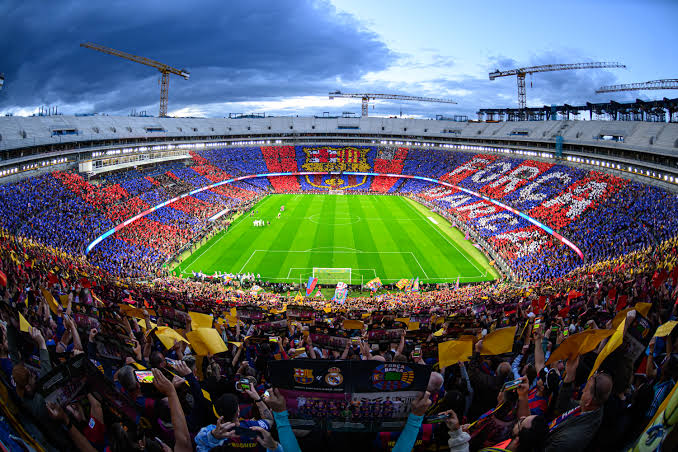
September 16: Barcelona’s rebuilt Camp Nou has won Wembley the right to host the 2029 Champions League final, giving Barca an early event for a stadium at the heart of its €1.5 billion Espai Barca redevelopment.
UEFA’s Executive Committee made the decision in Thessaloniki on Tuesday, awarding the 2028 final to Bayern Munich’s Allianz Arena before returning to Barcelona a year later. Wembley and Camp Nou were the only declared bidders for 2029, and Spain once again beat England.
It will be the third European Cup final at the Camp Nou, after 1989 and Manchester United’s famous late comeback against Bayern in 1999. That said, Barca’s rebuild has increased the mega-ground’s capacity to around 105,000 and therefore massively increased the amount the club can do in terms of hospitality, tickets, catering, sponsorship and events.
Espai Barca’s financing model is based on this additional income, which the club has estimated at around 247 million euros per year once the project is fully operational.
Landing the biggest game in European club football gives the new stadium exactly the kind of event the rebuild was designed for. It also comes just one year before Spain hosts the 2030 World Cup with Portugal and Morocco.
Wales, meanwhile, left the same UEFA meeting with an important award of their own.
Cardiff’s 74,500-seater Principality Stadium, to be named the National Stadium of Wales for UEFA, will host the 2029 Women’s Champions League final, beating bids from Dublin, Basel and Lyon. Lyon will host the 2028 edition.
Cardiff previously hosted the men’s Champions League final in 2017, while Cardiff City Stadium hosted the women’s final in the same year.
This award comes at a particularly useful time for the FAW, which has spent the last few years striving to grow the women’s game. Registered women’s attendances have risen from around 13,000 in 2021/22 to more than 21,000 at the end of last season, while Wales reached their first major women’s tournament at Euro 2025.
FAW chief executive Noel Mooney said: “This is about much more than one night in 2029. Our ambition is for the UEFA Women’s Champions League Final to become a catalyst for the continued transformation of women’s and girls’ football in Wales.”
The FAW plans a legacy program around participation, facilities, workforce development and audiences before and after the final.
Contact the writer of this story, Harry Ewing, at (email protected)