
















































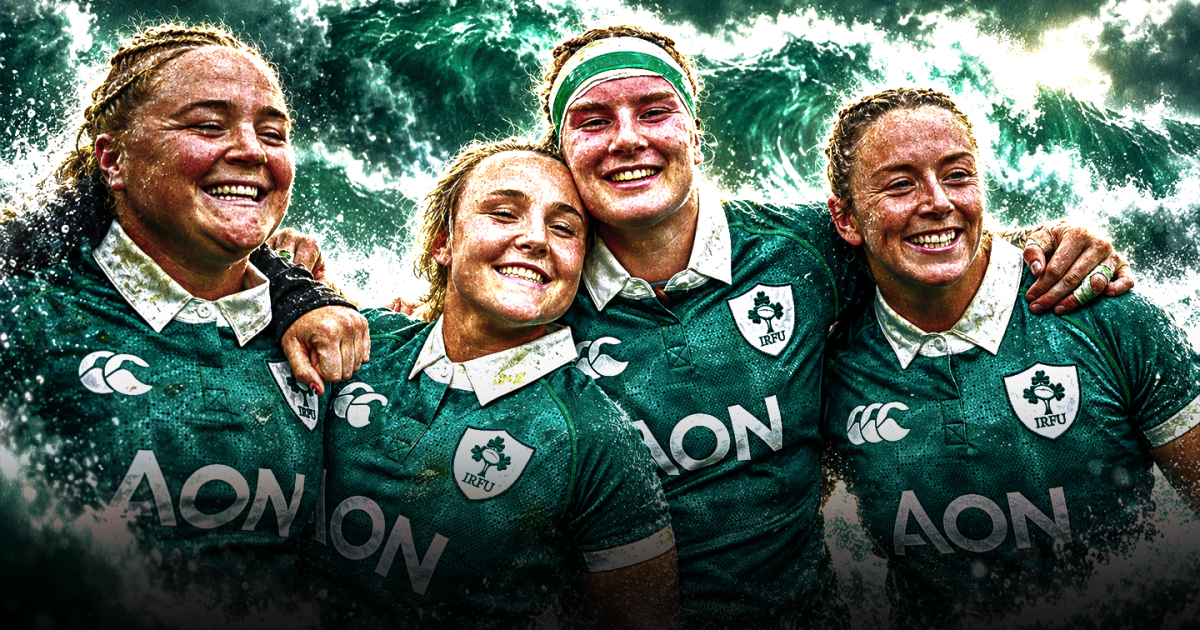
Mostly as expected, Ireland at times they were dominant against Italy, Wales and Scotland during the 2026 Guinness Women’s Six Nations.
They threw enough punches when they were losing France and England suggest that they are on a path that could see them properly competitive with those nations for years to come.
The game against Scotland was a fantastic way for Ireland to end their women’s game Six Nations campaign, playing arguably the best attacking rugby of the Scott Bemand era in front of record crowds at the Aviva Stadium.
Still, there were moments that suggested there was still work to be done. Against England, Ireland looked athletically outmatched and unable to compete with the superior skill level of the Red Roses, although the second half was markedly improved as they adjusted to the pace of the game.
When they took on France in front of a raucous atmosphere at the Stade Marcel Michelin, Ireland reached a level of physicality rarely seen as they looked to take on the side that narrowly knocked them out of last year’s Women’s Rugby World Cup, but they lacked a Plan B when a series of TMO interventions ensured the power approach didn’t work.
They were also exposed in terms of depth with France bringing a number of power options from their bench. This could be an area that Ireland should address in the coming months.
The biggest tests
Ireland starts with its own WXV Global Series run with home games against USA and Japan September 20 and 27, respectively. After the second Test against Japan in Cork – a match that is not part of the WXV Global Series – Ireland then travel to the South Africa for a pair of WXV Global Series tests in Cape Town.
Welcoming the USA, a familiar face returns in Jack Hanratty, a Dublin native who now coaches the Eagles. Ireland last played Japan in the women’s competition Rugby World Cup 12 months ago, they eventually ran out comfortable 42-14 winners after a stubborn first hour display from Brave Blossoms. They have only played South Africa once before, beating them at the 2006 Women’s Rugby World Cup, and have never played a Test in the southern hemisphere nation.
As for the on-field questions facing this team, it remains to be seen how many will be answered. Ireland have plenty of forward power with Aoife Wafer, Erin King and many others, but what held them back against the better teams in the Women’s Six Nations was their ability to have a Plan B when the grunts didn’t overwhelm them.
Admittedly, the latest evidence was a superb attacking foray against Scotland, but it remains to be seen whether games against lower-ranked teams are a true reflection of where Ireland are at with their more nuanced attacking play.
Star players
Sometimes the easiest answers are the best. When it comes to stars, it’s hard to look past Aoife Wafer. Recently appointed Harlequins captain, she continues to collect accolades after an impressive debut JAECOO Premiership Women’s Rugby campaign alongside another strong Women’s Six Nations.
If there is one area where Wafer’s game could improve, it would probably be her ability to bring others into the game. We all know how she dominates contact with the best of them, but if her handling skills add an extra layer to her offense, especially when she comes off contact, then she becomes increasingly difficult to defend. To be fair, we saw flashes of this skill set during the Women’s Six Nations.
Away from the Wafer, you don’t have to go far to find Ireland’s next most important player, their captain and second back Erin King. A versatile player given her ability to carry and find the line from close range, all while racking up big tackles and turnovers, she is the glue in the Irish back row, shifting balance as required.
Sometimes Brittany Hogan gets the run at six if some traditional carry and defensive work is needed, sometimes lock Fiona Tuite is used as a hybrid if the line is more of a priority.
Another name to watch is Beth Buttimer. The UL Bohs and Munster bitch has been in many Irish national teams without earning a living yet. She went to both Women’s Rugby World Cup and the recent Women’s Six Nations, but not surprisingly found PWR the duo of Cliodhna Moloney-MacDonald and Neve Jones is hard to pull off.
She could continue to struggle for playing time for the Irish, given the quality and experience of the pair in front of her. Nonetheless, after a stellar interpro campaign for Munster, it could be tempting for Bemand to see what he has at top level with a player who has been in the squad for some time.
Prediction
Given the world rugby rankings (Ireland are currently 5th, USA 8th, South Africa 10th and Japan 11th), Bemand and his coaching staff will be disappointed with anything other than four WXV Global Series wins in as many outings in the coming months.
The U.S. is in the early stages of a long-term project under its new coach Hanratty, which aims to peak at the next Women’s Rugby World Cup, if not the one after that on home soil in 2033. They just aren’t as advanced in their development as Ireland, who should be comfortable enough to play on home soil.
It’s the same with Japan, it’s hard to see any failure from the higher ranked side. Ireland have the consolation of knowing they faced a few blows before adding to the scoreboard at last year’s Women’s Rugby World Cup. They also have fond recent memories of the Dexcom Stadium, home of Connacht and venue of their clash with Japan, after they comfortably won Italy there during the recent Women’s Six Nations.
On paper, there are two things that could complicate the picture in terms of Ireland securing a 100 percent return. First, to what extent does Bemand use matches against lower-ranked opposition outside of the Women’s Six Nations as an opportunity for experimentation? Ireland’s line-up is generally composed and experienced. They’re also in a relatively sweet spot where most of those experienced players aren’t yet at the age where we start to question their longevity.
There could be a strange new face, though. Ellena Perry has retired, which means there’s an opening. Beyond that, it’s hard to see which positions Bemand might feel the need to rejuvenate.
On the hook, Moloney-MacDonald is 33, but Jones is arguably entering her prime at 27, while the aforementioned 21-year-old Buttimer is raring to go.
Another factor that may be the biggest challenge for Ireland is ignorance. Traveling to Cape Town for a couple of Tests is undoubtedly exciting news, but it’s an unknown. This Irish group, it should be said, has a good history of traveling, winning New Zealand in Vancouver 2024.
Provided any potential line-up experimentation and travel don’t add any complications, it’s hard to see anything but a 100% record for Ireland in this window.