






















































“I was talking about evolution, not revolution, and making sure we keep certain things consistent.”
Those were the words of Wallabies coach Les Kiss in July after he named his first Wallabies team. However, it is now clear that the change from former coach Joe Schmidt to Kiss was anything but minimal.
In fact, it’s clear from the selections, to the strategy, to the coaching, to the mantra, they have, and probably always have had, very different ways of looking at the game of rugby.
The plan to move on from Schmidt’s extended stay in the role was for Rugby Australia to try to make a smooth transition to Kiss as the next coach. Allowing Schmidt to hold the reins until mid-July 2026 gave Kiss time to complete his three-year stint in Queensland Red in Super Rugby Pacific, so there would be no crossover between club and international commitments.
The transfer window was withdrawn as the RA appeared to be under the impression that the change from Kiss to Schmidt, who previously worked together as coach and assistant coach for the Irish national team, would be minimal.
This is clearly not the case; the differences between the two begin off the field before the players selected for the field and the game plan on the field even enter the conversation.
Jonny Fisher, as the Kiss’ head assistant coach, and defensive line coach Scott McLeod do things very differently than Schmidt’s assistants. John Ulugia, the scrum coach, Eoin Toolan, the analyst/skills coach, and Tom Donnelly, the lineout coach, have been transferred from the Schmidt era to the Kiss team, and that’s about it until the procession is planned.
Kiss’ “moving forward” mantra led him to choose bigger athletes and value value over technical skill and work rate like Schmidt did.
In coaching structures, it took McLeod eight Tests and three games in which they conceded 40-plus points to get his message across to the players. With Schmidt’s defense coach, Laurie Fisher, looking to implement linked line speed, the Wallabies have now switched to a soft blitz defence.
Schmidt’s attacking structure saw the Wallabies cut through the middle and use more interplay forward from halfback, while Kiss’ system was a swing and dig model with a focus on big athletes. Although both coaches have a knack for striking set plays, the fact is that the two systems have so many variations that they should be considered completely different.
This transition, regardless of how Kiss or RA wanted to sell it, was a revolution.
Perhaps the sharpest way to explain this difference is to show both sides trying to score.
During Schmidt’s tenure in 2026, the Wallabies scored 18 tries in three matches; most of those (nine tries) came against Italy. Of those tries, 9/18 were scored in six or more phases, 5/18 were maul or rush tries with 0 phases, and 7/18 were scored in 10 or more phases.
During Kiss’ tenure, the Wallabies scored 41 tries in 10 matches. Of those tries, 13/41 were scored in six phases or more, only 5/41 were scored in 10 or more phases and 5/41 of the tries were scored through mauls or interceptions in zero phases.
A stark comparison is that in 41 tries, Kiss’s Wallabies scored just two maul tries, while Schmidt’s Wallabies scored four of their 18 tries.
Also, the split between Kiss and Schmidt in scoring attempts in six or more phases, or six or fewer phases.
Schmidt’s Wallabies scored 69% of their tries in six or more stages.
Kiss’s Wallabies scored 72% of their tries in six phases or less.
Schmidt’s Wallabies scored 53% of their tries in 10 or more phases.
Kiss’s Wallabies scored 13% of their tries in 10 or more phases.
In conclusion, Schmidt appreciated the extended phase count and ball retention; Kiss values bring strength and quick attempts.
This is also reflected in their choices.
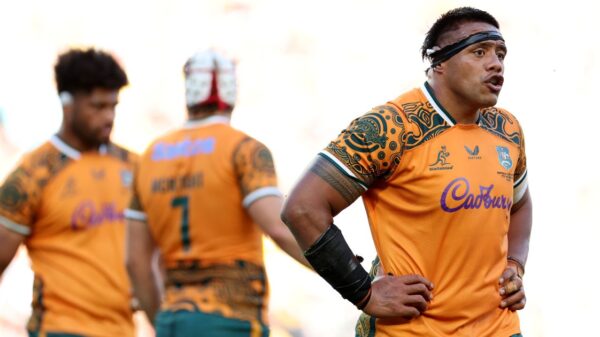
Where big ball carriers like Lukhan Salakaia-Loto, Isaac Kaile and Hunter Paisami could barely look under Schmidt, Kiss gave them new life.
Not signing Paisami after 2026 Super Rugby Pacific season is also a clear indication that the two coaches had very different opinions on the game plan and selection philosophy. Kiss regularly showered Paisami with praise and played him at No. 12 almost every chance he got.
Then comes Joseph-Aukuso Suaalii’s positional rollercoaster. Schmidt played Suaalii exclusively at No. 13 for nearly two years; Kiss moved Suaali to his lap in his first three months on the job.
If the selection differences and offensive structure numbers don’t paint a clear enough picture of just how much of a revolution the Schmidt-to-Kiss tenures were, here’s the commentary from 59-cap center Len Ikitau.
“Obviously, Kissy’s style of play is quite different to Joe’s… for me, I’m slowly adapting to the way Les wants to play,” Ikitau said after the win against Wales in Cardiff.
Ikitau talks about the need to find a balance between the setbacks, which he was allowed to do in Schmidt’s system, and the need to maintain his width and play his ball-playing role in Kiss’s system.
It speaks volumes when a guy with Ikitau’s experience and ability says the two systems are “quite different” and says he, 10 games into Kiss’ tenure, is still “slowly” adjusting to the new attacking structure.
Another example of how much of a turnaround it has been for players and team structures between the two head coaches is their defense.
As mentioned, former defensive coach Fisher was placed on the connected line of speed and breakdown; right now, McLeod is focused on big shots and high speed.
When asked why there was such a rapid improvement in between All black people games and England A Test in which the Wallabies conceded 40-plus points, and Scotland and Wales games, McLeod said change takes time.
“Yeah, with the change … Me as a coach, my language is different. My perspective is different,” McLeod said the week before Nations Championship finals week.
“The players probably need a little time to understand it and feel it and what it means under a little pressure. (I’m) learning about players and different combinations and how they work.”
So the takeaway from this is that things are “different”; the language in training is “different”.
Stormy, as the players know McLeod, says the boys improved quickly on defense because they over-communicated, and that streamlining the messages from the coaches at the end of the season was key.
When you have one of your most experienced players saying the two systems are quite different, and a new coach saying the players are still adjusting to his different language and expectations, it tells you it was much more than an evolution going on behind closed doors at the Wallabies.
It is too early to say whether the switch from Schmidt to Kiss will yield better results. It is too early to say whether the change of assistants will prove fruitful, but it is clear that a lot is different than it was in mid-July.
Schmidt’s motto has always been that “progress is not linear” and that has remained true for the Wallabies under Kiss. The highlight of his first five-game unbeaten run, followed by four consecutive defeats, three of them by strikes, and then a narrow win against Wales in the Principality.
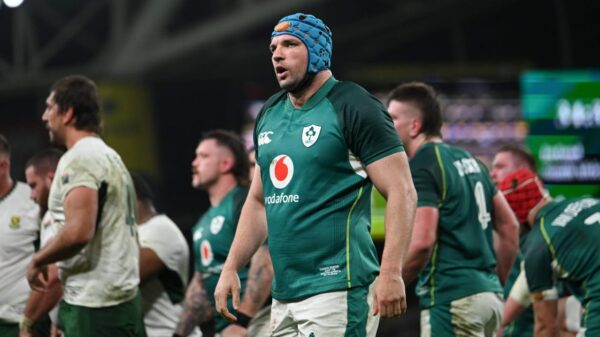
With Kiss’s men to face Ireland as their last opposition in 2026, which happened to be Schmidt’s first opponent in 2026, it will give a clear indication of where the Wallabies are 13 Tests later.
Ireland are undoubtedly stronger and in better shape now than they were in July when these two sides last met, but the Wallabies should also be better by all accounts.
However, it is a very real possibility that they are not.
If the Wallabies overhaul from Kiss to Schmidt is as big as it seems, the very real prospect is that fans won’t see the rewards of the new structures until July 2027.
Kiss appeared to be setting the challenges he and his team had in front of them just 18 months out from the home Rugby World Cup.
“I’m an optimist, but I’m also a realist, and I believe these players want more and are willing to work hard for it,” Kiss said in Sydney on July 23 at his first team announcement.
Kiss knows it wasn’t smooth sailing, as those All Blacks and England matches couldn’t have been part of the equation at all.
However, with players returning from injury and international selection, and promising improvements in defense in recent games, things look promising in the future.
However, if Kiss and his team get a result against Ireland on Friday, they would buy more time to prove to the Australian public that they are the right coaching team for the job.
Optics are vital in Australian sport and a win against Ireland changes the lens, giving critics less ammunition and fans more hope to spread.
However, what cannot be suggested is that the change from Kiss to Schmidt was not a turbulent event in terms of performance and strategy.
Any suggestion that this year’s coaching change was an evolution must be completely put aside, as the Kiss revolution is in full swing.