

































The next time you watch Jack Nicklaus make that birdie putt on the 17th hole at Augusta (“Yes, sir!”), look at the club that rises above his head.
It’s a MacGregor Response ZT 615, an oversized blade that Nicklaus initially thought was a joke. By the end of that Sunday in 1986, it was the putter that had helped him win his sixth green jacket.
That putter is alone eighth on this list. A few places ahead, there is a club with wings who won on the PGA Tour, a shaft that bends in a U shape and a training aid that a European tour player decided to use for life (if it works, it works).
Every putter here has done it in competition. I ranked it by how well it explained what I would do if I pulled one out of my bag on the first green during my Sunday morning quarter.
10. Bettinardi Kuchar Model 1 Arm Lock (Matt Kuchar)
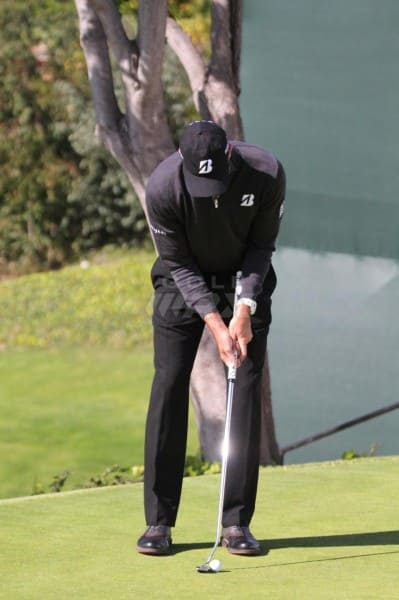
The head is the least interesting part of this putter so we can move right on from there.
Kuchar helped popularize the modernity of armor on the Tour. For a while, his colleagues simply called it “the Kuchar method.”
But his Bettinardi Model 1 took the arm to another level. It measured 44¾ inches and had a 17 inch grip and seven loft degrees. Pressing the handle forward took loft from the head, so the club needed more built-in loft to begin with. At address, with that forward press, the grip perfectly cradled the inside of his left forearm.
At the time, it was very unusual how the length, grip and loft worked together to suit his stroke. Now we see this technique more often.
9. Bobby Grace The Fat Lady Swings (Nick Price)
Sometimes it’s about a name more than anything else.
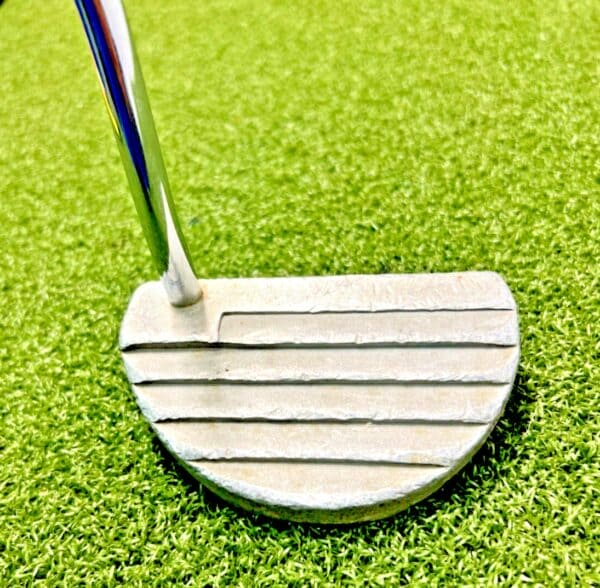
Bobby Grace brought his sense of humor to the club. The head was a thick, rounded mallet with a high moment of inertia, which helped it resist twisting in off-center shots.
In an era when a blade was still a familiar sight on the PGA Tour, it was a a lot of putter to look down. Compared to some of the mallets you see today, the head has aged surprisingly well even though it was considered very odd at the time. The name, however, does not yet have a peer.
Nick Price took a prototype to the 1994 PGA Championship and won. He also won the Canadian Open that year with a Fat Lady Swings so the putter got more than a week in the sun.
8. MacGregor Response ZT 615 (Jack Nicklaus)
During John Barba’s history of mysteries on MacGregor’s response to ZT 615, he wrote about as the putter was considered exceptionally funky at the time.
So consider the time period plus the player that made it arguably the most famous putter of the 20th Century alongside Bobby Jones’ Calamity Jane.
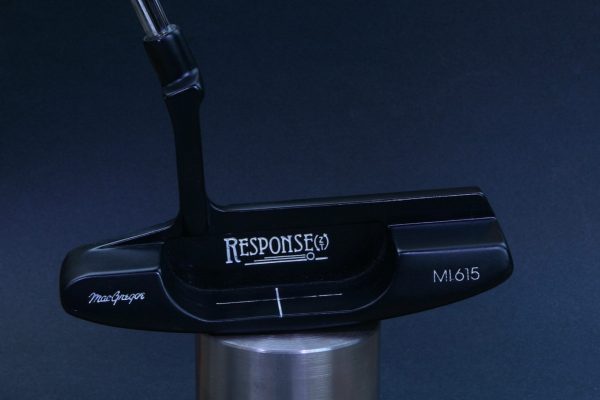
As the story goes, Nicklaus liked Tom Watson’s PING Pal and asked MacGregor designer Clay Long to make something along those lines. Long returned with a blade on a a lot larger scale.
An early version had an overhang that the USGA rejected. Long chased it away. What remained was also one of the greatest leaders of the Tour at the time. But it wasn’t just the size – it was the distinct shape.
What I like about it is that the shape is easy to recognize. It’s a conventional-looking blade until you see it in Nicklaus’ hands and realize how much club there is from heel to toe.
There will never be a better advertisement for a putter than Nicklaus holding that thing while the crowd behind 17 comes to its feet.
7. Odyssey Backstryke Marxman (Thomas Bjørn)
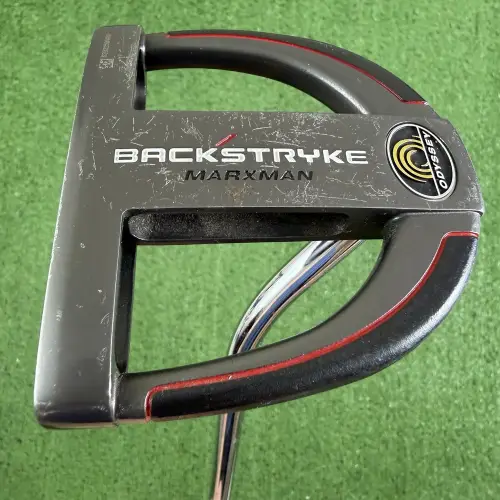
Follow the tree and you will see what makes the Backstryke so strange.
Join the head to the back, well behind the face. Odyssey wanted to give the player a clearer view of the face and ball at address. If you are used to seeing the tree enter near the heel or center of the head, the Backstryke asked to comfort you with a very different picture.
Thomas Bjørn won the 2010 Estoril Open de Portugal by five shots with the Marxman version and averaged 28 putts at one round that week. He also had it in the bag when he won the 2011 Qatar Masters where he went bogey-free over the weekend.
6. LAB Golf Directed Force 2.1 (Adam Scott)

The DF 2.1 looks like an open bottle with a putter face attached.
There is a wide front section, a narrow waist and a round opening in the back. The unusual shape makes it easy to overlook what LAB was trying to do. The company balances the head for the lie angle of the putter, so it resists twisting as the player swings it..
Scott played a DF 2.1 at the 2019 Masters before moving to a MEZZ.1 prototype in 2022. Seeing the LAB putters in the Tour bags became familiar, but Scott was certainly an early adopter and willing to look unusual.
The first time you look at a DF 2.1, it always takes a second.
5. Black Swan (Sandy Lyle)
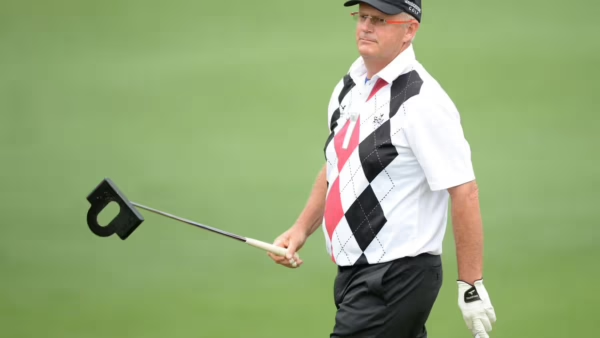
The Black Swan had such a big head that it earned the nickname “brick on a stick”.
Lyle took it to the 2013 Masters, 25 years after winning the tournament (and after missing the cut in his three previous visits). The club helped him move into Saturday at one over par. He shot 81 in the third round, but don’t pay attention to that part.
If a giant block behind the ball helps you commit to the line on the Augusta greens, I can see the appeal. I had even guessed that such a big head was as far as Lyle went. Five years later, he returned with a shaft that deserved its own camera angle.
4. Face prototype (Bryson DeChambeau)

There is a unique putter and there is putting it completely different from everyone else.
At the 2017 Sony Open, DeChambeau stood next to the ball in front of the hole and putt with a prototype in the center. He tied for 49th after receiving permission to use that version for the tournament.
However, the USGA subsequently deemed this particular putter non-compliant. The rule applied to the crew. Other versions he submitted conformed.
DeChambeau played a conformed version at the CareerBuilder Challenge, but returned to conventional putting shortly thereafter. Sam Snead had, of course, used a side saddle stroke decades earlier, but DeChambeau was the first in decades to attempt a revival.
Mind you, this was his rookie season and he was already trying to reinvent the wheel.
3. StickyGolf winged putter (Jesper Parnevik)
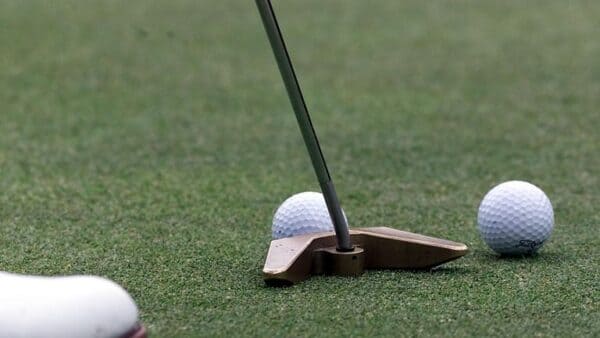
The face is small. The angled wings are what catch the eye.
It seems like the kind of prototype that a representative of the equipment could give someone on the green practice to see what they think of the comedy more than the practicality. But Parnevik put it into play at the 2001 Honda Classic and won. (Side note: this event took place at TPC Heron Bay, my childhood home course.)
Of all the designs out there that win on Tour, this is the one I’d most like to see someone pull off on a Sunday today. The putter already looks weird sitting still. Imagine how much attention these wings will get in a foreground with the tournament on the line.
2. U-shaped putter (Sandy Lyle)
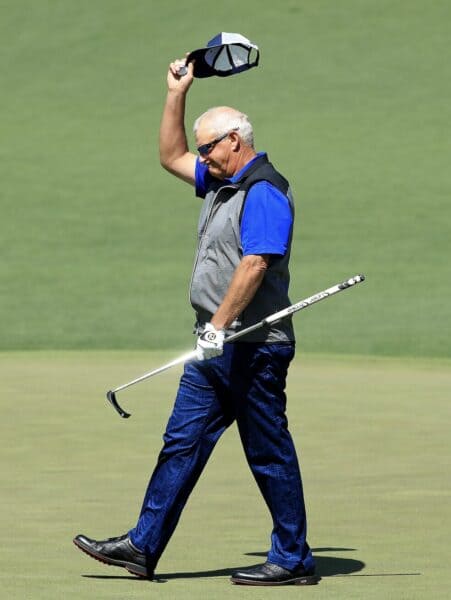
Lyle strikes again!
Most unusual putters give you something to look at behind the face. At Masters 2018, Lyle gave you something to see on the way in the shaft.
Near the head, it dives into a deep U, with the bottom of the curve sitting inches behind the face. Follow the tree in a photo and your eye will double back before it reaches the head.
Lyle made an eagle in an opening 74. He was playing at Augusta on the 30th anniversary of his victory there, and he had found a piece of equipment that could compete with that history for the air.
1. Cleveland Smart Square Stubby (Jaco Van Zyl)
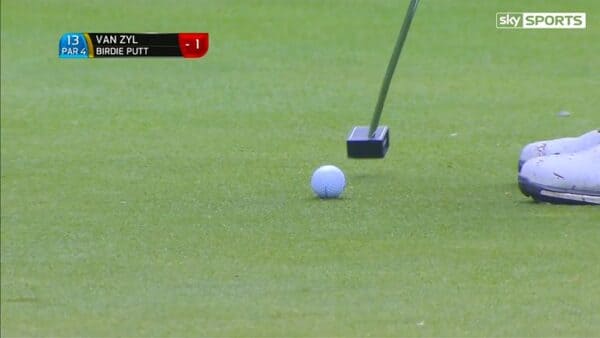
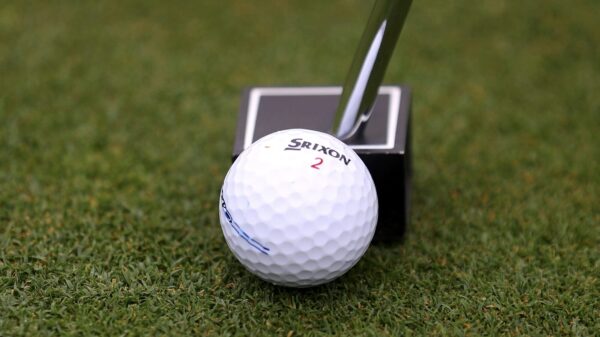
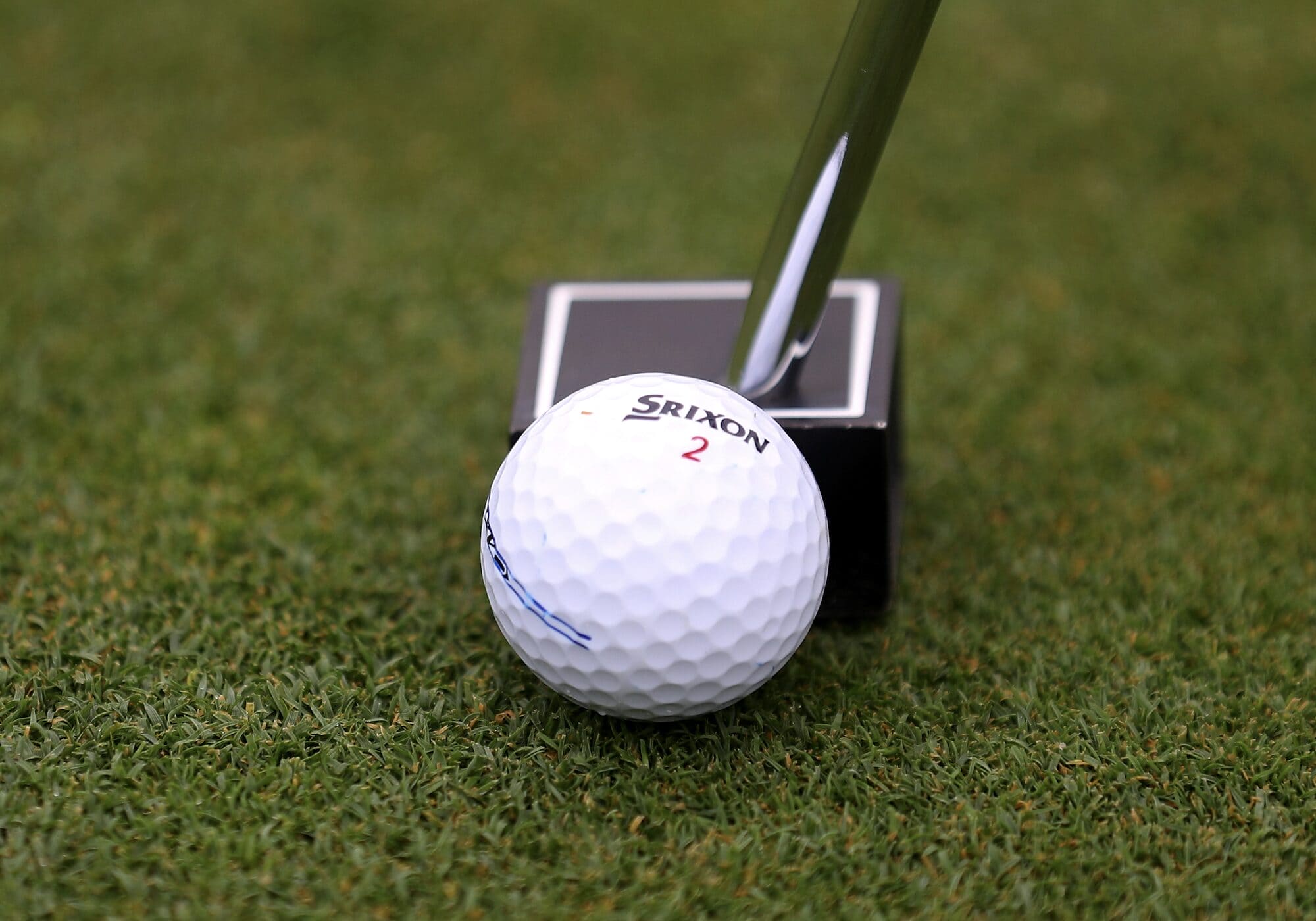
Cleveland made the Smart Square Stubby to help golfers practice finding the sweet spot. The head is just wider than the ball which makes an off center shot obvious.
At the 2017 Joburg Open, Jaco Van Zyl took that tiny practice putter out on the course and played tournament golf with it.
A lot of putters on this list give a player more of something. More head behind the ball, more shaft to lean against a forearm, more room to see the face. Van Zyl looked at a club designed to expose a mishit and decided it was exactly what he wanted on a putt that counted.
I’m not even crazy. I am impressed.
Which of these putters would you be most willing to drop for 18 holes? What are some other putters that were head turners? Let me know in the comments below.
Top Photo Caption: Cleveland Smart Square Stubby by Jaco Van Zyl (GETTY IMAGES)