




















The players involvedHenri Leconte and Pete Sampras
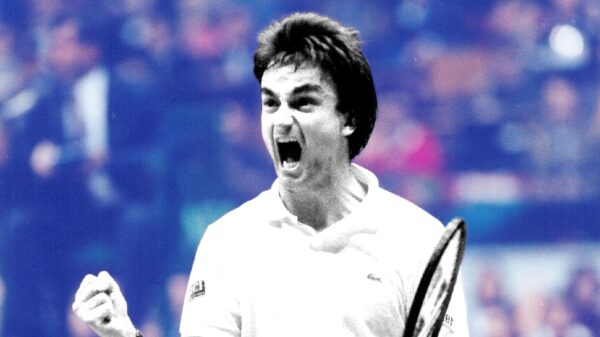
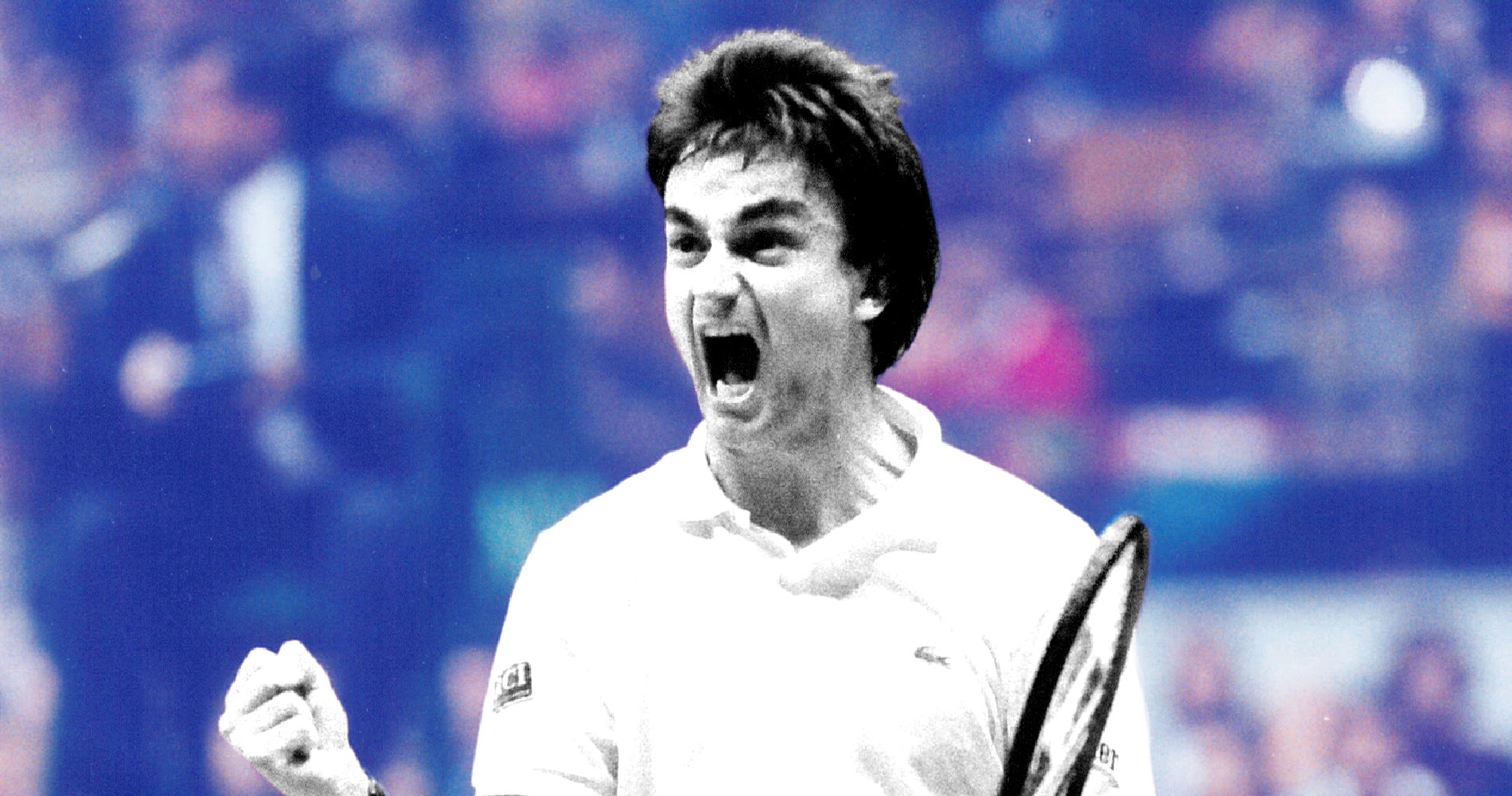
- Henri Leconte. The talented Frenchman who was taking non-existent shots
Henri Leconte was born in 1963 in LilleursFrance. With his spectacular high-stakes game, the southpaw first came to attention when he won the junior title at Roland Garros in 1980. In 1982, he lifted his first crown on the main tour, defeating Mats Wilander in the final of the Stockholm Open (7-6, 6-3).
After winning the doubles at Roland Garros in 1984 (partnering Yannick Neu), he achieved his breakthrough Grand Slam singles performance in 1985, reaching the quarterfinals at two Roland Garros (losing to Wilander 6–4, 7–6, 6–7, 7–5 and 7). Wimbledon (lost to Boris Becker: 7-6, 3-6, 6-3, 6-4). In 1986, he went one step better in the same tournaments, reaching the semi-finals, beating Michael Pernfors in Paris (2-6, 7-5, 7-6, 6-3) and Becker in London (6-2, 6-4, 6-7, 6-3).
He reached his highest ranking of world number 5 that year. His best performance was in the Grand Slams Roland Garros in 1988, when he finished runner-up to Wilander (7-5, 6-2, 6-1).

Unfortunately, Leconte was overwhelmed by the occasion and a few words he said during the trophy ceremony were misinterpreted by a section of the French crowd who ended up booing him. Leconte finished the year as world No. 9, but from 1989 his career was hampered by several injuries and he was unable to perform regularly at his best level. Described by Becker as “a player who makes shots that don’t exist” and Nick Bollettieri as a very dangerous player “because sometimes he doesn’t even know what he’s doing”, he had to undergo back surgery in the summer of 1991 and was now ranked 159th in the world.
- Pete Sampras. Youngest male player to win the US Open
Pete Sampras was born in 1971 in Washington, USA. Although he was part of the American golden generation, along with Andre Agassi, Michael Chang and Jim Currier, Sampras was the last of them to become a top player. By the end of 1989, while his rivals had all won titles and achieved breakthrough Grand Slam performances, Sampras was still only ranked 81st in the world.
In November of that year, Ivan Lendl, then world number 1, invited him to his home to train with him for 10 days; the young American then realized the work required to become a champion.
Six months later, he had already broken into the top 20 after winning his first two titles in Philadelphia and Manchester. In September 1990, he surprised the tennis world by becoming the youngest player ever to win the US Open, defeating Agassi in the final (6-4, 6-3, 6-2). This stunning victory saw him break into the top 10, but in the first half of 1991, Sampras struggled to continue his great streak.
He had better results on the US summer Tour, winning titles in Los Angeles, Indianapolis and Lyon, but was unable to defend his US Open: title, losing in the quarterfinals to Currier (6-2, 7-6, 7-6). However, the first title at the end of the season Masters Cupwhere he took revenge against Courier (3-6, 7-6, 6-3, 6-4), confirming his steady improvement.
The placeLyon, France
The 1991 Davis Cup final was held in Lyon, France at the Palais de Sport de Gerland, an indoor venue that could hold up to 8,000 spectators. The French team chose a fast indoor surface that suited the playing style of their top players, especially Guy Forge, who was world No. 7 and had just won the Paris Indoor Open on a similar surface.
The factsLeconte is confident of victory even before stepping onto the court
The Davis Cup final in France was the main sporting event of the 1991 winter season. France, despite its impressive roster, had not fared well since losing to the United States in the 1982 final. However, this year, with Yannick Neu as their captain, all players performed at their best to lead the team to the finals.
After the semifinal against Yugoslavia ended, the captain began to think about a plan to upset the American all-star team in the final. The United States had three of the top 10 players (Sampras, Agassi and Courier) and one of the best doubles teams in the world (Ken Flach and Robert Seguso). Noah felt that he had to take out something special or someone. That one was Henri Leconte, the only player who in his best days could upset Sampras and Agassi and also challenge the best in doubles.

The main problem with Noah’s plan was that LeConte was recovering from back surgery at the time. Ranked 159 in the world, some thought his career might even be over and that he would never play at his best again. However, he accepted Noah’s call and took a real Commando course to prepare for the finals. His condition improved and his game slowly returned. In the week leading up to the event, preparing for the doubles match, he did not lose a single set against his teammates. On the Monday before the final, Noah came to LeConte to inform him that given his level, he was going to play in singles as well.
“Don’t worry, I’ll kick his ass“
Henri Leconte Guy Forget Pete Sampras
“Sure, don’t worry,” said the leftother.
On Friday, November 29, the long-awaited final did not start well for the French team. Their #1 player, Guy Forge, defeated Agassi (6-7, 6-2, 6-1, 6-2). Instead of putting extra pressure on Leconte’s shoulders, the scenario added to his resolve and he kept his cool before facing the Masters Cup champion.
“Don’t worry, I’ll kick his ass,” he told Forget as he walked out of the meeting.
And he did.
“From the first moment I knew I was going to beat him. I took everything out. These sideways volleys that I pulled off… I felt invincible,” Leconte recalled years later. for eurosport.fr. “It was one of those days when you feel like you can do anything. It just works. I was like an artist with his brush, it was magic.“
After three sets, Leconte defeated Sampras in straight sets 6-4, 7-5, 6-3.
“I told you so,” he said Forget it.
What next??
The following day, Leconte and Forge would win the first 16 doubles points against Flach and Seguso before winning 6-1, 6-4, 4-6, 6-2. Forge will defeat Sampras (7-6, 3-6, 6-3, 6-4) on Sunday to give France its first Davis Cup since 1932.
In 1992, Leconte would receive a wildcard to Roland Garros, where he would achieve his last major Grand Slam feat, reaching the semifinals (losing to Petr Korda 6-2, 7-6, 6-3). He would claim his ninth and final career title in 1993 in Halle (defeating Andrei Medvedev 6-2, 6-3 in the final).
Pete Sampras would recover from this nightmare to become world #1 in 1993. He would go on to set a record 14 career Grand Slam titles, winning seven times at Wimbledon, five times at Flushing Meadows and twice in Australia, but his best performance at Roland Garros would be a semi-final at 199.
He would also win the Masters Cup no fewer than five times, and he would spend 286 weeks as world No.1. Although most of his amazing records seemed unbeaten at the time of his retirement in 2003, many of them would be surpassed by Roger Federer and Novak Djokovic years later.