



























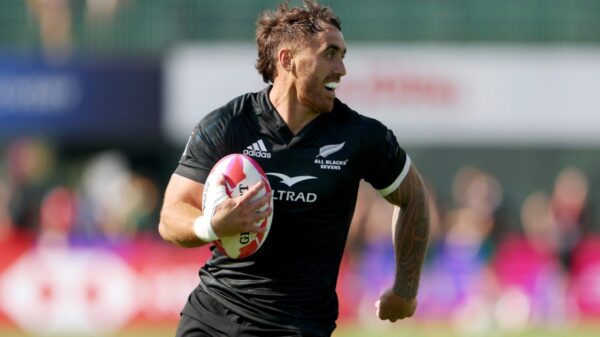






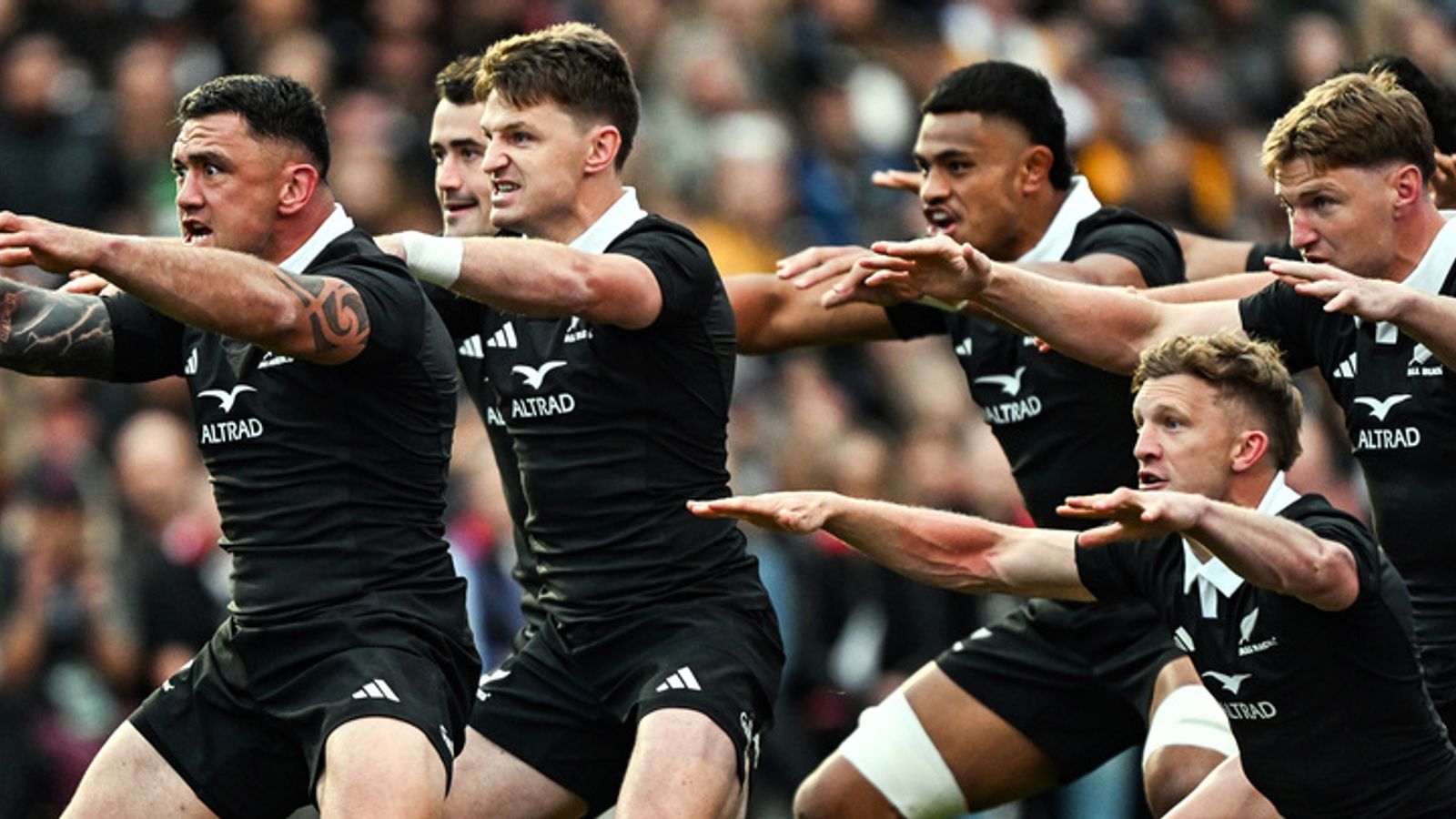
One of the most intriguing and anticipated moments in the sport of rugby union: the sight of the New Zealand All Blacks performing their world-famous haka as the opposition stand in front of them.
But how much do you know about haka? And also of the three other ceremonial war dances that take place in rugby: Cibi, Siva Tau and Sipi Tau.
Find out everything you need to know below…
History of the haka in sports – When did it start? What does it mean?
An ancient traditional Maori practice, it has no single recorded date for the first performance of the haka for this reason. It has been practiced by indigenous Maori communities for centuries.
The earliest point at which Europeans witnessed the haka was the 18th century: Joseph Banks and James Cook on their first voyage to New Zealand in 1769 recorded the haka as “powerful and fierce”.
Regarding his introduction to the sport, the first New Zealand rugby union side visited Australia in Sydney in 1884 and performed the haka. During 1888/89, a ‘New Zealand Home Team’ toured the United Kingdom for the first time, performing the haka on 3 October 1888 against Surrey in a tour match.
1905 saw the birth of the ‘All Blacks’ as they toured Britain with a team that became known as ‘The Originals’.
The All Blacks performed their famous ‘Ka Mate’ haka before the Tests against Scotland and Wales, with the one composed in 1820 by Maori chief Te Rauparaha.
However, the tradition of the All Blacks performing the haka on home soil before every Test they played did not become customary until 1986.
Before the first Rugby World Cup in 1987, All Black Buck Shelford tried to reform the haka so that pre-match shows could be organised, synchronized and executed properly.
“If we’re going to do it, we’re going to do it right. Either do the hakas right or not at all. Vote and decide which way you want to go,” Shelford reportedly told teammates at the time.
Shelford and teammate Hika Reid then taught and coached the All Blacks on the correct pronunciation of words and actions, as well as the importance of the haka.
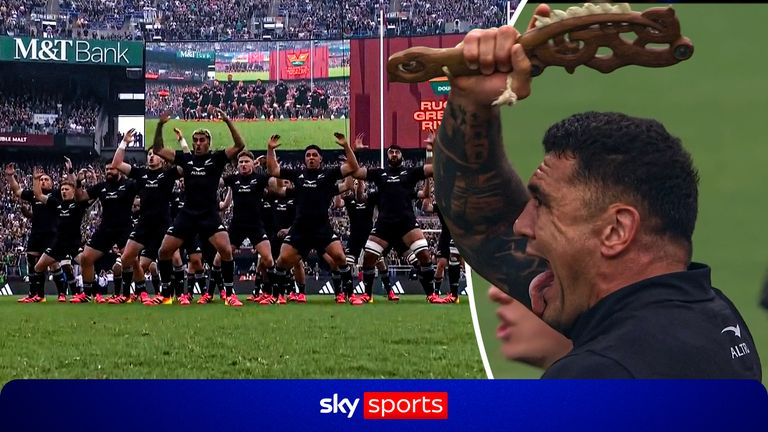
New Zealand captain Codie Taylor runs a haka for the first time against South Africa.
At the 1987 World Cup in New Zealand, with Shelford now captain, the All Blacks performed the haka in New Zealand for the first time, en route to the All Blacks winning the trophy.
In terms of what the haka means, “Ka Mate” is the recitation of a traditional Maori poem about life, death and endurance.
The most common haka performed by the All Blacks today is ‘Kapa o Pango’, first performed in August 2005 before a Tri-Nations Test against South Africa in Dunedin.
The haka featured an extended and aggressive presentation from team captain Tana Umaga, highlighted by a thumbs-up throat draw.
Famous hack responses – how should teams respond?
There have been a number of famous haka responses from opposition parties over the years.
In 1996, Australia Famously (or infamously?) decided to ignore the hake completely in Wellington, turning his back on the All Blacks, following Wallabies great David Campese who chose to ignore the hake and take practice shots before the 1991 World Cup semi-final between the sides, which Australia won.
in 2019, England adopted a V-shaped formation in Yokohama ahead of the World Cup semi-final against the All Blacks. As soon as the haka began, the English players advanced beyond the halfway line and held their ground as the officials tried to move them on.
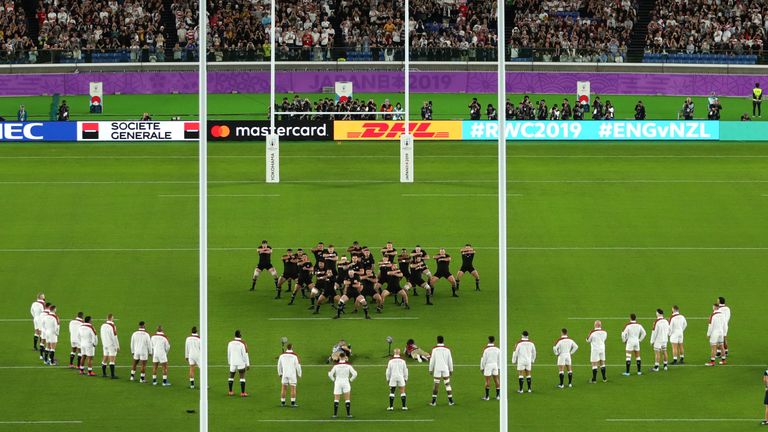
Facing the hook ahead of the 2019 Rugby World Cup semi-final in Japan, England came forward in a V-shaped formation
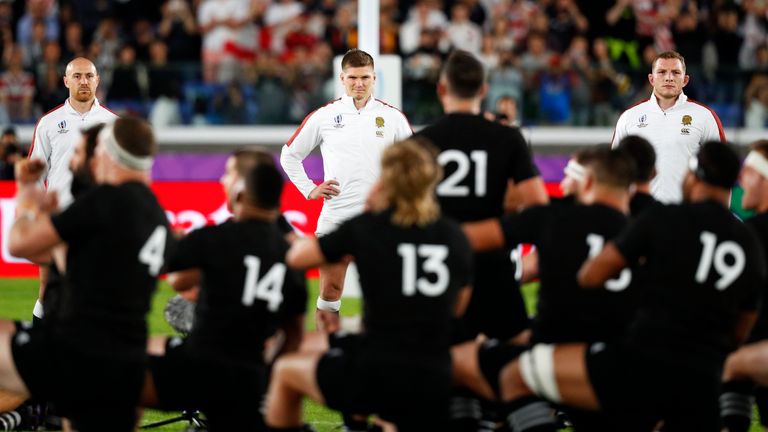
England captain Owen Farrell smiled as the All Blacks performed the haka in Yokohama
England were later fined £2,000 by World Rugby for breaching the 2019 World Cup rules relating to cultural challenges, which stated that no player from the team receiving the challenge could advance beyond the halfway line. England won the match 19-7 after a sensational performance.
In the 2007 World Cup, France faced the All Blacks in a World Cup quarter-final in Cardiff, and memorably climbed a line against the All Blacks, reaching a meter from the haka. France won the match 20-18.
France also marched forward in a darts formation in front of the haka ahead of the 2011 Rugby World Cup final in New Zealand, before losing controversially 8-7 at Eden Park.
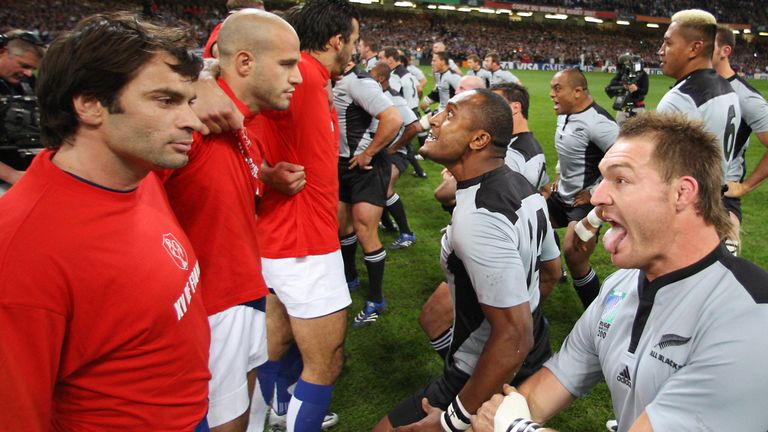
France and New Zealand came within a meter of each other in a haka reply ahead of their 2007 World Cup quarter-final
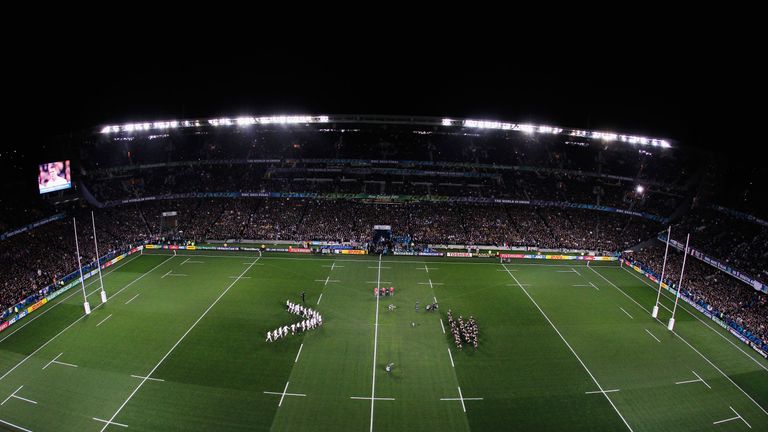
France also marched forward in a darts formation in front of the hake ahead of the 2011 Rugby World Cup final
In 2005, the All Blacks agreed to a request from the Welsh Rugby Union to repeat the sequence of events from the original match a century earlier in 1905, which included the haka taking place after the New Zealand national anthem but before Wales’.
A year later in 2006, Wales demanded a replay of the sequence, which the All Blacks refused, ultimately performing the haka in the dressing room rather than in front of the watching fans. Then All Blacks captain Richie McCaw defended the decision saying the haka was “integral to New Zealand culture and All Blacks heritage” and “if the other team wants to mess around, we’ll just do the haka in the shed”.
Two years later, in 2008, another memorable Wales v New Zealand haka situation unfolded as after the haka ended in Cardiff, Wales refused to break and move until the All Blacks did. Neither side did for nearly a minute and a half, despite referee Jonathan Kaplan’s urging, until McCaw instructed the All Blacks to break away. Wales led 9-6 at half-time but were eventually beaten 29-9.
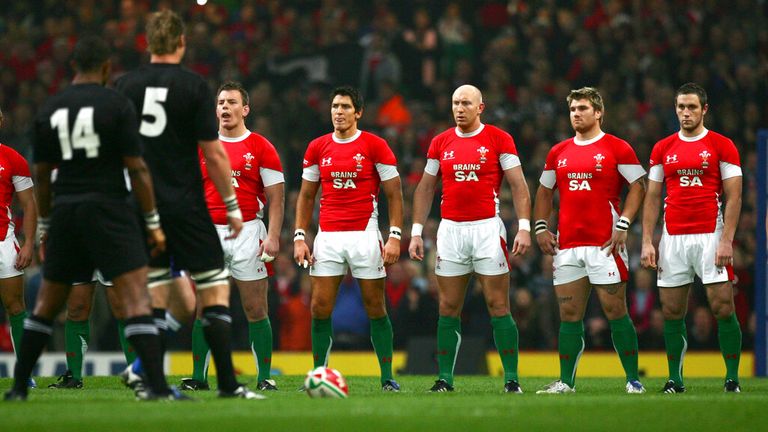
Wales and New Zealand held their position for more than 80 seconds after finishing the haka in 2008
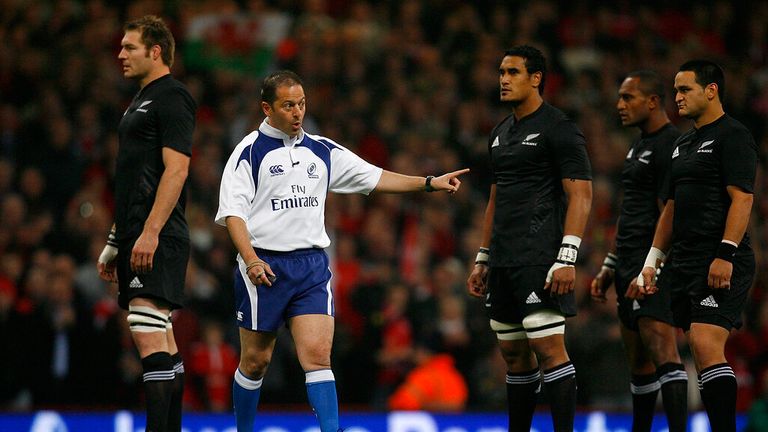
Judge Jonathan Kaplan tried to get both sides to move to Cardiff in 2008 but failed.
in 2016, Ireland took on the All Blacks in Chicago looking for a first ever win over New Zealand in 111 years. Just weeks earlier, Munster manager Anthony Foley had died in his sleep in Paris aged 42 ahead of a European Cup tie against Racing 92.
In front of the hook, Ireland lined up in a figure of eight in memory of Foley, a former Ireland and Munster No 8 in his playing days. Ireland followed up with a stunning 40-29 win over the All Blacks.
Ahead of the 2023 Rugby World Cup quarter-finals, Ireland repeated the same haka response but lost to the All Blacks in Paris 28-24.
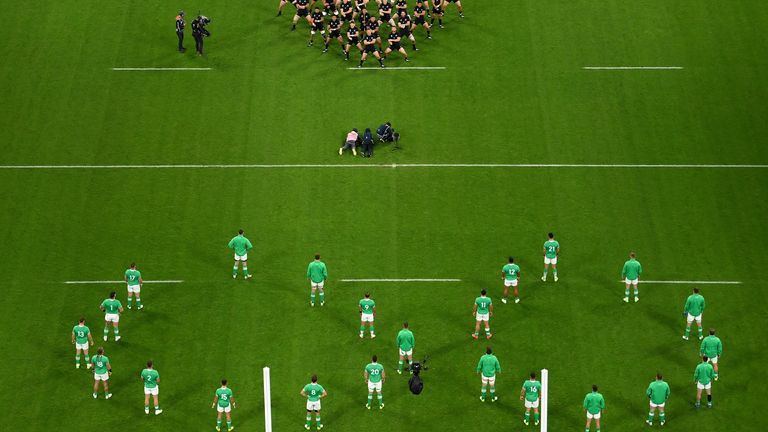
Ireland lined up in a figure of eight to face the haka in memory of the late Anthony Foley ahead of victory in 2016 and defeat in 2023
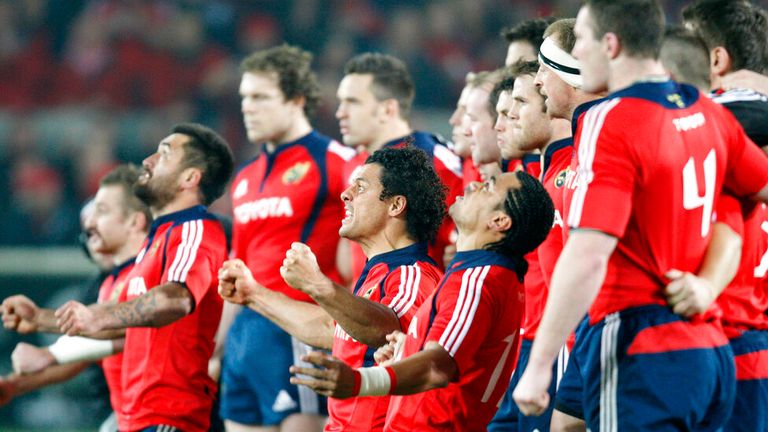
In 2008, a unique inciting response haka took place in Thomond Park in Limerick as Munster the quartet of Doug Howlett, Rua Tipoki, Lifeimi Mafi and Jeremy Manning stepped forward to perform a haka in front of the All Blacks with the rest of their Munster teammates standing behind them.
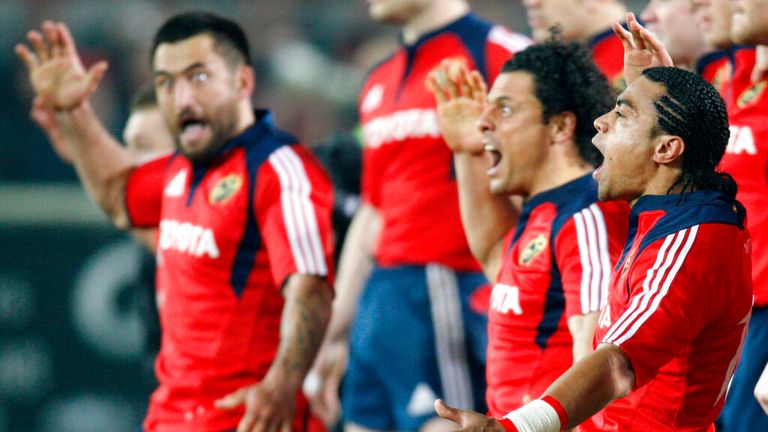
Munster’s Rua Tipoki (left), Doug Howlett (centre) and Lifeimi Mafi (right) step forward to perform a memorable haka against the All Blacks at Thomond Park in 2008
A similar event happened as recently as 2026 when the All Blacks were superb Get used to it performed a solo haka in front of the All Blacks while playing for South African club Sharks before the New Zealand tour match in Durban.
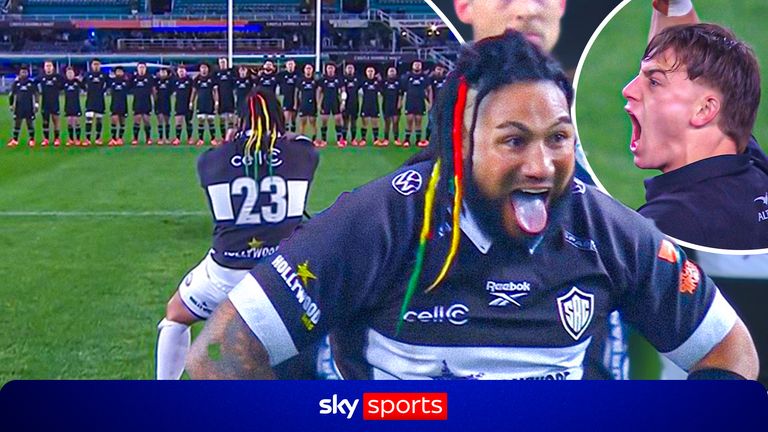
Ma’a Nonu gave his former All Blacks teammates the ultimate show of respect by answering their haka with one of his own.
Is New Zealand the only nation that performs the haka?
While the haka is rugby’s most well-known and famous traditional pre-match ceremonial war dance, the island nations of Fiji, Samoa and Tonga also perform their own versions.
FIJI EXECUTIVE Foodswhich sees the team stay in formation and led by a vocal soloist, before dropping into a synchronized low bow or knee while making aggressive arm and hand gestures, ending with an explosive jump or step up.
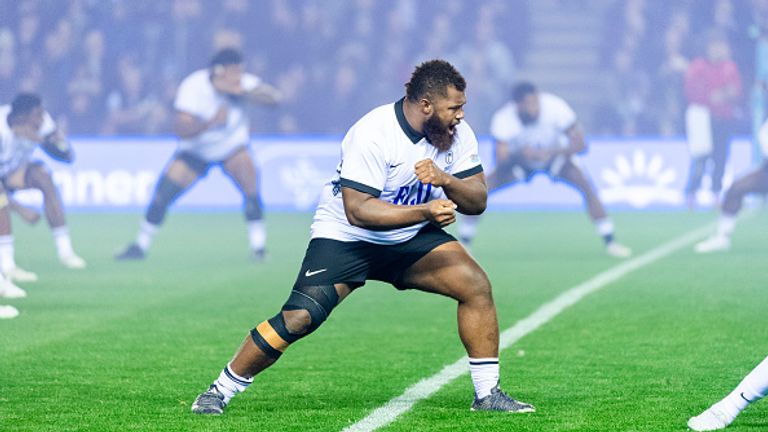
Fiji perform Cibi during a 2025 Autumn Nations Series test against Scotland at Murrayfield
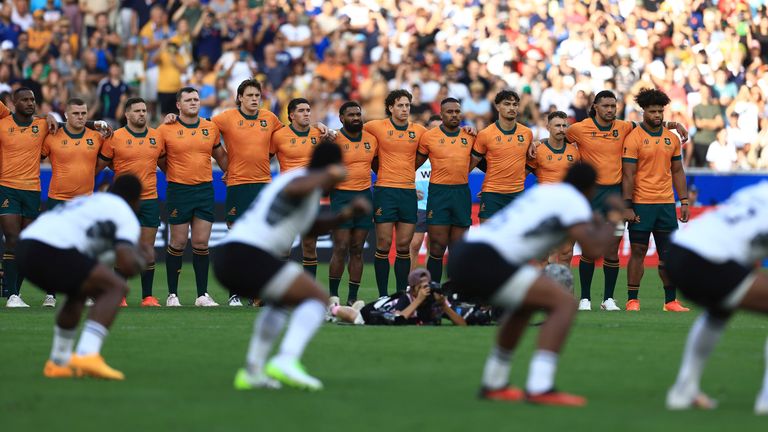
Australia watches as Fiji perform Cibi at the 2023 Rugby World Cup
Samoa EXECUTIVE War dancewith the ritual led by a designated singer and the players starting in a seated or kneeling position before rising in synchronized movements that include chest-beating, foot-stomping, aggressive gestures and intense vocal chants.
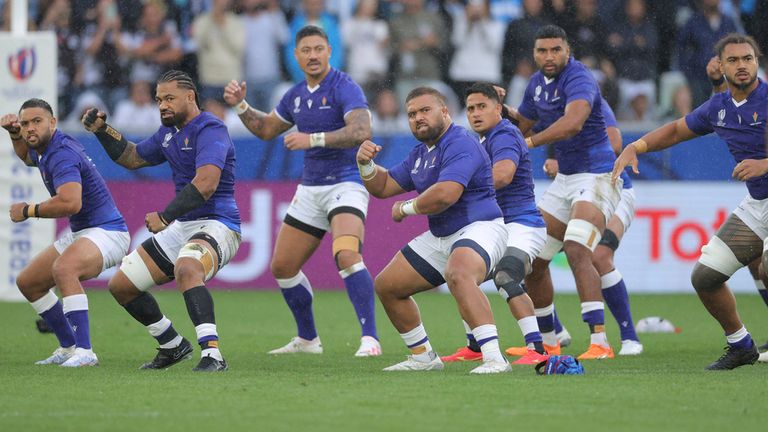
Samoa players perform Siva Tau at the 2023 Rugby World Cup in France
Tonga EXECUTIVE Price Jeepwhich begins with the team huddled or kneeling in a circle led by a central caller, before erupting into a structured formation on the court with deep squats, chest thrusts, rhythmic foot stomps and aggressive synchronized gestures.
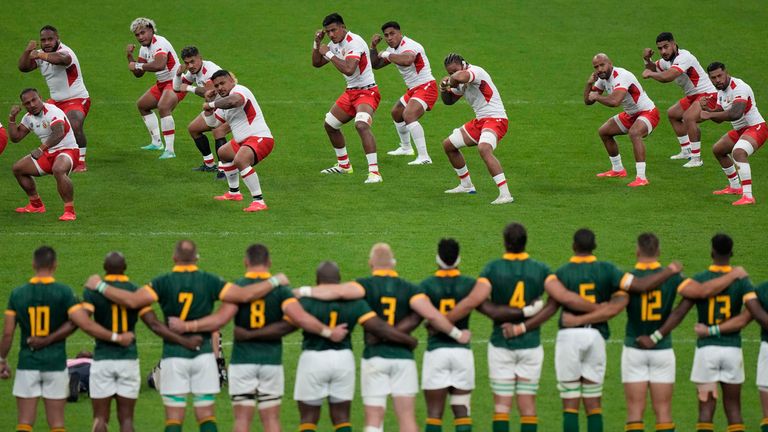
Tonga players perform Sipi Tau before the match against South Africa