















































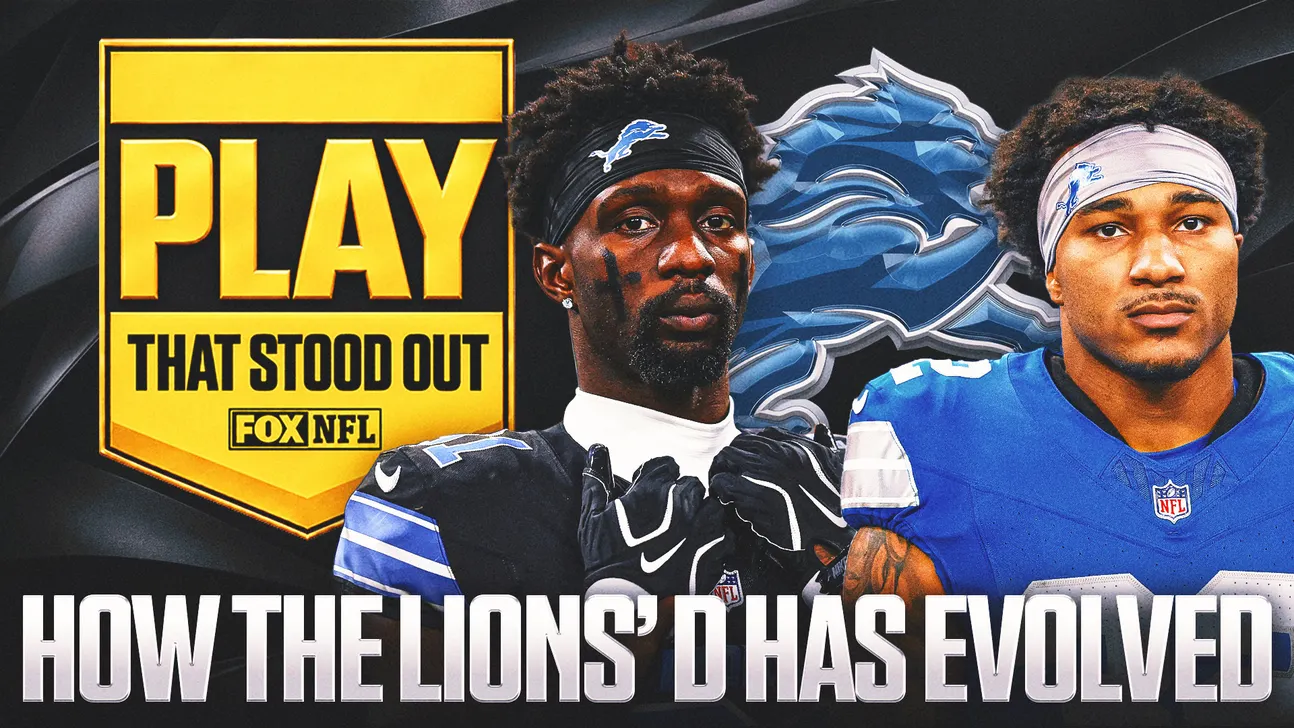
There was plenty of competition for the title, but the Lions may have had the worst defense in football after four weeks. Detroit allowed nearly 32 points per game and tied Dallas for the most expected points allowed per game. No team was giving up explosive plays at a higher rate in that first month.
After the site saw Bryce Young torch the Lions’ defense on Oct. 4, second-year coordinator Kelvin Sheppard was asked if he needed to rethink the team’s run-heavy approach.
“Those calls were the right calls,” Sheppard replied. “And I’ll leave it at that.”
Sheppard’s messages were not well received, and calls for his job, which had already begun during his first year as the team’s defensive player, only grew louder.
Well, now it seems those calls were a little premature. Detroit hasn’t lost since that press conference, running its record to an NFC North-leading 8-2, and only the Chiefs have allowed fewer points per game during that span.
On Sunday, the Lions extended their winning streak — and that streak of quality defensive performances — with a 31-21 victory over the Buccaneers, and the play that essentially iced the game (and dropped Tampa Bay’s win probability to 1.4%, according to Next Generation Stats) showed how Sheppard has turned this title into a true defense and helped improve this title into a true defense midway through the season.
We go straight into the fourth quarter with 4:12 left on the clock. Tampa Bay is facing third-and-7 near midfield and must extend the drive to have any chance of closing a 24-14 deficit. The Lions come out in this strange, amoeba-like front with no players in a three-point position.
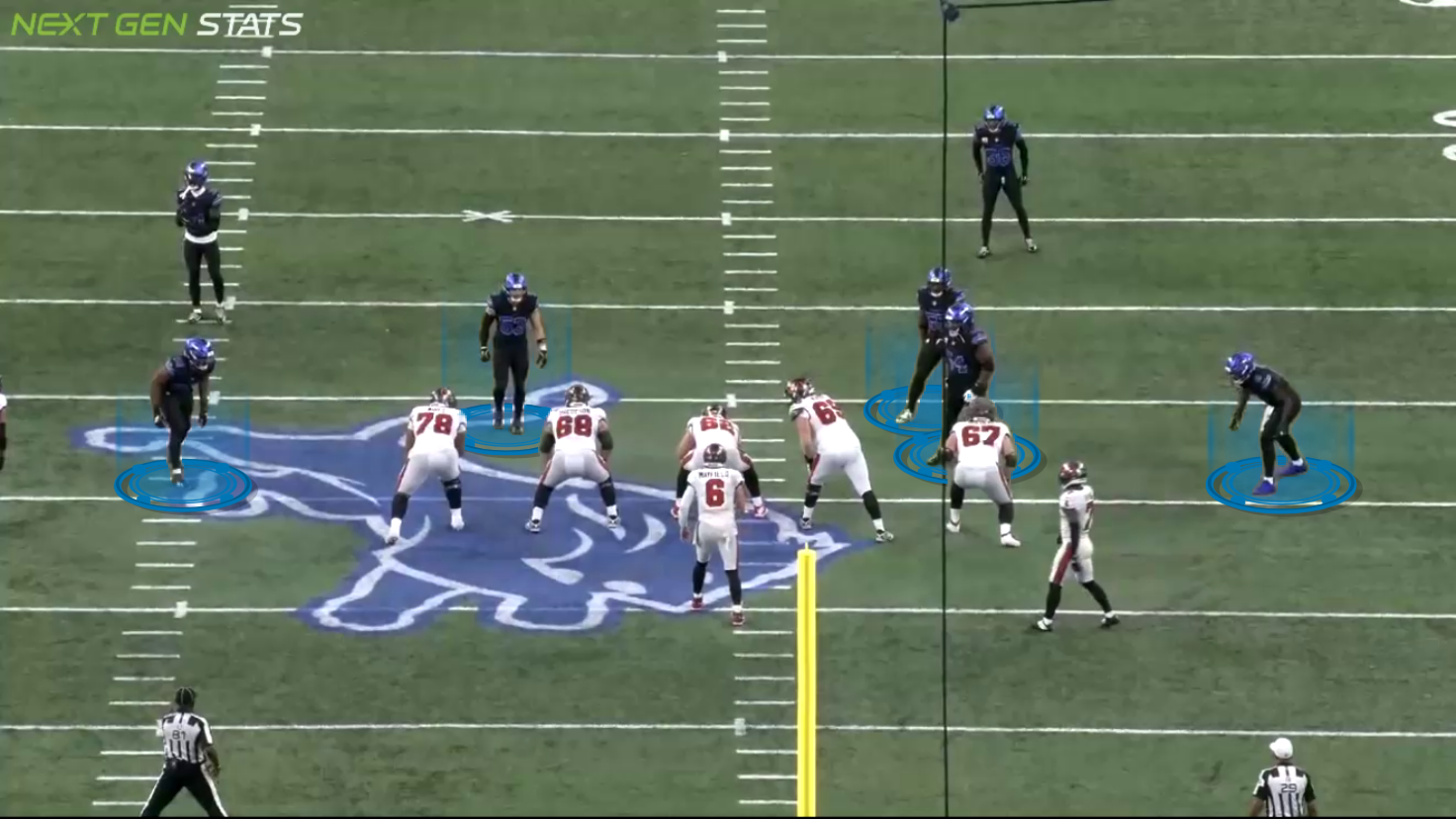
The goal is to confuse the offensive line and make Baker Mayfield think he’s going to see exotic pressure. After all, Sheppard is known as a heavy tool. But the Lions end up sending just three runners at quarterback, with a fourth play spying Mayfield. After that, they are playing a version of Cover 1 called “robbers”. In the Cover 1 “robber,” the defense plays man coverage across the board, with one safety over the deep middle and the other working in the intermediate zone to help with passing routes.
The Buccaneers have a good call to beat that particular coverage. They gather in a group and lead a chosen route for Chris Godwin, who is leading a crawling route down. Emeka Egbuka’s middle way of passage is meant to conquer the robber.
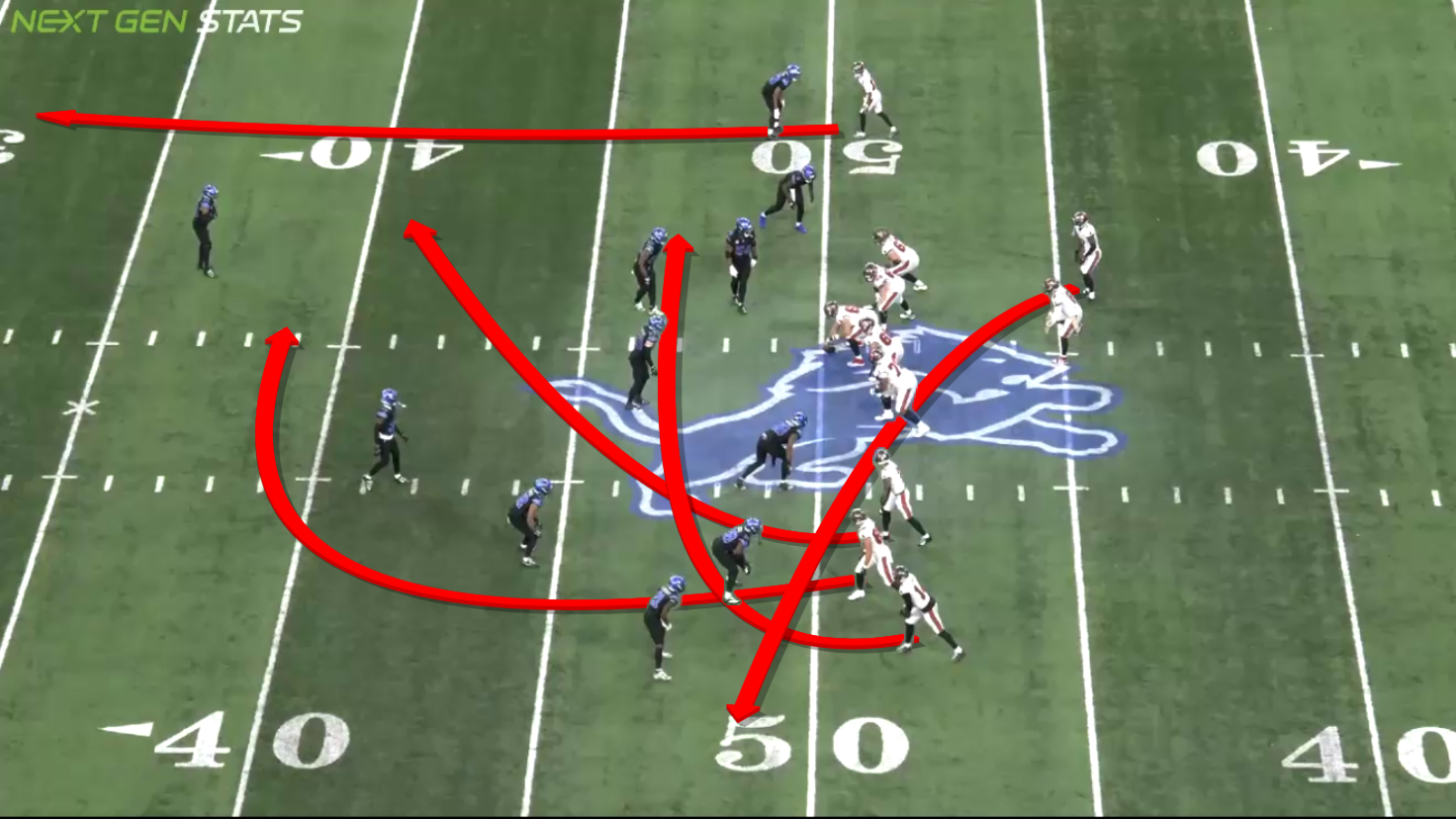
And it worked! Lions cornerback Roger McCreary gets involved in traffic, leaving Godwin wide open.
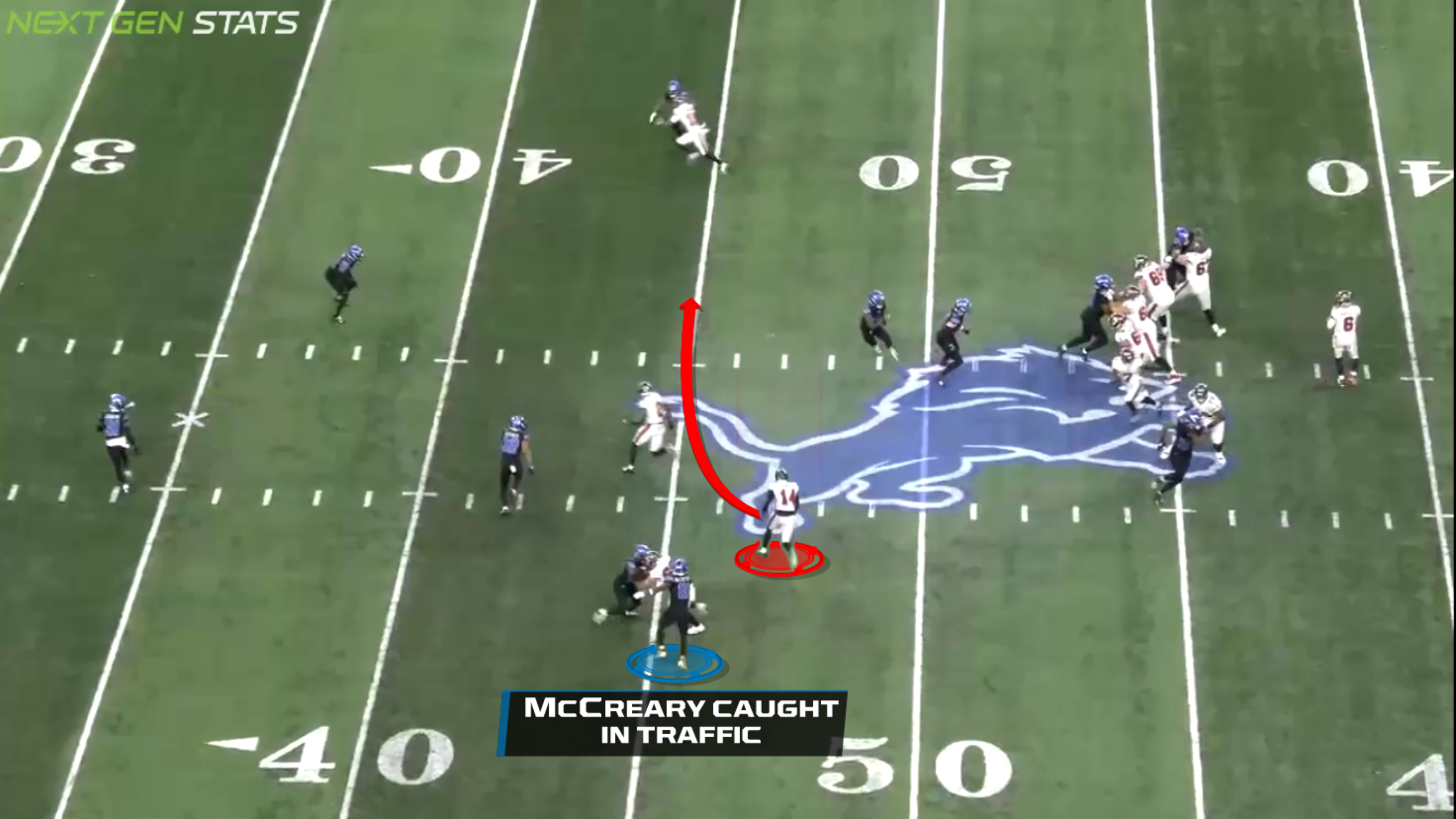
This is where the robber comes into play. In this case, it’s safety Chuck Clark, who stiffs teammate Brian Branch and takes his man. Most of the time, Branch would take over as the new rusher, but he spots Godwin getting open and has the awareness to connect with him before Mayfield can throw.
The Bucs quarterback had to carry the ball, which gave three players enough time to get it out of the pocket and get the sack.
Detroit has forced many more of those extended drops during its six-game winning streak. The drop rate for opponents lasting more than 4 seconds has nearly doubled compared to the first four weeks, coinciding with Sheppard Man coverage doubling at the same rate, according to Next Generation Stats.
Statisticsweeks 1–4weeks 5–11AmENdmENT
Opp. extended return %
EPA/return allowed
Success rate allowed
Source: Next Gen Stats
With Branch back on the field after missing the first five games recovering from a devastating foot injury in 2026, Sheppard has been more willing to play man coverage and the improvement in pass protection has been staggering. According to Sports Info Solutions, the Lions have posted a 0.18 EPA per drop without Branch on the field. When he’s on the field, that number drops to -0.07. To put it in perspective, that’s the difference between a Patrick Mahomes return and a Tyler Shough return.
Returning safety Kerby Joseph, who made his season debut against the Bucs, could provide another boost. “The versatility he provides for guys like (Andre) Cisco, Brian Branch, Chuck Clark,” Sheppard said earlier in the week. “You can look up, and these guys are everywhere right now, so it opens it up for us.”
All four of those safeties were on the field for Mayfield’s third sack. Joseph was in center field, Clark fell into that marauding role, Branch was in the slot, which is where he’s at his best, and Cisco was equipped with Cade Otten. The Lions have a versatile group of safeties and Sheppard is getting the most out of them. At one point in Sunday’s game, the Lions had five safeties on the field at once. They are the only team to do so outside of Hail Mary situations this season.
Safeties aren’t usually seen as man coverage players, but Branch is more of a nickel corner than a traditional safety and Cisco is a tight end. With the Lions losing Jack Campbell and cornerback DJ Reed to injuries in Week 8, having two players who can play those positions in a pinch has really helped Detroit’s defense absorb those hits.
The same goes for Aidan Hutchinson, who will miss the rest of the season after tearing his ACL in the win over the Patriots. With the Lions playing more man coverage, which can disrupt timing and force the quarterback to hold onto the ball longer, the pass rusher has more time to get to the house.
“You hate to lose somebody (to injury), but we’re also gaining (with Branch and Joseph back),” Sheppard said. “So there’s kind of a balancing factor act that’s working right now.”
Sheppard’s creative fronts and pressures will also help offset the loss of Hutchinson. The Lions’ blitz rate has dropped a few percentage points since that Week 4 press conference, but Sheppard is still thriving with regularity. And they’ve been much more effective now that Detroit is playing man coverage behind them instead of dropping back into zone coverage. Through four weeks, Detroit played man coverage on just 38.5% of its snaps.
That number has increased to 63.1% since Week 5, per Next Generation Statistics. Opposing quarterbacks averaged 8.3 yards and 0.26 EPA per drop against the rusher in four games. Since then, they are averaging 5.8 yards and -0.25 EPA.
Statisticsweeks 1–4weeks 5–11AmENdmENT
EPA/return allowed
Passerby’s assessment is allowed
Source: Next Gen Stats
The return of Detroit’s defense has been shocking, but it’s still unclear how much better this unit is now than it was in the beginning. We should get an answer on Thanksgiving when Ben Johnson and the Bears travel to Detroit for the first of two meetings. Caleb Williams has lit it up against man coverage this season, averaging 0.25 EPA per drop with the third-best rating (125.9) behind only Joe Burrow and Brock Purdy.
Williams is also one of the few quarterbacks who performs better the deeper he goes on a drop, so the Lions’ defensive backs will have to stay in coverage for much longer than they’re used to. If they can face against THIS quarterback and THESE receivers, and continue this hot streak, they should be able to hang with any offense in the league – and we’ll have to add Detroit to the short list of teams with a real chance to win it all in February.