


































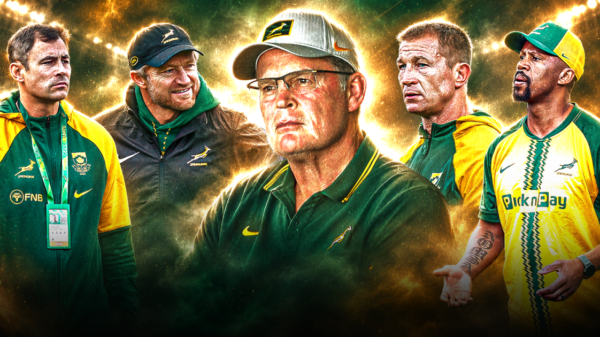







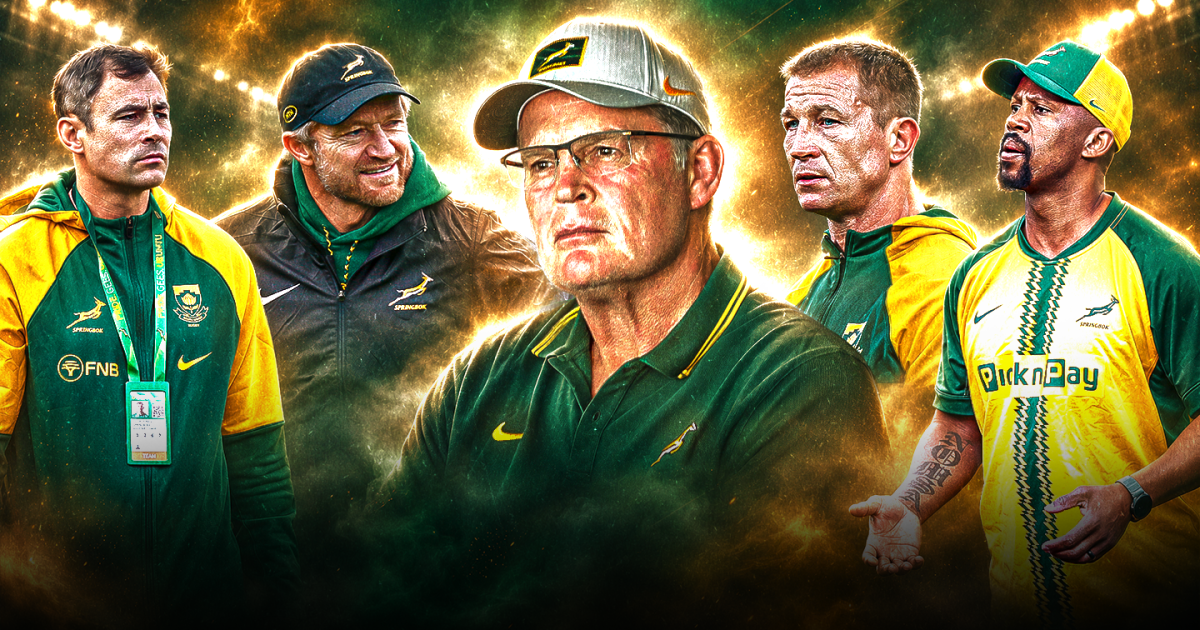
Cut off the head of a snake and the body will die, or so the old saying goes. With Rassie Erasmus handed a six-match suspension, South African rugby has an opportunity to show that its success is not entirely dependent on the brilliance of one man.
The official world ranking list in the app 📱
You can now check the official international world rankings in the RugbyPass app!
Whatever the outcome of this turbulent November, the Springboks will one day have to contemplate the future without their talismanic coach, who is under contract until the end of the World Cup in 2031. His greatest legacy could be to leave behind a system capable of sustaining the success he designed.
That’s where Dave Wessels comes in.
“Rassie is responsible for winning today and I am responsible for winning in the future,” explains SA Rugby’s high performance general manager.
Succession planning goes beyond identifying the next generation of Springboks. Physiotherapists, doctors, fitness specialists, team managers and coaches are preparing for positions that may only be available in a few years.
Until recently, those working with South Africa’s various national teams operated largely in isolation from their colleagues. Wessels brought together people with similar jobs, regardless of which team they served on. The solution to the problem faced by the coaches of the week could now benefit the Junior Springboks or the women’s side.
“We don’t necessarily want a revolution one day in the Springbok team,” says Wessels. “We simply want evolution.”
But where South Africa find your trainers? Wessels’ own career provides some answers. His first assignment was coaching Cs under-nines at Reddam House Primary School in Cape Town, an experience more akin to babysitting than rugby coaching. There he ran into Les Kiss, the current Wallabies head coach, who was then working with the Springboks and running sessions at the school as a favor to the principal.
Some of the best coaches in the country actually coach at the collegiate level. You are really training against truly world-class coaches, many of whom have more franchise experience.
“I just remember thinking, God, I’ve never seen anyone talk about rugby like this,” Wessels recalled.
After spending time with Kiss in Australia, Wessels applied for a coaching position at Bishops, one of South Africa’s most prestigious rugby schools, but was turned down. He traveled two minutes down the road to Rondebosch Boys’ High, looking for an apprenticeship alongside ex-Springbok hooker Shaun Povey. They trained the under-16s together as they did before moving into the first XV.
A presentation to teachers brought Wessels into contact with Erasmus, who was then in charge of the Stormers. Armed with his phone number, Wessels pestered him relentlessly until he was offered a job with Western Province and then the Stormers.
Wessels also coached at the University of Cape Town before joining Jake White Brumbies as a defense consultant. In 2016, aged 33, he became the youngest head coach in Super Rugby history when he was appointed by the Western Force. He later managed Melbourne Rebels until their first Super Rugby AU finals appearance in 2020 before returning to South Africa in 2022.
“Some of the best coaches in the country actually coach at the (scholastic) level,” Wessels says. “You’re really training against really world-class coaches, many of whom have senior franchise experience.”
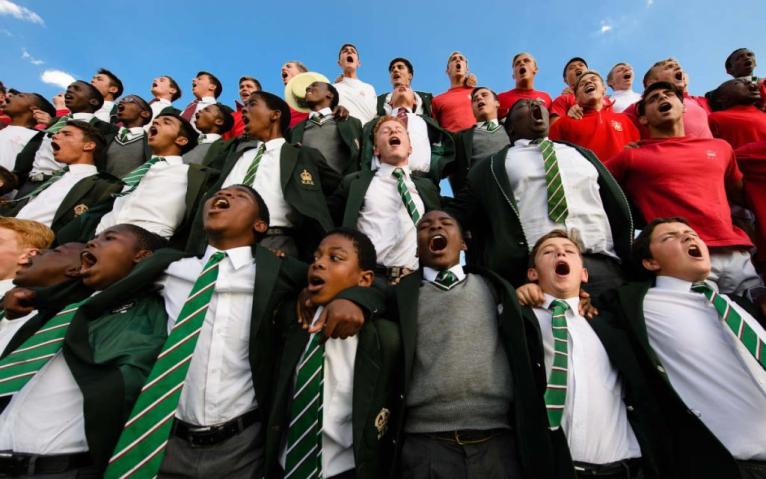
South Africa’s leading rugby schools, with their specialist coaches, sophisticated conditioning programs and hotly contested inter-school matches, are effectively a network of rugby academies funded by educational institutions.
SA Rugby is increasingly using that expertise. In 2025, four schools coaches, all World Rugby Level 3 qualified, have been appointed to the national schools and under-18 structures under the mentorship of Junior Springboks head coach Kevin Foote.
At the time of our interview, 17 high school coaches were scheduled to spend time with Foote’s staff. School coaches also accompany players to elite player development camps, sharing feedback among colleagues at home.
South Africa’s biggest structural advantage, however, may exist on the next rung of the ladder.
Launched in 2008 and co-founded by former Springbok captain Francois Pienaar, the Varsity Cup initially involved eight universities before the introduction of the second-tier Varsity Shield in 2011. National television coverage gave college athletes unprecedented exposure, while the labor law experiment became an experiment.
You can’t maintain the appearance of being someone else or that someone’s personality is under pressure.
The 61 Springbok graduates include Eben Etzebeth, Handré Pollard, Malcolm Marx, Ox Nche and Kurt-Lee Arendse. Less famous is its importance as a final school for coaches.
“The Varsity Cup put me on the radar as a coach,” Stormers head coach John Dobson told the 2021 competition website.
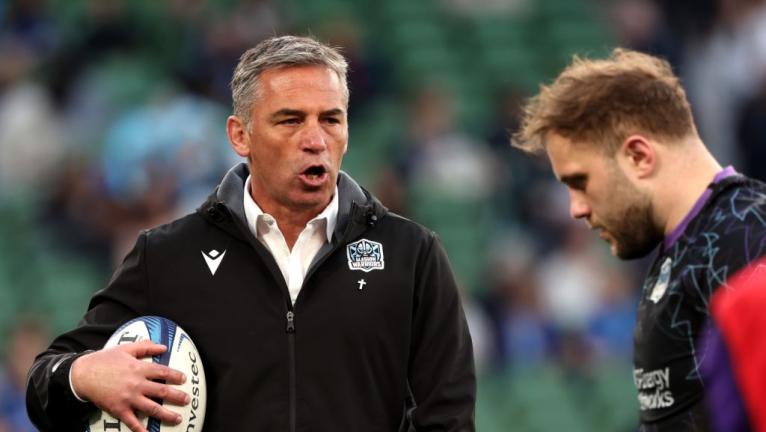
Franko Smith won the tournament with the University of the Free State in 2015 and was named Cheetahs head coach within a month. Later he trained Italy before conducting Glasgow Warriors until 2024 United Rugby Championship title.
Along with community club competitions, the SA Cup and the Currie Cup, the tournament allows coaches to hone their craft in progressively more demanding environments before taking on the management of professional teams.
But the existence of a ladder does not guarantee that everyone is allowed to climb it.
Jonathan Mokuena, the former Springbok sevens captain who led North-West University to their first Varsity Cup title in 2016, questions whether success at university level translates into professional opportunities.
“Your success should also be your coach, but sometimes unfortunately that doesn’t happen,” Mokuena told IOL in 2020, identifying provincial unions as particularly important gatekeepers.
In South Africa, the question of who gets those opportunities is inseparable from race.
In 2022, provincial unions nominated 101 candidates for SA Rugby’s elite coaching program aimed at developing black coaches. Of the 18 selected, only 11, including Mokuena, completed the intensive 18-month program.
In addition to masterclasses led by Erasmus and Jacques Nienaber, participants studied leadership, diversity management, media relations and strategic planning.
“Although SARU cannot make any promises, we will look at you first when the opportunity arises,” Erasmus told the 2023 graduates.
If you have a group of coaches who think exactly the same, you never challenge your game
SA Rugby formalized the program in 2024 and hopes to give its graduates an accredited university qualification.
This month, 48 South African coaches and two Zimbabweans have been invited to attend World Rugby Level 3 courses, including former Springboks Jongi Nokwe and Keegan Daniel. This follows the country’s first independent Level 3 course for women.
Wessels admits that overseeing the women’s program was initially something he thought he had to do “heartlessly”. He now believes South Africa could win the Women’s World Cup in the next two cycles if sufficient funds are invested. He estimates that 75% of the support staff at the last Women’s World Cup were women. Ambitious coaches gain international experience with national teams under 18, under 20 and A.
Not everything that makes a good coach can be measured by qualifications. As a junior coach, Wessels would have someone record his sessions, examining his body language, where he stood during drills and whether he paid as much attention to some players as others.
“The technical, tactical side is the easy part,” he says. “Soft things take time.”
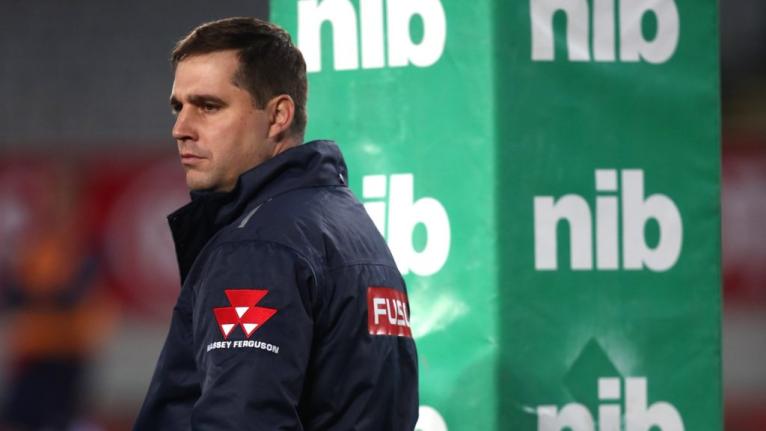
Wessels sees coaching as an extension of teaching. How to persuade a player to sacrifice something of himself for the team, especially when his own ambitions are not satisfied? There is no easy answer to that in the classroom.
The danger with the Springboks’ continued success is that ambitious coaches could seek to reproduce Erasmus rather than develop their own philosophy.
“You can’t maintain the appearance of being someone else or having someone else’s personality under pressure,” says Wessels.
Nor does he want assistants who instinctively defer to their head coach. From his time in Australia, Wessels recalls a maxim favored by Michael Cheika: “Disagree and commit”.
Coaches should vigorously challenge ideas behind closed doors, but present a united front to their players. Wessels has come across coaches who, after losing an argument with colleagues, look for validation among disgruntled players. Under pressure, those competing factions can split the team.
This is also why Wessels welcomes the presence of foreign voices in South African rugby. New Zealander Tony Brown and Ireland’s Felix Jones have brought fresh perspectives to the Springboks, while South Africans like Smith, Nienaber and Johann van Graan are broadening their horizons overseas.
What might normally be seen as a brain drain to wealthier northern hemisphere clubs could end up benefiting South African rugby. Those coaches may one day return home with ideas they would never have encountered if they had stayed.
“If you have a group of coaches who think exactly the same, you never challenge your own game,” he says.
Ask Wessels what success would look like in his current role and he doesn’t mention how many SA Rugby coaching certificates he could hand out. He wants to see people currently working with South Africa’s junior and other national teams to help the senior Springboks win.
Perhaps the ideal candidate to eventually succeed Erasmus is not the person most like him, but someone sufficiently equipped, educated and encouraged to challenge his ideas.
The greatest testament to Erasmus’ genius may end up being the Springbok team that continues to win without him.