






















































Golf equipment has changed a lot since Rich Beem won the 2002 PGA Championship. We have more fit data, more shaft options, adjustable woods, increasingly specialized iron sets and putter technology that would have sounded pretty foreign 24 years ago.
The problems golfers are trying to solve haven’t changed nearly as much.
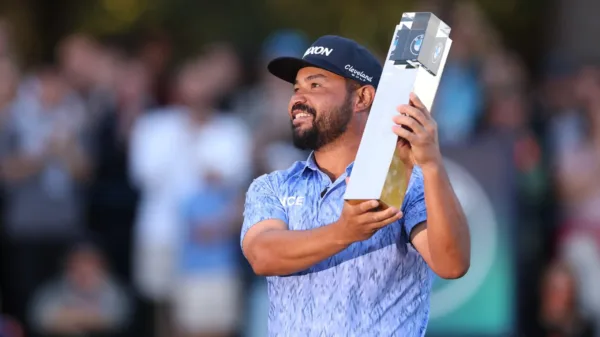
I saw Beem win at Hazeltine with my grandfather. We had seen him win the International two weeks earlier and were curious to see what he could do in just the fourth major championship start of his career. Beem was easy to like. He looked relaxed and regal. He later admitted he was so nervous going down the stretch that he felt like he might throw up.
When he held off Tiger Woods to win, my grandfather, a retired police chief and a hell of a character himself, laughed and cried at the same time. I can still see it. We had both become lifelong Beem fans.
More than two decades later, I was lucky enough to talk golf equipment with Beem. What struck me was how many of the things he was trying to solve in 2002 are the same things golfers are working on today: finding the right shaft weight, controlling the putter face, filling in the gaps and getting the right trajectory at the top of the bag.
Here’s what he told me.
Graphite iron shafts were rare. Beem never understood why.
Graphite iron bushes they were not heard when Beem won at Hazeltine, but winning a major with them was certainly rare. John Daly did it in the 1995 Open Championship and Bryson DeChambeau will then win the 2020 US Open with shafts of graphite in their irons and wedges.
Beem’s move to graphite was not the result of an elaborate fitting session. He kept asking for something lighter, something he felt would make it easier to pass the ball and create a little more speed.
Remember, this was 2002. Players didn’t have the amount of launch monitor data and tree comparison information they have now. They may look at some numbers, but most of the decision is still reduced to what the player saw, felt and believed worked for his game.
Beem liked what graphite gave him and essentially never went back.
“Why wouldn’t you? Nobody puts a steel shaft in their driver, their fairway wood, their hybrid. Why stop? What’s the stigma? We all have graphite shafts somewhere in our bag.”
His point about the technology itself is important as well. Whatever turned you away from graphite years ago, whether it was weight, torque, feel or a lack of options, the category is very different now. There are enough weights, profiles and stiffness options that graphite doesn’t have to mean a particular type of shaft or golfer.
Beem is also happy to have made the change from a body standpoint. After decades of hitting thousands of golf balls, he likes the reduced vibration of graphite compared to steel.
What I find particularly interesting is how little his reasoning has changed. Shortly after winning the PGA Championship, Beem spoke of preferring lighter clubs, a softer feel and graphite shafts around 100 grams rather than the heavier steel options he had been playing.
More than two decades later, he still looks the same way.
The STX putter still looks good to him
Beem’s STX putter was another unusual piece of the winning setup.
He first took one at Doral. Seve Ballesteros and Jesper Parnevik had used STX putters and Beem remembers that Parnevik was surprised when he saw that Beem had put one in the bag too.
Beem liked the small head because he felt he could control it.
“It was light, but when I look at it, it just seems that it should for me and I put up very well with it.”
The putter was a little too light, so he added lead tape until he got the weight where he wanted it.
After all the attention zero torque putters received in 2026, it’s interesting to look back at what Beem liked about the STX. It wasn’t a zero torque putter, but it was center shaft and visually very different from many of the traditional blades used on Tour at the time.
More importantly, Beem kept coming back to check and what he saw when he looked.
That sounds pretty familiar today. Golfers may have more technology available to help stabilize the putter and manage face rotation, but the ultimate goal is always to find something you can aim, control and return consistently.
The STX worked so well that Beem only needed 107 putts for the week at Hazeltine.
He has an Odyssey in play now, but he still has the STX. Every time he takes it, it always looks good.
My favorite part of the bag: solving the gaps
My favorite part of Beem’s setup may be what he was doing at the top of the bag because there was a lot of problem solving.
He had a high-loft fairway wood that didn’t fit neatly into one of the traditional categories. Someone asked him if he was a 5-wood. Beem’s response was essentially that it wasn’t really a 5-wood. It was more like a 6-wood.
There weren’t as many ways to customize a fairway wood then as there are now, but loft was something players could work with. Beem found a setup that gave him the distance and trajectory he needed.
It sounds a lot like what we are seeing today with more golfers putting up 7-woods and even 9-woods in the bag. The number printed on the sole is secondary to what the club does.
His approach to the 4-iron may be even more interesting.
At one point, Beem brought two of them. One was more blade-like while the other had a larger head, more in the style of improving the game that it was easier for him to throw higher. I wasn’t looking for two clubs that produced exactly the same shot. I wanted two trajectory options when approaching greens from longer distances.
Eventually, one of the 4-irons came out and a fourth wedge took its place.
Now Beem plans to change the balance again.
“I now have a gap in my bag that I need to fill and it makes me think about giving up a wedge and cleaning that gap.”
Beem said he’s more comfortable manipulating a wedge yardage, whether to get something or go after it a little harder, than asking a fairway wood or long iron to cover a distance that isn’t well suited.
That makes a lot of sense regardless of where you are in your golf game.
Technology has changed. The problems do not exist.
That’s probably my biggest takeaway from talking gear with Beem.
We can measure more now and adjust more. We have many more shaft, head and loft combinations available than he had when he won at Hazeltine.
But the questions are still quite simple.
Can I get the ball high enough? Do I have a gap that I can’t cover? Can I control the putter face? Does this shaft help me deliver the club as I want? Does the club look good when I put it behind the ball?
Beem was solving those problems with graphite shafts, a club that was basically a 6-wood, two different 4-irons and an STX putter with lead tape.
Twenty-four years later, we have much more sophisticated tools to find the answers. We always ask a lot of questions and while Beem no longer plays competitively, I’m glad he shared some of his wisdom with us.
The place I talked about golf equipment with leading champion Rich Beem. Here’s what he told me appeared first MyGolfSpy.