













































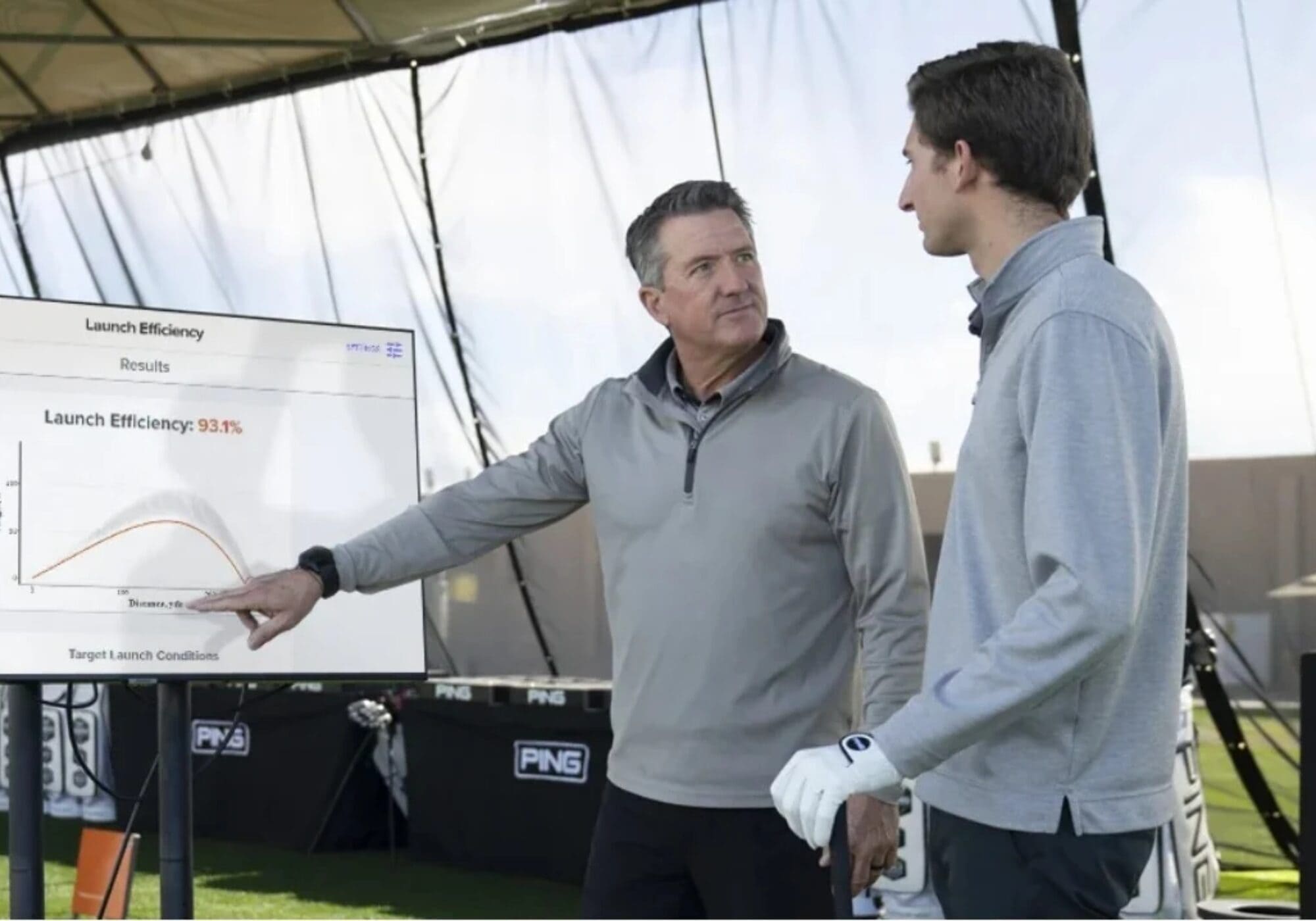
This is how a bad fit often happens. A golfer walks into a sim bay and hits some irons and the numbers look great because the clubs go far. So, the fitter asks the classic question: “What is the longest iron you like to hit?” The golfer says a 4 iron and the set is built around that answer.
Now the long irons throw too low. And the gaps have to come from a place to be squeezed from the medium and short irons, where most golfers need more good spaces.
That’s the scenario Marty Jertson, who oversees PING’s tools, processes and education, described when he guided me. co-pilotthe PING digital fitting tool kit launched in 2024. Not a fan of this question of comfort.
“This question drives me absolutely crazy,” he told me.
I have written before hitting a 7 iron is not suitable. A lot of golfers are nervous about getting it wrong and co-pilot it’s PING’s attempt to give fitters something solid to lean on.
Jertson stated the goal clearly: “It helps the fitter make smarter decisions and helps the consumer get a better product or eliminate the bad fit.” And it reaches well beyond gapping, touching almost every decision in a match from the first shaft of the driver to the grind on your lob wedge.
What is Co-Pilot and who uses it
co-pilot is a web app that authorized PING installers access. Jertson says about 9,000 fitters have accounts from big-box retailers and regional fitting studios to country club shops and PING’s proving grounds. It has been used about 7.5 million times. It is also translated into many languages so, for example, a golfer equipped by PING Japan receives Co-Pilot in his native language.
Think of it as a collection of small apps in one app. Jertson calls them “widgets.” Now, fitters enter launch monitor numbers manually, usually switching between monitor and co-pilot on a phone or tablet.
His mission for this is “to make the complex simple”.
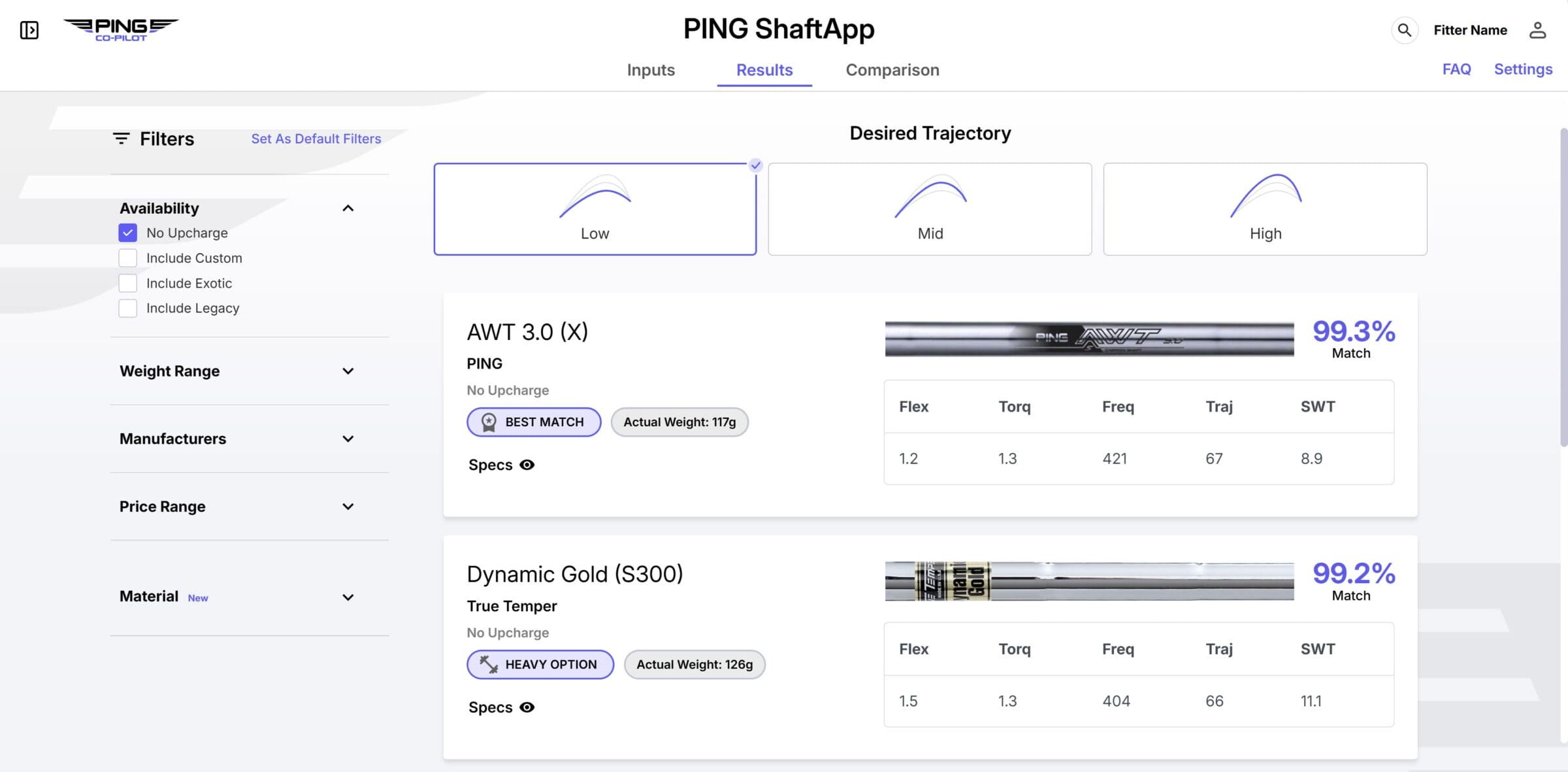
Tree adaptation is the classic example because there are hundreds of options. Co-pilot shaft tool takes three inputs, club, transition and speed. It returns a ranked list from the PING database of trees, all measured in their own laboratory, complete with a match percentage and full specifications.
“We filter as bad as we give you a good fit,” Jertson said.
This stuck with me because I think the shaft is where the fittings go wrong most often. You can make a clubhead work for many average players, but the wrong shaft is difficult to hide.
Where visuals gain their keep
The part that sold me wasn’t the math. The answer was seen.
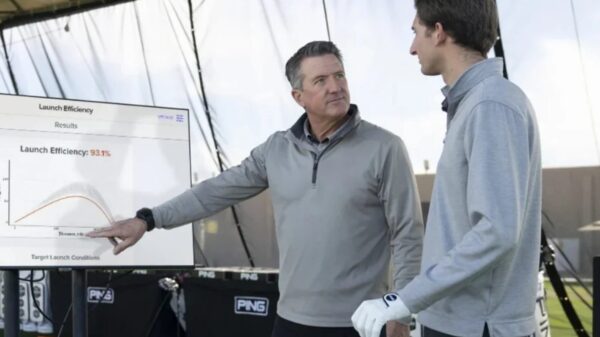
In seconds, co-pilot it turns the numbers into pictures that a golfer can understand and does so throughout the entire swing, not just gapping.
Barrels, classified. At the start of a fitting, the tee tree narrows down hundreds of options to a short ranked list that a fitter can have the player start hitting. Jertson was careful what he promised. It is not “guaranteeing” the final adaptation, he said, but “enlarging from the hundreds of options”.
Launching the driver, before and after. The driver tool takes ball speed, launch, spin and angle of attack and displays the launch and spin that suits that player. “What he does is go through every combination for that speed and angle of attack to find the perfect launch and spin,” Jertson said. Fitters can run before and after the changes to show the player what is moving. It also offers tips, such as checking the place of impact or the height of the tee.
The spin bell curve. Many fitters have grown up with a rule of thumb that good spin is 1,000 rpm times the number of the club. For a 7 iron, that’s 7,000 rpm which Jertson says is tour-level spin, not what the average golfer produces. Modern 7 irons also have stronger lofts than that rule assumes. So what co-pilot it shows where a player is on the distribution for their speed. In one example, a player landed on the bottom third in the spin and the app suggested PING’s Retro-spec lofts to move toward the middle of the curve. As Jertson said, the fitter “doesn’t have to remember all the launch spin distributions for all the different types of players and speeds and patterns.”
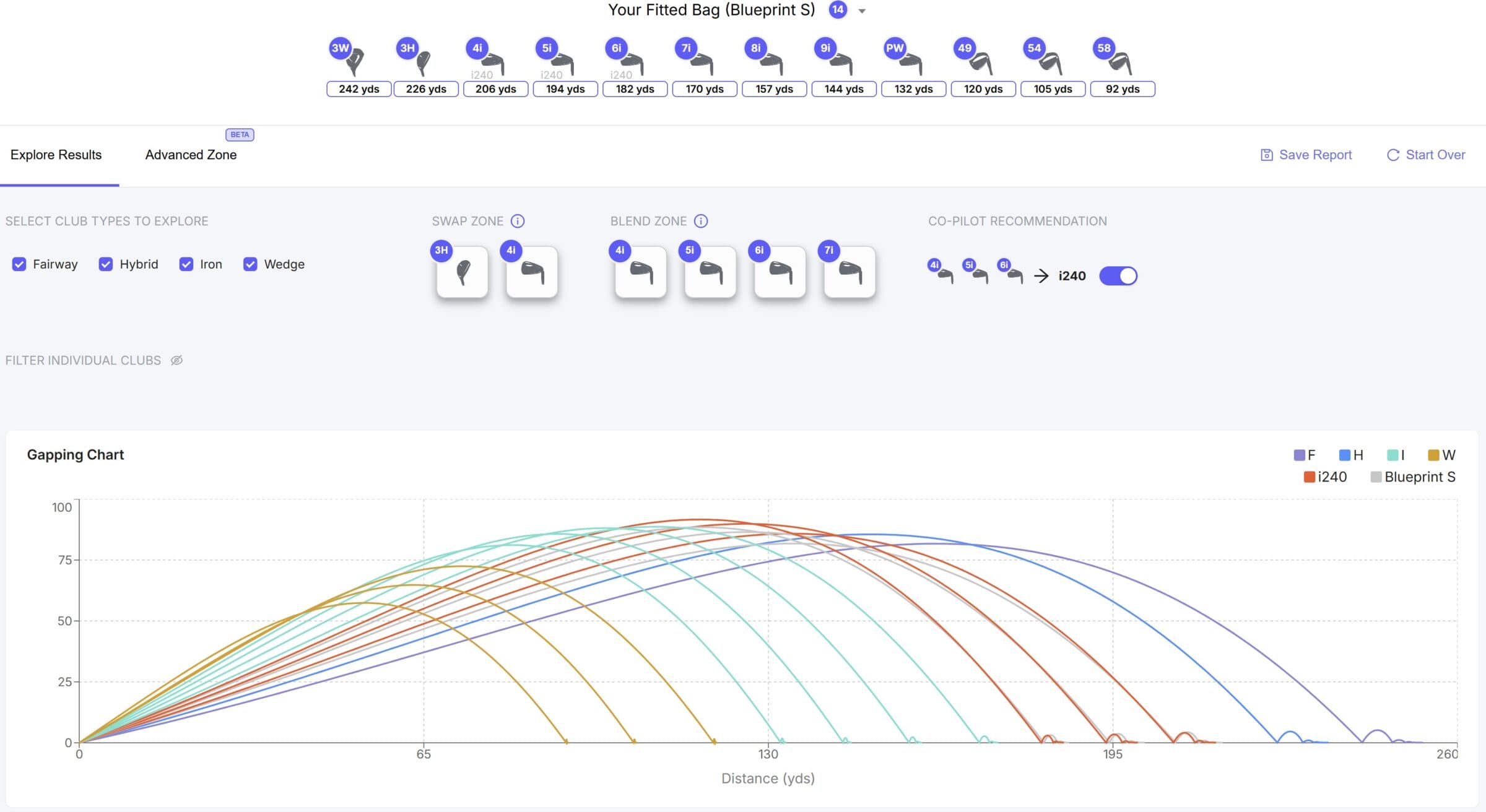
The whole bag, built from a 7 iron. Fits a golfer for a 7 iron and co-pilot predict the carry, total distance, peak height and landing angle through the bag. Also rate the best club lowest. In an example, put the chance of a 5-wood being the best club top at 43.4 percent. For Jertson’s own bag, he gave the 3-wood a 60 percent chance and the 4-wood 32 percent. He made a point of saying to me, “This is not a stage thing.” He plays a mixed set and had set his own wedge lofts the same way. It’s a handicap plus so anything works!
Exchange a club and watch it click. This was my favorite part because it’s where the idea stops. If a golfer is struggling with a 5 iron, the fitter can swap it into a hybrid and the new trajectory and peak height will appear on the screen. Suddenly, the conversation is not abstract. “You can see the height differences,” Jertson said. A golfer who sees the flight of the ball go up understands why the change matters and that picture stays in his head long after he leaves the fairway. They can try a few exchanges before spending anything.
Something to take home. At the end, the player receives an e-mail or downloadable report showing their shortfall. Some players use it as their yardage chart on the course.
The human part
If you just looked at the screen, co-pilot It might look like a machine that gives answers. Jertson was emphatic that it is not. “We are always giving power to the fitter. We do not want to replace the fitter.”
He gave me a good reason for that. The app might point a player towards a certain loft specification, but a fitter might know that the player’s home course has firm greens, false fronts and bunkers to carry. That context changes the call, which is why the tool says “recommended” and offers what Jertson calls “nudges.” “It’s about quantity with quality,” he said.
He was equally skeptical of a fully automated version. “We can also easily be like, ‘Fitter, we’ll replace you.’ But that’s not how fittings work. That’s real life.”
I don’t think people buy golf clubs. We want to talk to someone who sees our shots, asks about our course and our misses and hears what we like and don’t like. The data is there to back up that conversation.
What this means for your next fitting
The PING tool is an example, but it indicates what a good fitting should be. A few questions to ask before booking:
- They look peak height and landing anglenot just distance?
- They build your gaps through the whole bag instead of the longer club you say you are comfortable with?
- They wonder where to play?
- Start with numbers you can hold?
co-pilot it’s a PING tool so you’ll find it at PING fitters, although Jertson noted that some boutique fitters use it alongside his methods. He also said that PING is bringing more of these features to its WebFit tools for consumers.
There is real power in knowing that the club in your hand is the right one for you, not because someone told you so, but because you saw why. That’s what a good fit should leave with you and that’s what PING tries to build into every fitter’s toolkit.