

































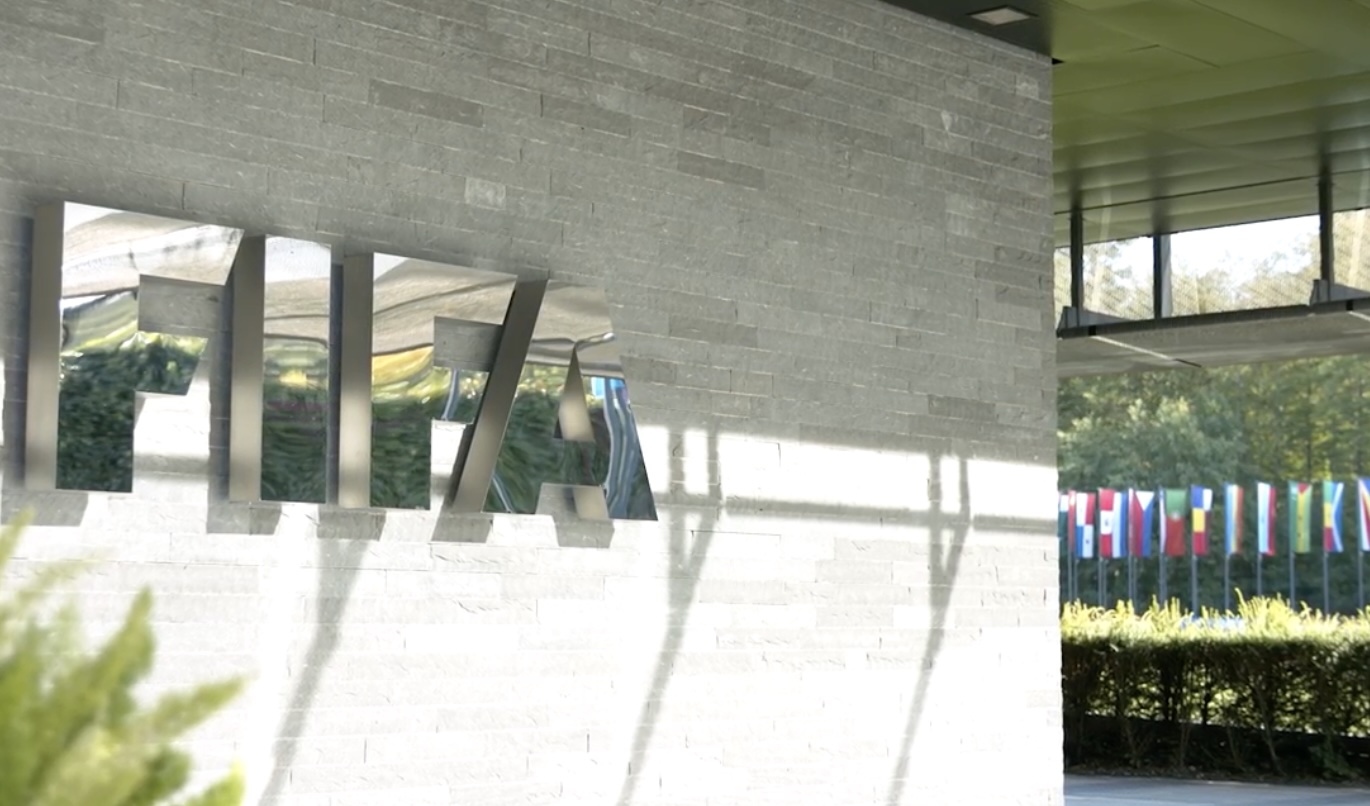
October 21: UEFA’s written questions to FIFA, sent on Monday following last Thursday’s Council meeting, raise questions about the ethics and integrity of FIFA’s Ethics Committee and, in particular, the presidents of the investigation and adjudication chambers, both of whom are named in the questions.
UEFA also raises questions about FIFA’s lack of action in key cases, particularly in Africa, of complaints against key supporters of FIFA president Gianni Infantino.
UEFA appoints President of the Investigation Chamber, Martin Ngoga (Rwanda) and President of the Adjudication Chamber, Maria Claudia Rojas (Colombia), to worry about their “independence and impartiality”.
UEFA says Ngoga’s “long-standing political and professional ties” to Rwandan President Paul Kagame – he served as Rwanda’s attorney general and as a member of parliament – and Kagame’s close relationship with Infantino have been publicly illustrated. Kagame starred in a video marking the FIFA president’s ten-year tenure.
As the Norwegian FA has filed a complaint against Infantino (the complaint includes Donald Trump’s FIFA Peace Prize, the Balogun red card case and World Cup selling schemes), UEFA is asking FIFA to “explain how potential concerns about Mr Ngoga’s independence and impartiality have been assessed in cases involving the FIFA president?” UEFA asks if Ngoya “would be prepared to recuse himself from current and future ethical proceedings relating to the FIFA president”.
UEFA is also questioning whether Rojas would recuse himself from proceedings involving Infantino because of his publicly acknowledged personal friendships with former Colombian FA president Luis Bedoya and current president Ramón Jesurún. Both have been key supporters of Infantino’s agenda and his presidency.
The “appearance of bias” in most judicial systems would mean an automatic disqualification for both Ngoya and Rojas.
At the heart of the matter are wider concerns about the independence and weaponization of FIFA’s judiciary by Infantino dating back to his first FIFA Congress as FIFA president in Mexico in 2016, when he dismissed FIFA’s independently appointed investigative and judicial presidents in favor of a judiciary of his choosing, subject to ratification by the FIFA Congress. To achieve this, he changed FIFA’s statutes to allow FIFA to appoint its won judiciary
It was an agenda item that was settled in less than three minutes, almost as a fait accompli, immediately after Infantino had just announced that he was increasing FIFA’s grant money to member associations. The hapless MAs were so busy counting their new money that changes in the judiciary passed them by. For many it became a lost agenda item that was ultimately his undoing as Infantino tactically purged the MAs and built his power base.
Doing the right thing for Africa?
UEFA’s questions also raise Nigeria’s pre-World Cup complaint regarding DR Congo playing eligible players in 2026 World Cup qualifiers DR Congo during FIFA World Cup qualifiers, including play-off matches against Cameroon and Nigeria, then Jamaica.
UEFA asks: “According to the information available to us, FIFA established that the player was ineligible for certain matches, but no sporting sanction, such as the forfeiture of a match, was imposed. Could FIFA explain the legal and factual basis for this result? Could the FIFA president also confirm that he did not intervene, directly or through any member of the FIFA administration, acting in his disciplinary influence or in his disciplinary influence. Ensure a decision specific?”
Congo has a new president in former CAF Secretary General and Infantino’s friend, ally and political stormtrooper in Veron Mosengo Omba. Veron was involuntarily removed from CAF following several allegations about his conduct and subsequently because he “aged out”, becoming too old to hold the position under CAF laws.
Infantino was instrumental in parachuting him into the Congolese position, using the government’s influence over local FA members to do so, and despite opposition from Congolese FA members.
By doing the Congo a huge favor, Infantino at the same time severely disadvantaged Cameroon and Nigeria both nationally and economically. Both federations have been reliable supporters of Infantino, although there is now a growing awareness among members of African federations that blind trust in Infantino and FIFA can work against them and certainly does not guarantee fair treatment.
FIFA’s failure to act on ethics in the Congo case has been mirrored in similar situations in Djibouti and Somalia, where Infantino’s supportive leaders have artificially remained in their positions despite protests from local football players.
Djibouti police remove Waberi from FA headquarters
Infantino’s pattern of favoring key allies goes beyond the questionable UEFA incidents, with a number of FAs beginning to raise questions about FIFA’s meddling in the politics and leadership of their national federations.
In early October, Djibouti Football Federation (FDF) president and FIFA Council member Souleiman Waberi was removed from FDF headquarters by police after being voted in as president.
Waberi is a member of the executive committee of the Confederation of African Football (CAF) and a member of the FIFA council. Waberi is reportedly facing embezzlement and money laundering charges, after being arrested in 2024 for “misusing cash payments” totaling almost £500,000. FIFA said that “monitoring mechanisms have not revealed any indication of wrongdoing with regard to the funds it disbursed.”
However, one contractor told The Guardian: “The money is gone, the projects are never finished, or if they are, it’s just the plain version, and nobody says a word. It breaks my heart for the young people who just want to play football.”
FIFA has been aware of the allegations and the unknown money since 2024, but has done nothing, instead allowing Waberi to continue supporting Infantino.
Somali stakeholders are interested
Concern has been growing in Somali football over the upcoming Somali Football Federation (SFF) elections and FIFA’s refusal to intervene so far to ensure transparent and fair elections.
At the center of the controversy is SFF president Ali Abdi Mohamed, a vocal and staunch defender of Infantino and who during his time as SFF president has benefited considerably and financially from the relationship with FIFA.
Abdi Mohamed is a member of the executive committee of the Confederation of African Football (CAF), vice-president of the African regional confederation, the Council of East and Central African Football Associations (CECAFA) and is part of the FIFA Grassroots and Amateur Football Committee.
Somali football players claim that he has massively overstepped the bounds of governance and basic human rights to ensure his re-election. So far, FIFA has done nothing to stop him, although it is well aware of the activity that has been reported on several occasions of his electoral behavior.
Abdi Mohamed is accused by the Somali football family of using his position to suspend members who do not support him, and even using his position as Somali police captain to threaten and intimidate opposition supporters.
In June 2026, a majority of the SFF congress voted against Mohamed and in favor of Omar Mohamoud Nor (Muganbe) as acting president. FIFA quickly intervened, saying it would investigate the election and keep Infantino’s man, Abdi Mohamed, in office.
Infantino must keep his followers in charge of African federations until the March 2027 elections.
While Infantino has the presidents, the growing unrest across Africa suggests he hasn’t necessarily had football’s support.
Contact the writer of this story at (email protected)