The G450 MAX, LST and SFT are the one-for-one replacements you’ve been waiting for. The G450 MiniMax is the long-awaited arrival of a PING mini driver.
It’s that time of year. SZN pre-release is in full swing and new drivers appear on the USGA compliance list almost every week. So it’s all but unexpected that PING’s next-generation G450 drivers made their USGA debut… right on schedule.
What golfers might find more intriguing is the fourth listing: the G450 MiniMax which suggests that PING is finally ready to join the mini driver party.
Let’s start with the mini
Although the G450 MiniMax makes sense, I’d say it’s a bit late. A PING prototype mini has been on tour for almost a year and with TaylorMade, Callaway, Titleist, COBRA and just about everyone else already on the shelves, PING is the last OEM of consequence without a mini in their retail lineup.
To be clear, PING has not ignored golfers who want something more controllable than a driver. His answer was the “thriver” (or the macro driver as PING’s Marty Jertson called it and as I will continue to call it because I like it). The recipe is simple: take a full-size driver head (PING recommends starting with a MAX of 12 degrees) and build it to 3-wood (43.5″), 5-wood (43″) or even 7-wood (42.5″) length. The logic behind this is simple. If you hit your 3-wood from the bridge with any regularity, keep it. If you don’t, a bigger head on a longer shaft short gives you more MOI and more control.
It is a reasonable argument. It’s not just what the market imagines when it hears “mini driver”. A smaller, custom built head is what the industry and consumers have come to expect and the MiniMax will probably be more in line with that.
What’s in a name?
Because the macro driver has always been built on the MAX, it looks like PING’s first own mini will be built on its core. That’s what the MiniMax name tells me, anyway, and it’s about as on-brand for PING as it comes. Bet before the MiniMax leans towards forgiveness.
It is listed in a single loft (13 degrees) which is what most brands do in the mini space.
Three familiar faces
None of the full-size drivers are a surprise. The MAX, LST and SFT have been mainstays of the PING line for a few generations now, so expect one-for-one replacements with some improvements along the way. PING is not a company that spits things out for the love of it.
G450 MAX

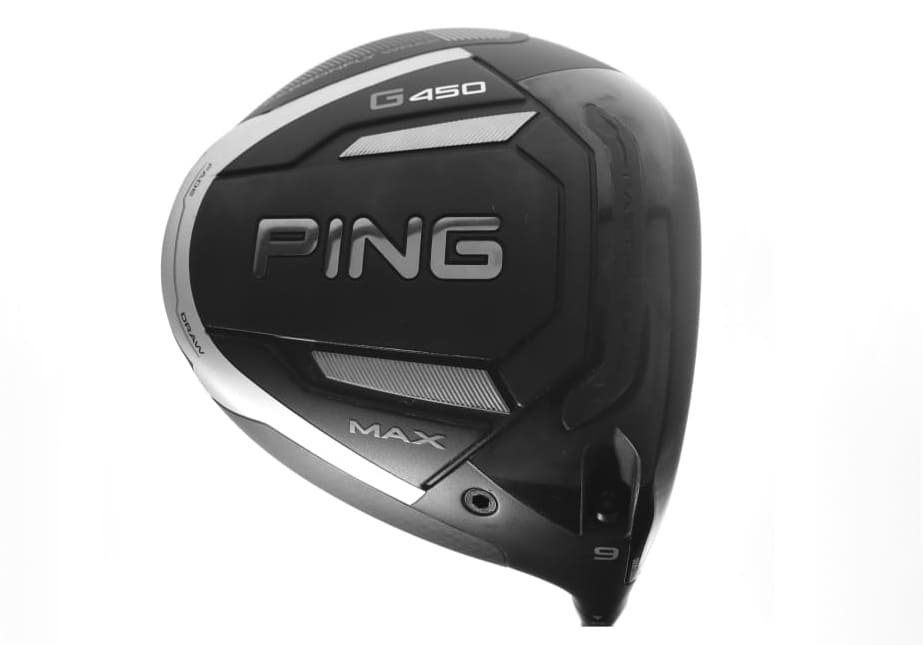
The MAX (9, 10.5 and 12 degrees) is the core model of PING. It tends to have a higher MOI than most core drivers, but with the G440, PING has pushed it slightly towards the middle of the forgiveness chart which leaves room for the K to occupy the extreme end of the MOI scale.
As a quick aside: if you’re wondering why there’s no G450 K on the list, you’re missing something. PING releases the MAX, LST and SFT every year with the K falling in off years. The G440 K arrived last January. With that said, don’t expect a new K until this time next year (give or take).
G450 LST

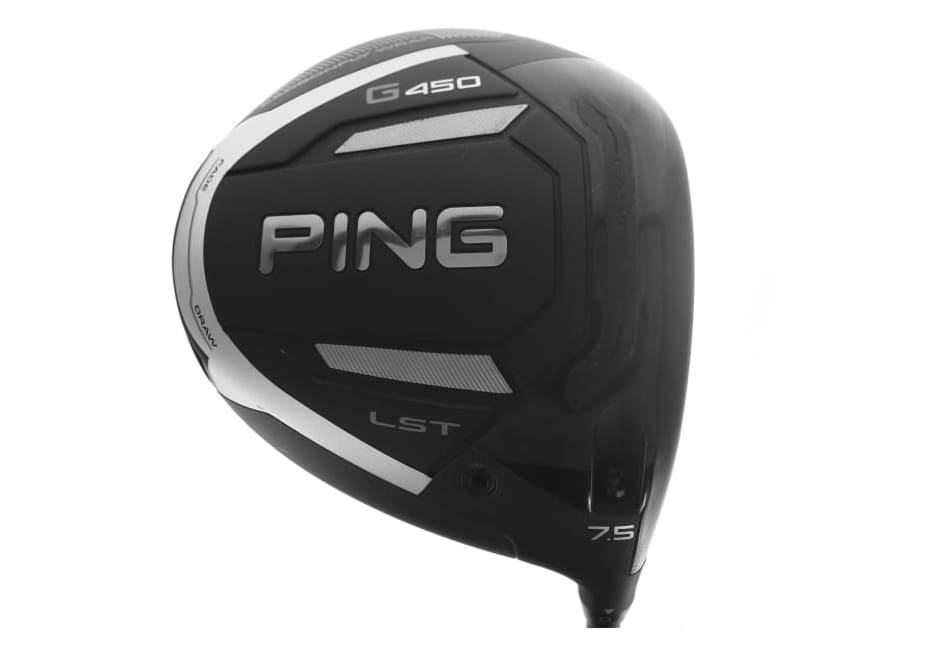
The LST is listed in 7.5, 9 and 10.5 degrees. That 7.5 is worth a mention. Last time, PING added it to the line well after launch. This time, it looks like it will be available out of the gate.
On paper, 7.5 degrees puts the LST among the lowest nominal lofts on the shelf which sounds like something reserved for tour players and guys who swing 125. The reality is that PING’s LST tends to be less spin low (and higher MOI) than most LS models on the market. Less loft helps compensate for the dynamic loft that some golfers add at impact as they pull spin down a little more. For a brand that puts a premium on fit, giving fitters one more tool to work with makes a lot of sense.
That said, the MAX is the one that will do the heavy lifting at retail.
G450 SFT

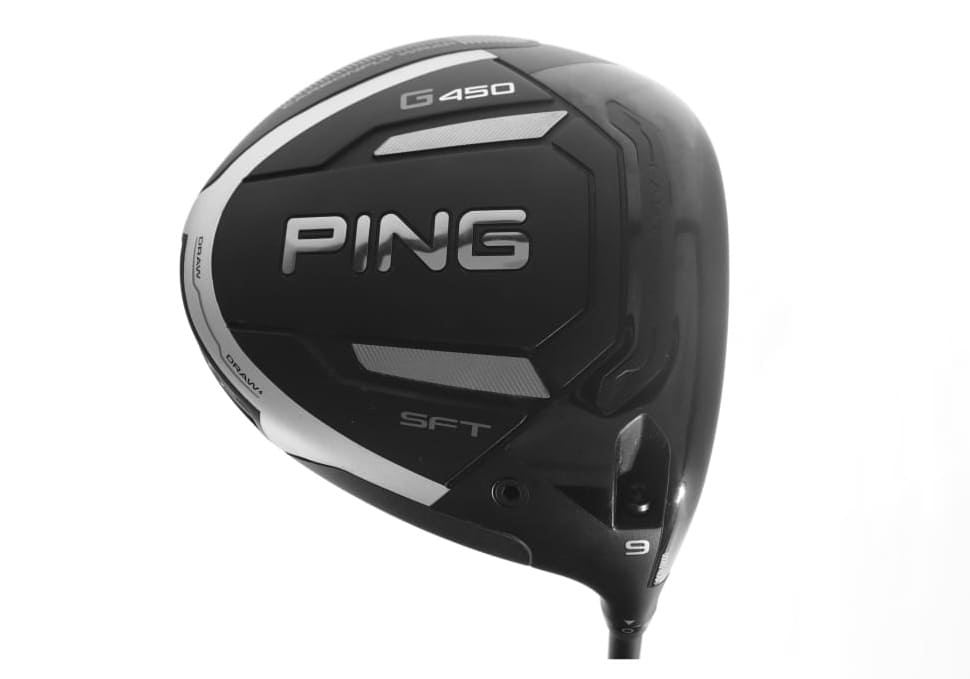
The SFT (9 and 10.5 degrees) is what it is: a mainly niche driver for slicers. He also absolutely excels at that job. It’s great if that’s what you need.
If not, you’ll never think again.
What the USGA List Tells Us (And What It Doesn’t)
The USGA list is notoriously light on technical details, but between the markings and the photos, we can pick up a few things.
Every model, the MiniMax included, wears a Carbonfly Wrap crown. It’s not new (it went all the way with G440) but it’s at least worth a footnote that brings in the mini.
The MAX, LST and MiniMax have drawn and fade marks on the sole (and, presumably, a neutral setting in between) to go with the shoulder weight port. The SFT trades those for DRAW and DRAW+. No one buying an SFT ever asked for a fade setting.
FASTFLEX
The new technology identified by the brands is something that PING calls FASTFLEX. Specifics are TBD but on the face of it (or in this case, its only), FASTFLEX appears to be a slot-based technology similar, at least in appearance, to TaylorMade’s SpeedSlot or Mizuno’s CORTECH Camera. The name doesn’t exactly hide the intention. “Fast plus flex” reads like a ball speed story and if history is any guide, slots typically pair wonderfully with low impact stories.
Again, that’s just what we can see. Under the hood, there’s probably more.
Prices and availability
PING has not announced the price or availability, but the story says January. My guess is $650 for the full-size drivers and I wouldn’t be surprised if the MiniMax lands just a little lower.
Save some money
With G450 on the way, the next generation G440 LST, G440 MAX and G440 SFT are discounted to $448.98. If you don’t need the newest, this is a lot of PING drivers for the money.
Have your say
Can you fit a mini PING driver in your bag or stick with a 3-wood (or a macro driver)? Let us know.
More information as it becomes available.
The place The PING G450 Drivers Hit The USGA List and one is a Mini appeared first MyGolfSpy.