
















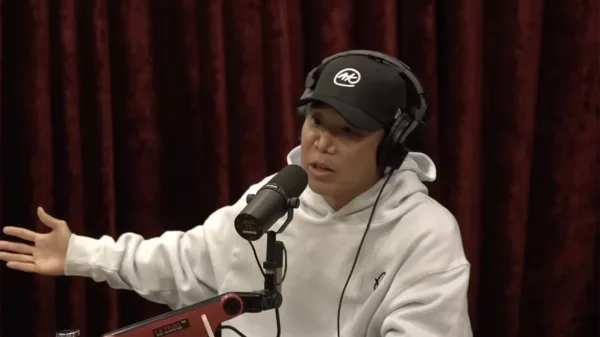



















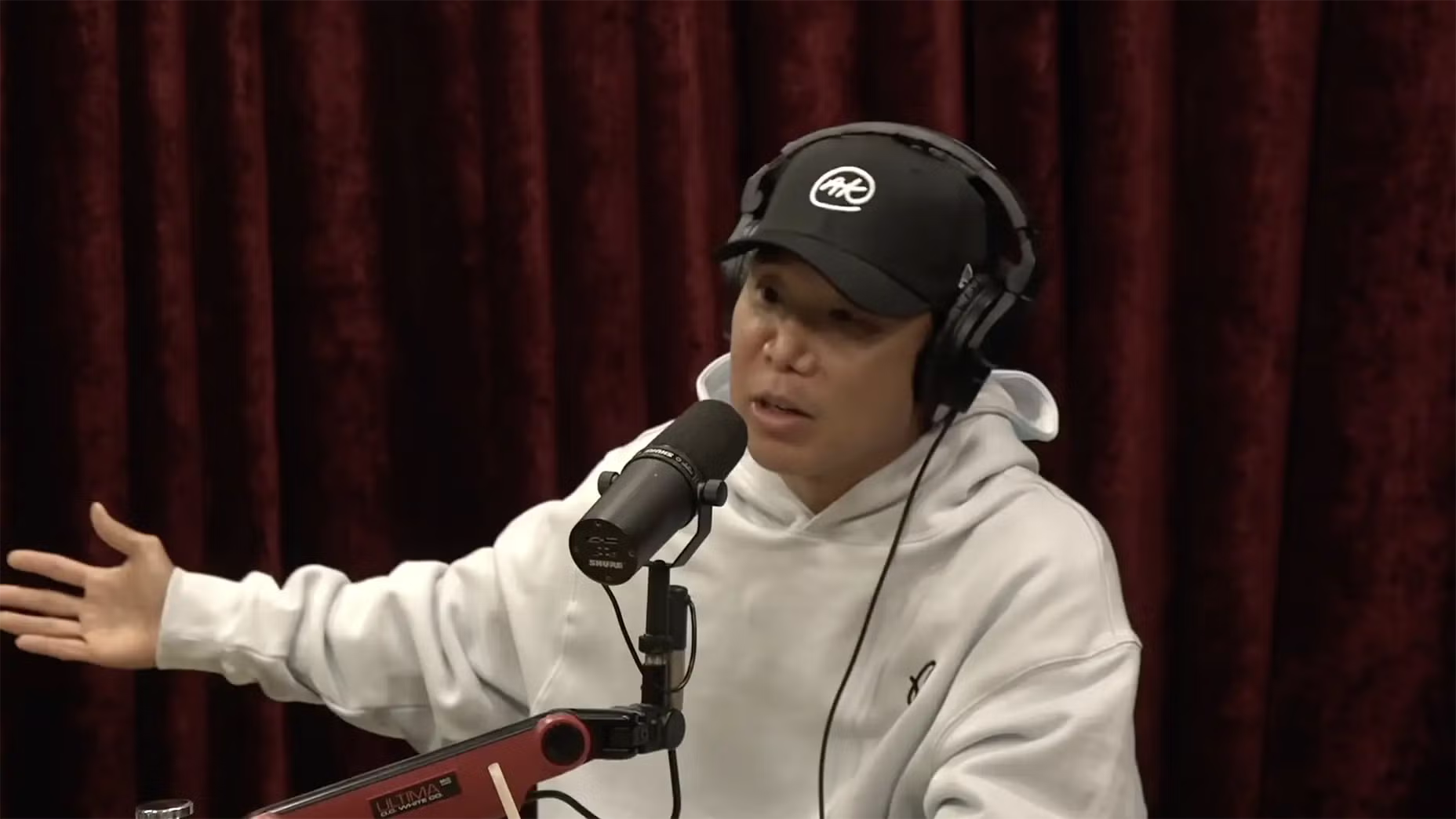
Since he returned to pro golf, and even before his return, Anthony Kim he is planning for a full breakdown of his rise, fall and return in a future documentary. He refrained from (and during) interviews, always promising that he will go deeper into that platform first. It’s the one that suits them best and certainly the most beneficial, and that was the case until this week when Kim joined Joe Rogan on the latter’s world-famous podcast.
For more than two hours, Kim sat down with Rogan in his Austin, Texas homestudio, diving into the journey that Kim’s life had taken at this point – or, as Kim can remember. Rogan did as Rogan did, scrolling through the CliffsNotes of Kim’s career and driving the conversation forward. The result was one of the most revealing conversations Kim has ever shared.
It was not perfectly transparent. There are gaps in Kim’s memory, he admits, from his many years of heavy alcohol and drug use, but we learned a lot more about his upbringing, what he saw in his parents, his introduction to marijuana as a 12 or 13-year-old boy, then to cocaine as a 15-year-old, leading all the way to the current golfer that Kim thought about the care of LIV.
Let’s start with the early days, where Kim talks about watching her mom, a store owner, get robbed at gunpoint when she was 7 or 8 years old. Watching his mother and family struggle, Kim says, was a recurring motivation in his early golf days. But soon, those first days of golf introduced him to a world he couldn’t stay away from.
When he was a preteen, Kim was introduced to marijuana, greatly influenced by the people around him in the golf courses in which he plays. Kim says he was hanging out with men 20 or 30 years older than him, who were members of the country club he wanted to join.
“I was like man, this is the guy,” Kim said. “This guy has a convertible Mercedes and he has four hot chicks with him and he parties and drinks. And then he goes to this club that is $100,000 to join and he signed the bill and didn’t even pay cash. That’s how much I respect him. One day I’ll go.”
Around that group of people, Kim said, introduced him to cocaine at age 15, which he abused frequently during his college career at Oklahoma. Kim recalled being suspended for several fall seasons, and eventually banned from Oklahoma for his substance abuse, despite numerous run-ins with the OU athletic department.
When Kim was in Norman, Oklahoma, she had a friend from Los Angeles shake the center of a jar of peanut butter and send her drugs in the jar “so I could have the best for the party.”
Kim was constantly riding the “false confidence,” making a fool of himself in a way he could never understand until he sobered up.
Kim detailed his time on the PGA Tour, combining performances in Q School to sponsor exemptions and spend money immediately as he won it, completely ignoring, for example, the fact that he had to pay taxes on those winnings. He first gave it to his mother before quickly buying the trendy vehicle: an Escalade with 24-inch rims. Next came a $60,000 necklace.
“It’s crazy how fast it goes,” Kim said. “Like you go to the bar and then you lose track and you bought 94 shots because you think you’re a boss. This confidence. Then you’re like: “Oh man, that was 12 grand. Who cares? I got it. “… It became regular for me.
It was the mid-2000s when, as Kim aptly put it, “Thank God there was no social media.” He says he threw up on the 1st tee during one event, and almost passed out during another, and going without sleep at a Dallas tournament because he was at home and partying every night.
But then his story revolves around a few simple words:
When I was in rehab, I found something.
Kim thanked her friend, Rick Solomon, for convincing her that rehab was necessary. In 2023 or so, Kim says, his first rehab visit provided an alarming environment. He saw the other people around him, judged their situation and registered with him why he might also need to be there.
“I’m ashamed of my life, you know what I mean?” he said. “Like 10 years ago, I had a chance to win the Masters, and now I’m sitting here with the crazies. And so I called my wife, and I said, ‘Hey, I don’t think this is for me. I want to give this my best, but I don’t think this is for me.”
“I said these people are insane and she asked me, she says, ‘Sleep right next to them.’ What does it do to you? It took me a few seconds to be like, wait, did you call me f-king crazy? And I sat there for a second and I said, “This is true.”
It’s around that point where Kim’s story is at least a little more publicly known. In 2024, he returned to the public eye, committing to LIV Golf. He shared tiny notes about an upcoming documentary and also that he battled depression and suicidal thoughts during his battle with addiction.
His body has also taken a beating over the years. He underwent 10 surgeries, including a spinal fusion. His cocaine use led to the development of an autoimmune disease called vasculitis, which Kim says has weakened the bones on the right side of his face. Kim now has “like 40% vision in my right eye,” which prevents him from playing as much as he’d like.
To get through it all, he does about 90 minutes of stretching every morning, he says. He has lost about 50 pounds since returning to pro golf. And somehow, it can not be forgotten, Kim gathered win the LIV event in Australia earlier this year – an indelible moment that felt impossible for anyone to believe, even as few months before. Kim stated, as on many occasions, that he did not think he would be alive if it were not for his wife, Emily, and his daughter, Bella, 4 years old.
But where does everything leave him moving forward? The demise of LIV Golf left Kim as a total free agent with no playing status anywhere. He remains interested, for at least the next three or four years, in pursuing what remains of a professional career. He left Rogan with a prediction of sorts for what’s to come:
“I think I’m about eight months to a year away from being good,” Kim said toward the end. “I think people won’t believe what they see in eight months, a year.
“What I did is, I worked, even if I had to take two steps back, score, I worked on things in my swing, and how to transform the information to be good in a year. I suck when I’m not playing well, but I’m staying true to my plan.”
For more on his rollercoaster ride — and there’s a lot we didn’t get to here — check out the podcast below. It is absolutely worth your time.
“>