
























































It was a strange feeling at the final whistle in Tbilisi.
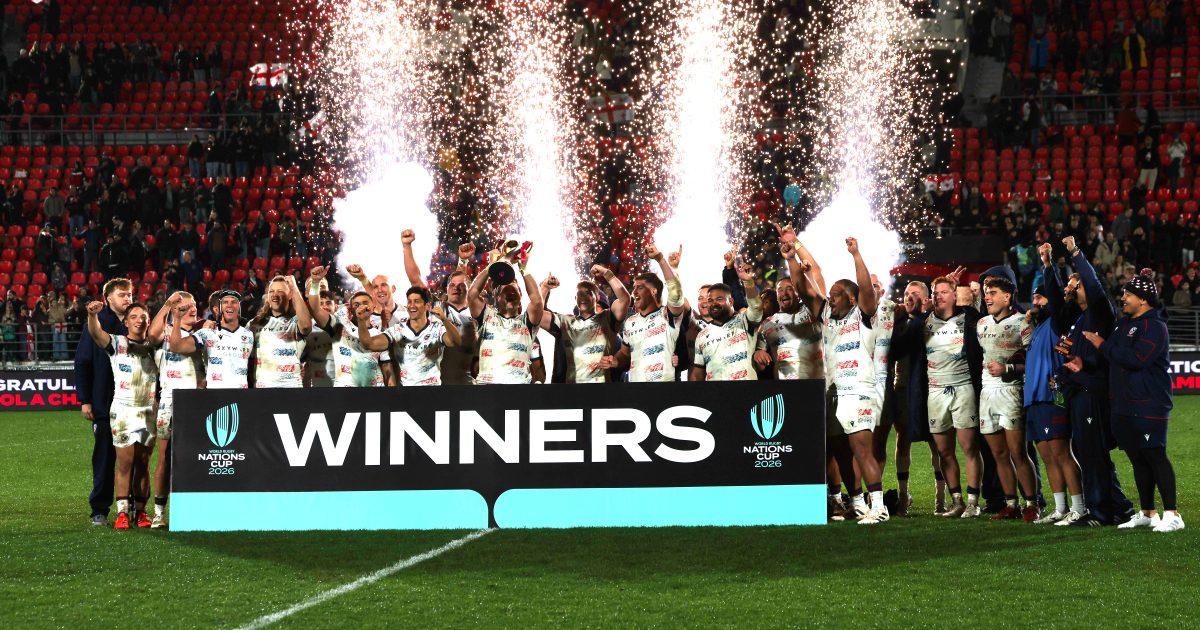
I’m not sure I’ve witnessed many occasions where both teams receive trophies, celebrate together and pose for a collective photo.
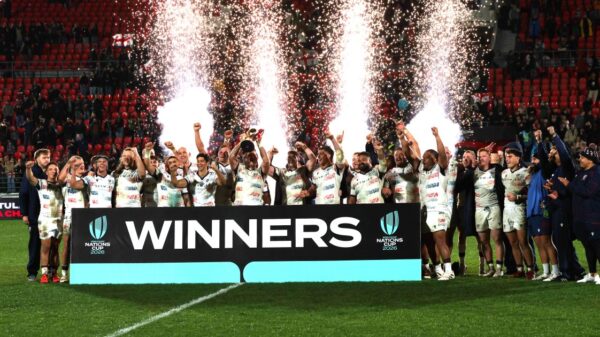
Still, it was a scene like Georgia and USA The Eagles are crowned Nations Cup champions in the pool. But there was no doubt who emerged as the real winner on Saturday.
The Lelos battled through wet conditions to secure a convincing 38-10 victory, extending their 13-year unbeaten home record against the USA.
For the Eagles, their Cup of Nations campaign has produced results but mixed performances. They arrived in Georgia with a 100% winning record, having scored seven tries in an emphatic 53-24 win over Romania the previous weekend.
That performance gave me real optimism that the Eagles could make another statement in Tbilisi. Unfortunately, as Saturday progressed, that optimism gradually faded.
It wasn’t necessarily the loss that was disappointing, but the limited attacking opportunities the Eagles created and the fact that they never fired.
Talked to me before the gameEagles captain Jason Damm described the match as a “huge game” and a chance to “make a statement”.
Unfortunately, the conditions made that ambition much more difficult.
Heavy rain and a ball like a bar of soap meant that territory became king. Possession was almost a liability, with both sides preferring to shoot rather than risk mistakes in their own half.
To describe the opening 20 minutes as brutal would be an understatement.
Just four minutes into the contest, we had already witnessed seven tackles from the box, four from Eagles scrum-half Oscar Lennon.
The attacking variety that impressed me against Romania, with forward-back link-ups and intelligent attacking moves that create chances, was largely absent.
However, Georgia itself did not offer much more. The conditions will never produce an expansive spectacle.
The Eagles clearly arrived with a territorial game plan. Anything inside their own half, and often as far as the Georgia 40-yard line, would be kicked out.
Some fans may have been tearing their hair out, but there’s nothing inherently wrong with that approach in those conditions.
In fact, a passage around the 32nd minute showed exactly how effective it could be.
The line, carry forward and subsequent kick from the box are allowed Chicago Hounds winger Noah Brown to regain possession in the air, creating an opportunity to attack inside the Georgia 22.
Lennon then cleverly flicked a shot over the defensive line, while Brown came agonizingly close to gathering himself and firing into the corner.
Good strategy, good execution, unfortunate outcome.
Unfortunately, that was probably the most encouraging offensive sequence for the Eagles of the night.
Brown deserves a lot of credit. For me, he was the standout performer for the Eagles, demonstrating tremendous effort and an impressive ability to compete in the air.
But maybe that tells its own story.
Against Romania, Brown’s attacking threat came from his ball-carrying, finishing and ability to exploit space. Against Georgia, his biggest contribution was chasing shots and recovering possessions.
Defensively and at times, the Eagles had encouraging moments. However, the biggest difference between the teams was Georgia’s ability to turn lost possessions into offensive opportunities.
It was almost as if the Lelos had an offensive switch they could turn on when opportunities arose, something the Eagles struggled to find.
Georgia won the overall aerial contest, reacted quicker to turnovers, were more decisive in transition and much more clinical.
Admittedly, the rebound of the rugby ball also played its part.
Two Georgian tries, either side of half-time, proved particularly damaging.
First, a difficult rebound eluded Eagles guard Mitch Wilson, allowing Georges Shvelidze to capitalize. Shortly after the break, another full-back shot deflected off Chris Hilsenbeck and into the path of Luka Ivanishvili.
Suddenly, the Eagles were down 19-3 in the 46th minute.
Questions will inevitably surround the coverage of the Eagles backfield, but sometimes the rejection of the rugby ball can be cruel.
Still, chasing a 16-point deficit in those conditions was always going to be a huge challenge.
The Eagles eventually got inside the Georgia 22 shortly after 50 minutes, but what followed included their frustrations on offense.
There was plenty of determination and physical commitment, but seemingly little alternative when the initial approach failed.
Repeated pick-and-go attempts were met by a stubborn Georgia defense, and the Eagles struggled to create momentum or change the point of attack.
Hindsight is wonderful, especially when analyzed from the comfort of a television screen rather than battling the elements in Tbilisi.
But even inside the opposing 22, the Eagles rarely looked capable of unlocking Georgia’s defense.
And that brings me to the biggest question since Saturday.
Was the Eagles’ tactical approach too predictable?
Kicking itself wasn’t necessarily a problem in that type of game. The lack of variation around that batting strategy was more concerning.
The Eagles relied heavily on one-phase setups followed by Lennon’s box kicks.
Could they occasionally play an extra phase before kicking? Moving the ball toward the rim? Used Hilsenbeck to change the angle of the snap and challenge Georgia’s backfield differently?
None of those options would be straightforward in these conditions, but even subtle variations can manipulate the backfield and force defenders to make different decisions.
I was also surprised the Eagles didn’t use their driving stroke more often. Looked like one of their stronger attacking weapons and eventually set up Paddy Ryan’s second-half try.
About half way or inside Georgia territory, could that platform have been used to generate penalties, manipulate defenders around the rim with offensive threats like Brown and McLean or create opportunities for running backs?
In my opinion, these are relatively small tactical adjustments that could have demonstrated a different mindset and approach.
One pass in the 59th minute stood out in particular.
Backup linebacker Ezekiel Lindenmuth, who impressed me with his carry, made a strong run toward the half, leaving the Georgia defense momentarily disorganized.
It seemed like an ideal opportunity to inject pace, challenge a retreating defensive line and take advantage of a potential blindside overlap.
Instead, the Eagles reverted to their punting strategy.
Brown nearly regained possession, but Georgia collected the loose ball, ran through four quick passes and scored from deep in its own territory.
Within seconds, a promising American attack opportunity became another Georgia try.
That sequence illustrated the difference between the teams.
The Lelos were not necessarily producing anything revolutionary. They simply recognized opportunities, reacted faster and executed when it mattered.
The Eagles’ commitment was never in question. Even late in the contest, they kept fighting and produced moments of promising rugby.
But too often the push for initial work is not accompanied by the precision or composure needed to maintain pressure.
A great counter-rack earned the Eagles a turnover inside Georgia territory in the 64th minute, but just one pass and one carry later, possession was lost.
Georgia charged. One clearance and three passes later, Aka Tabutsadze scored in the corner.
In the end, Georgia deserved their victory and unofficial bragging rights as Cup of Nations champions.
For the Eagles, though, there has to be a sense of what might have been.
It is important to acknowledge the demands of a long international season. There have been encouraging performances, more depth in the squad and good results in 2026.
The win over Romania showed an attacking identity that should provide confidence for next year.
But Saturday was also a reminder of the challenges that lie ahead at the Rugby World Cup.
France, Japan and Samoa will each present significant obstacles. An emphatic 90-22 victory for Samoa Spain Last weekend was another reminder of the quality in that pool.
The Eagles have shown they can compete physically, defend resolutely and, at times, run an effective territorial game.
The next challenge is developing the adaptability to recognize when that approach isn’t working and finding alternative ways to threaten adversaries.
This does not mean that they abandon their strengths. That means building on them.
Because against the best in the world, winning the fight or relying on physical prowess alone probably won’t be enough.
Saturday was a disappointing end to an otherwise successful Cup of Nations campaign.
But if the Eagles take their lessons from Tbilisi, combine them with the attacking ambition demonstrated against Romania and develop greater tactical flexibility, this defeat could still prove worthwhile.
The challenge now is to ensure those lessons translate into performances when it matters most in the big World Cup year ahead.