















The playersLeighton Hewitt and Pat Rafter
- Leighton Hewitt. The Australian who had just become the new US Open champion
Leighton Hewitt was born in 1981. While her father was a professional Australian footballer and her mother a professional netballer, young Leighton chose tennis. In January 1997, aged just 15 years and 11 months and without an ATP ranking, he was invited Australian Open qualifying event where he won three matches to become the youngest qualifier in the tournament’s history (lost to Sergi Brughera 6-3, 6-4, 6-3 in the first round of the main draw).
A year later, in 1998, the young Australian stunned the tennis world by winning his first ATP title before the age of 17 in his hometown of Adelaide. On his way, he defeated the great Andre Agassi (7-6, 7-6), and in the final he defeated Jason Stoltenberg (3-6, 6-3, 7-6).
It took Hewitt another year to break into the top 100 in early 1999. He won a second title that year, in Delray Beach (defeating Xavier Malis 6-4, 6-7, 6-1) and finished the season as world No. 25, also taking part in Australia’s Davis Cup victory. In 2000, he became the first teenager since Pete Sampras to claim four titles in one year; The most important of these was the Queen’s Club Championship, where he won six times Wimbledon champion Sampras in the final (6-4, 6-4). It was also in 2000 that he got his first major Grand Slam result, reaching the semi-finals of the US Open, where Sampras avenged his loss to Queen (7-6, 6-4, 7-6).
“Rusty,” as his trainer Darren Cahill called him, was now a member of the top 10. In 200, he went even further by winning the US Open, defeating Sampras in the final (7-6, 6-1, 6-1). At just 20 years old, he was now a serious contender for the world No.1 spot. Hewitt was a great mover, very skilled as a returner and, above all, he was an incredible fighter; his trademark “Come on!” was already famous in the tennis world.
- Pat Rafter. Australia, who was a two-time US Open champion
Patrick Rafter was born in 1972 and turned professional in 1991. The Australian did not achieve any remarkable results at the beginning of his career, winning only one title until 1997, at the 1994 Manchester Open. In 1997, Rafter’s career suddenly took off when he reached the semifinals Roland Garroslost only to Sergi Bruguera (6-7, 6-1, 7-5, 7-6). A few months later, she stunned the tennis world and won the US Open title. It was his second career title.
On his way, Rafter defeated Andre Agassi (then 63, 6-3, 7-6, 4-6, 6-3), world No. 2 Michael Chang (6-3, -3, 6-4) and Greg Rusedski (6-3, 6-2, 4-6, 7-5) in the final.

In 1998, his disappointing results in the first half of the season led John McEnroe to criticize him as a one-slam wonder, and Sampras suggested that the Austrian needed a second major title to be considered a major player. In response, Rafter claimed titles in Toronto and Cincinnati in the summer of 1998 (beating Sampras 1-6, 7-6, 6-4 in the final). Riding a wave of confidence, Rafter would go on to win a second US Open title, defeating Pistol Pete (6-7, 6-4, 2-6, 6-4, 6-3) for the second time, before he defeated Australia’s Mark Philippousis (6-3, 3-6, 6-2, 6-0) in his first Grand S70 final.
Budd Collins described him as “a humble man known for his gracious manner on the court, great generosity and always a gentlemanly demeanor”. With his serve-and-volley game, Rafter desperately chased the Wimbledon title after reaching the semi-final in 1999 (defeated by Andre Agassi, 7-5, 7-6, 6-2) and finishing runner-up twice, in 2000 to Pete Sampras (6-7, 7-6, 6-4, 6-2), and in 2001 to Goran Ivanisevic (6-3, 3-6, 6-3, 2-6, 9-7).
The place: Sydney
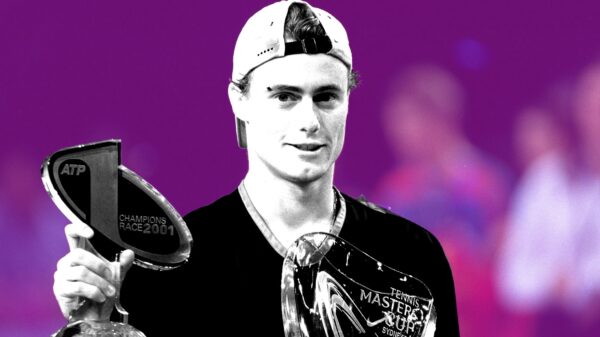
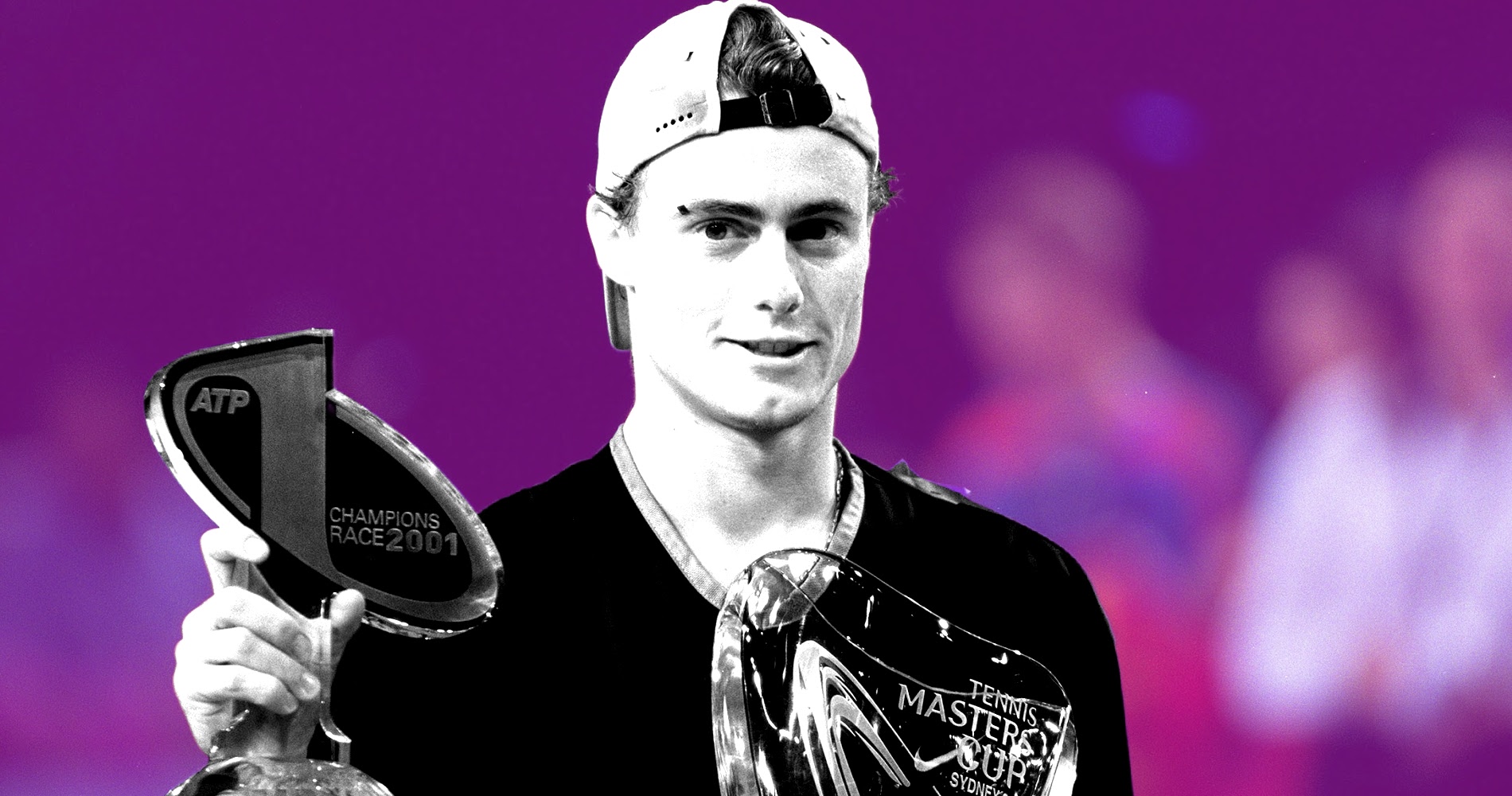
Established in 1970, the year-end Masters Cup was the final showdown of the world’s top eight players. Originally held at a different location each year, it was housed in New York’s Madison Square Garden from 1977 to 1989. Since then, the tournament has moved several more times, from Frankfurt (1990-1995) to Hannover (1996-1999) and Lisbon (2000). In 2001, the Masters Cup was held in Sydney for the first time, at the 17,000-seat Sydney Superdome. Because only the top eight players of the year qualify for the event, its list of past champions reads like a who’s who of men’s tennis.
The factsHewitt becomes the youngest world No. 1
At the 2001 Masters Cup, the world No. 1 ranking was on the line. Four different players won four Grand Slams that year, and in November three of them were in contention to end the year at the top of the ATP rankings: French Open champion Gustavo Kuerten (World No. 1), Lleyton Hewitt (World No. 2 and US Open champion), and Andre Agassi (World Open No. 3).
Kuerten lost all three of his matches during the round robin, while Agassi only won his first match against Rafter (6-2, 6-4) before losing to Grosjean (6-3, 6-4) and Hewitt (6-3, 6-4). With both of his contenders out of the tournament, “Rusty” could have reached World No. 1 for the first time and become the 2001 ATP Champion if he could win his third-round match against compatriot Rafter.
The Sydney Superdome was packed for this all-Aussie showdown. Both players were close in the first set, but Hewitt won 7-5 in the end. The second set was easier for the world number 2, who broke serve three times. However, in the final minute, the 20-year-old felt the pressure to become the new world No.1 and needed no less than six points before he sealed his victory. 7-5, 6-2.
Hewitt was now guaranteed to become the youngest world No. 1 in tennis history when the new rankings were released three days later on November 19. He will remain the youngest No. 1 in ATP history and the youngest year-end No. 1 until Carlos Alcaraz surpasses him in both categories in 2022.
Years later, reflecting on that moment, he would simply comment.
What next? Hewitt remains #1 for a total of 80 weeks
A few days later, Hewitt would begin his reign in style by winning the tournament, defeating Grosjean in the final (6-3, 6-3, 6-4).
The Australian would hold the top spot for a total of 80 weeks, including the entire 2002 season, winning at Wimbledon (defeating David Nalbandian 6-2, 6-3, 6-2 in the final) and the Masters (defeating Juan Carlos Ferrero 7-5, 7-5, 2-6,6, 4).
A better achievement, I think, was the following year, when I was ranked No. 1 all year and won the Masters, when No. 1 was in contention again..
Lleyton Hewitt to the ATP Tour website
After losing his top spot in 2003, Hewitt would remain the top player for several more years, finishing runner-up to Roger Federer at the 2004 US Open (6-0, 7-6, 6-0) and Marat Safin at the 2005 Australian Open (1-6, 6-3, 6-4, 6-4). By early 2006, he would be out of the top 10 for good and, suffering from knee, hip, arm, wrist, back and leg injuries, would never again reach the final four of a Grand Slam.
In late 2001, Rafter’s shoulder would require surgery. He would never return to tour after that and would announce his retirement in 2003.